If you have ever walked on safari, anywhere in Africa, you owe yourself one more walk: in South Luangwa, where the walking safari began and where the walking is still among the best in Africa.
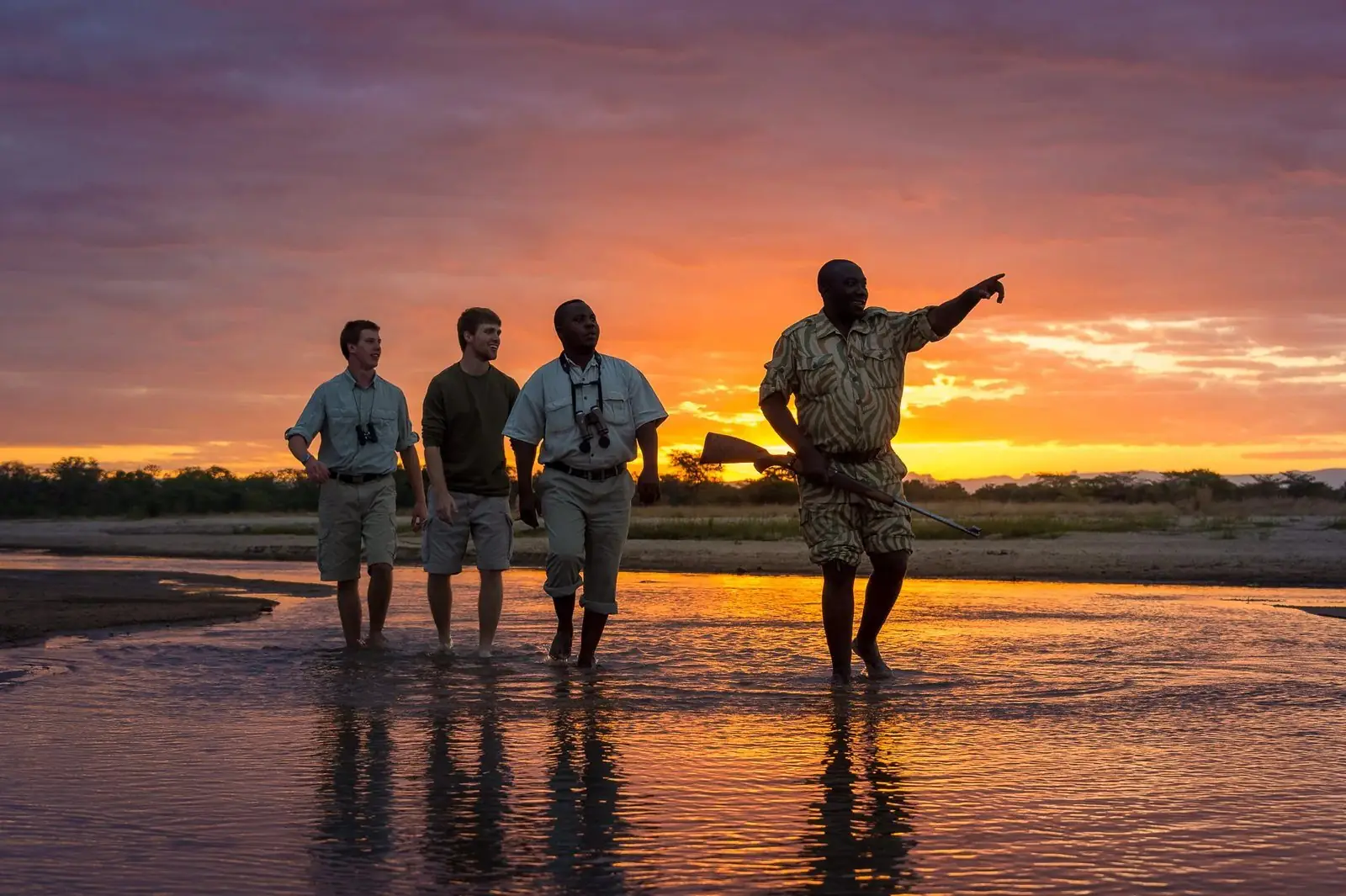
Walking has spread across the continent. By our count, more than 200 camps in nine African countries now offer guests the chance to walk, from Kenya’s conservancies and Tanzania’s Ruaha to Zimbabwe’s Mana Pools, South Africa’s Kruger and, most recently, Mozambique’s restored Gorongosa and Namibia’s rhino country. If you have done one of those walks, you know the feeling: the hush when the guide raises a hand, the first fresh track, your heart beating a little faster as you get closer, and the strange sense that you are finally in the wild rather than looking at it.
That feeling has a birthplace. And the people who know walking best keep coming back to it.
Where it all began
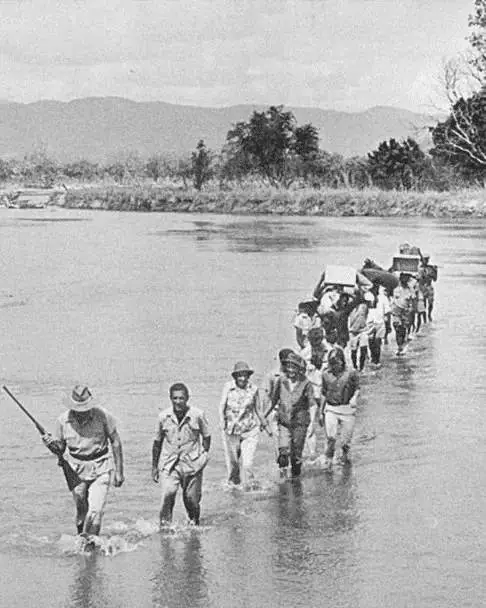
The walking safari as a form of tourism was born here, on the ground the Safari Heritage Collection now looks after.
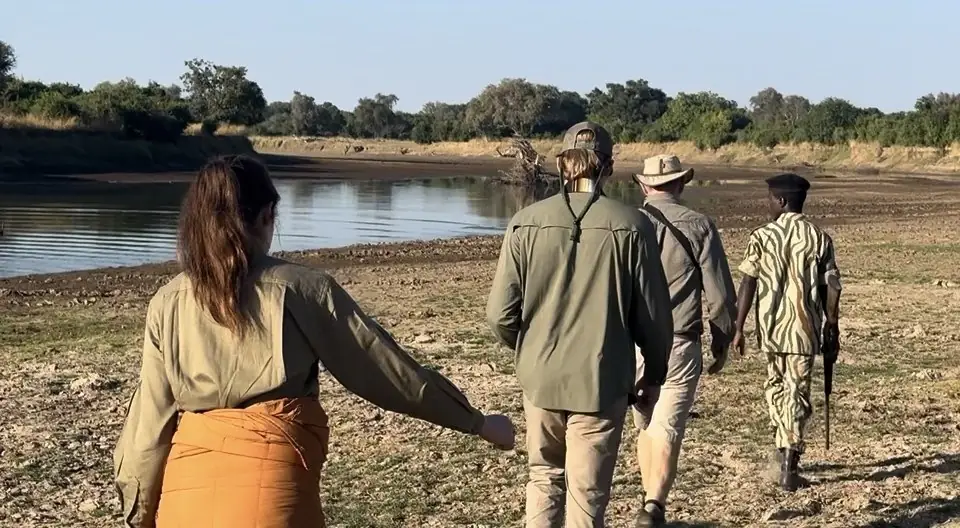
People had walked through wild country long before. What began on the Chibembe–Lion Camp circuit was something new: the walking safari as a guest experience, with small groups of visitors, a trained guide, a scout and a camp to walk to. Almost every walking safari in Africa today follows that model. Read the full story in The Road to Chibembe.
Why South Luangwa is the mecca
Walking began here for a reason, and the same reasons make it among the best places in Africa to walk today.
More walking than anywhere else
South Luangwa has more camps built around walking than any other park in Africa. Of the camps across Africa where walking is a central part of every day, nearly three in ten are in South Luangwa. In many parks a walk is an add-on, an hour before breakfast. Here it is the heart of the day, offered every morning as an equal choice with the game drive.
Country made for walking
The Luangwa River meanders through the valley floor, leaving oxbow lagoons, sandbanks and dry riverbeds behind it. Within a single morning you can walk through open floodplain, along a lagoon, under ebony and mahogany groves and out into mopane woodland, with the Muchinga Escarpment rising on the horizon.4 The terrain is mostly flat and easy underfoot, and the variety means no two walks are the same.
Wildlife, close
South Luangwa is an unfenced park of about 3,500 square miles (some 2.2 million acres) with wildlife everywhere you look.4 Elephant and buffalo herds, hippos in the hundreds, lion, African painted dog and some of the finest leopard viewing anywhere. Thornicroft’s giraffe and Cookson’s wildebeest are found only in the Luangwa Valley, and some 400 bird species have been recorded here.4 On foot, all of it is closer, quieter and more real.
The guides
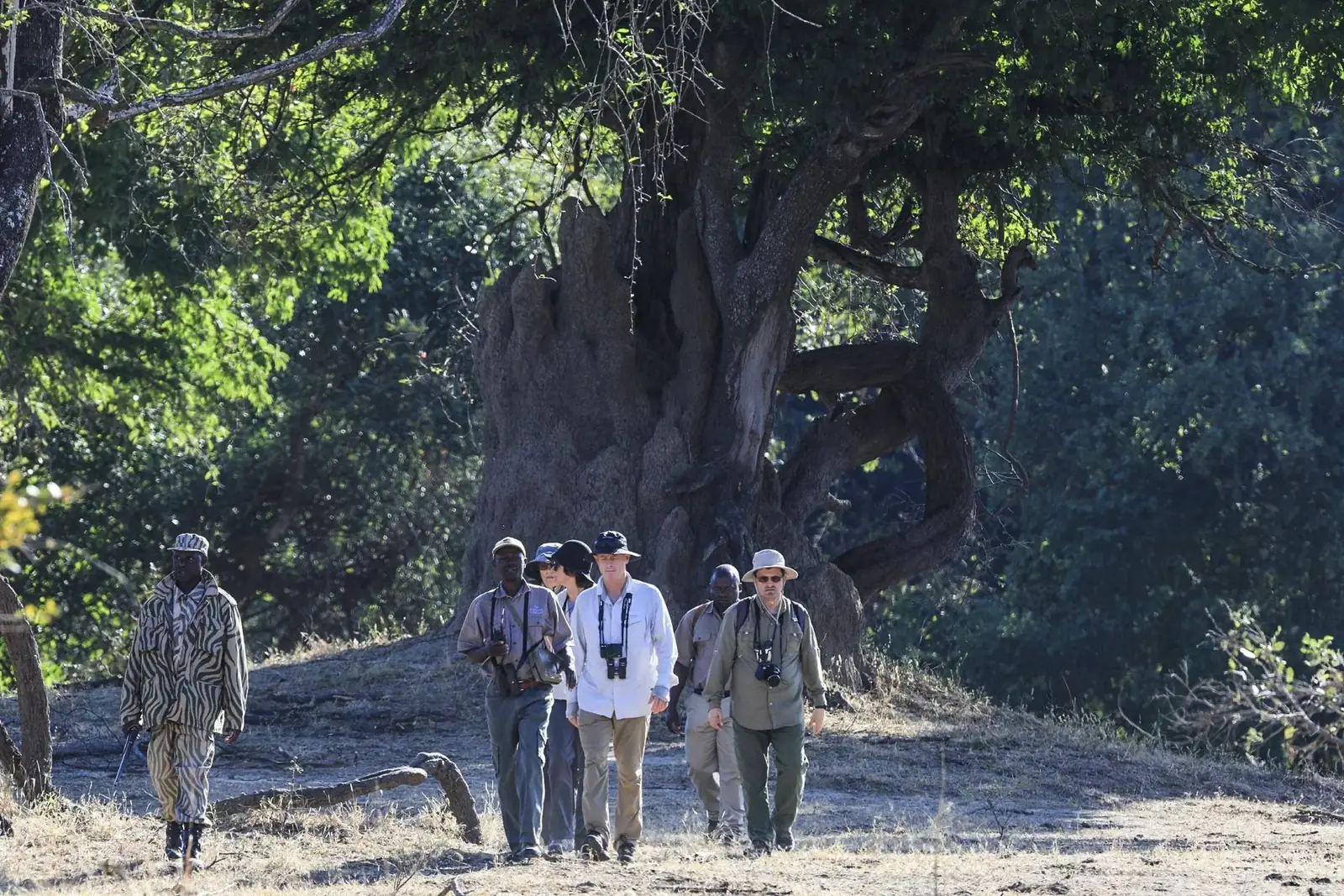
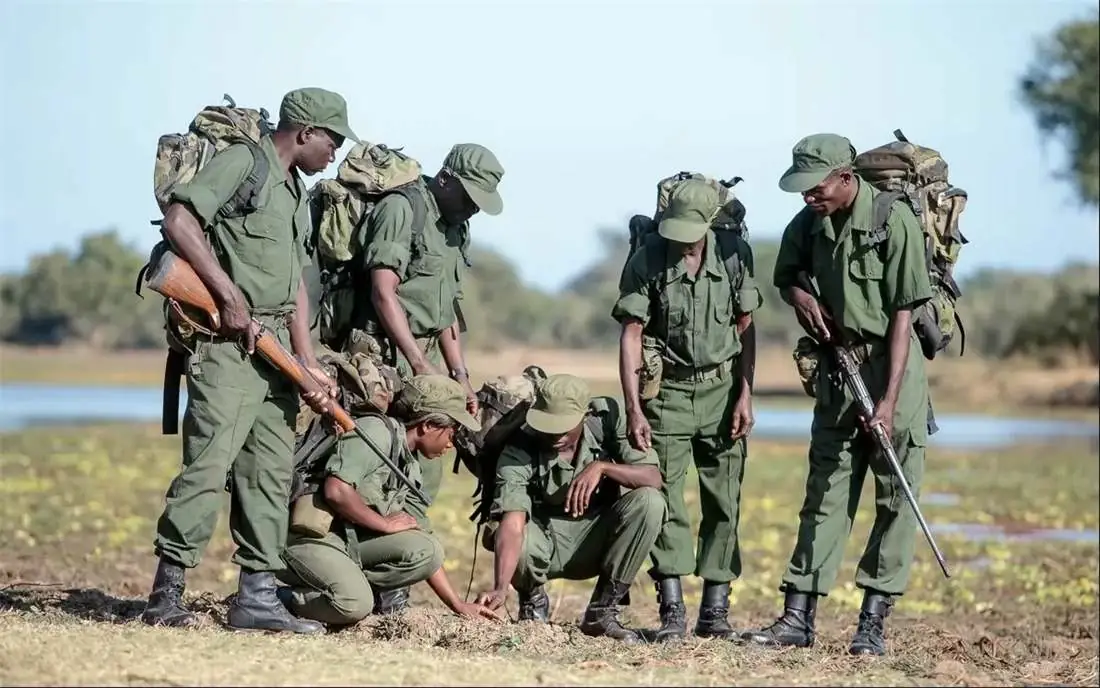
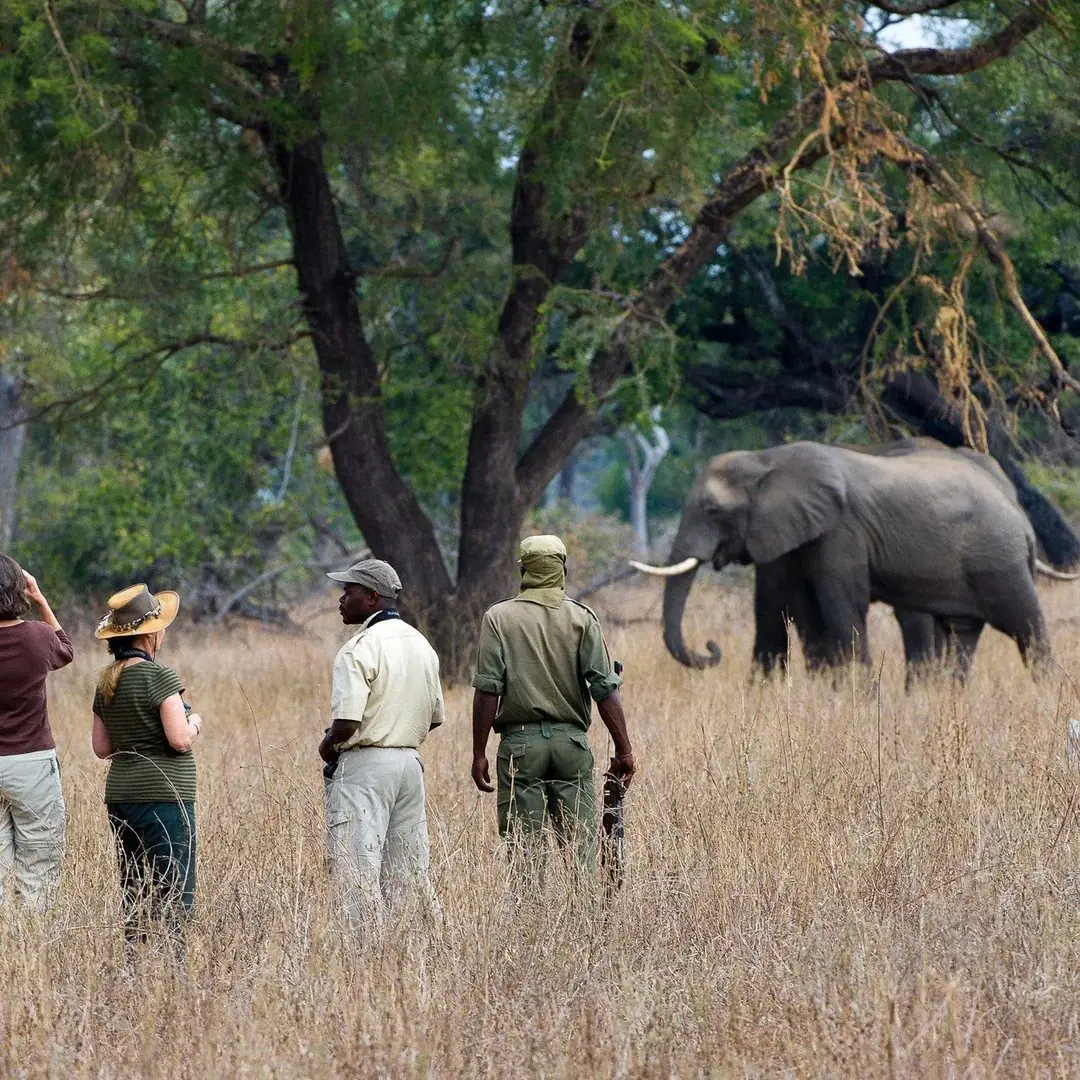
Zambia’s walking guides are among the best trained in Africa, held to strict national guiding exams.5 Every walk in the park is led by a licensed guide with an armed scout from Zambia’s Department of National Parks and Wildlife. The craft has been handed down here for more than sixty years, and it shows in how they read a track, a wind and an animal’s mood.
Walk the whole circuit
Here you can do what Carr’s first guests did: live in one park and walk through it. The Collection’s camps form a continuous safari circuit through the heart of South Luangwa, sixty miles camp to camp, from the gateway camps near Mfuwe through the bushcamps of the remote south to Lion Camp and Chibembe in the north. Some camps are close enough to walk between. See The Heritage Circuit.
Come back to where it began
If you have walked in Kenya, Tanzania, Zimbabwe, Botswana or South Africa, South Luangwa is not a repeat. It is the original, and for many walkers, the best. Come and walk the country where the walking safari was born, with guides who carry its tradition, from camps that sit on its original trails.
Walking is always your choice. Every camp in the Collection offers walks and game drives, so you can walk in the morning and drive in the evening, or simply sit by the river and watch. But if you have ever felt that first hush on foot, you already know why you should come.
The walking safari was born here. The walking here is still among the best in Africa.
Walk where it all began.
Plan your journeySources
- 1. Wikipedia, Norman Carr — https://en.wikipedia.org/wiki/Norman_Carr
- 2. Safari Heritage Collection, The Government Record: How the Luangwa Valley Was Opened, 1949–1968 — news-the-government-record.html
- 3. Safari Heritage Collection, The Road to Chibembe — news-the-road-to-chibembe.html
- 4. Wildlife Worldwide, South Luangwa National Park — https://www.wildlifeworldwide.com/locations/south-luangwa-national-park
- 5. Expert Africa, Walking safaris in Zambia — https://www.expertafrica.com/walking-safaris/zambia