
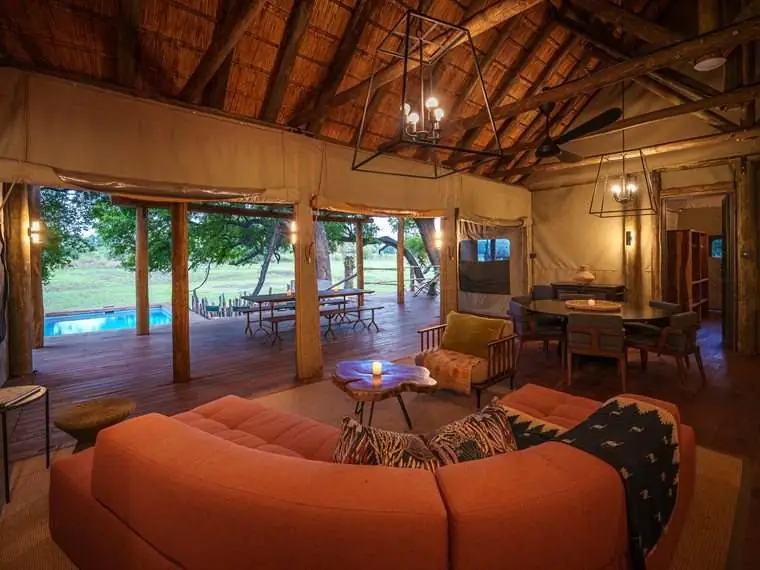
A villa of your own
Private villas at the park gate, each with its own guide, vehicle and plunge pool. Children of all ages are welcome, and the day runs to your family’s rhythm.
All ages welcome
Getting there, entry and health, walking, families and what to pack: the practical side of a safari in South Luangwa.
New to safari? Start here →This page gathers the questions guests ask most. Either of our two reservations teams can book one camp or the whole circuit, and so can your travel advisor. For the best months to visit, see When to go.
A small, seasonal camp deep inside the national park: three to five rooms, unfenced, run on solar power, with the animals moving through camp. Our six bushcamps open for the dry season and close for the rains.
Mfuwe Lodge and The Villas at KuKaya, just inside the park’s main entrance near Mfuwe, about 40 minutes from the airport. Open all year, and the natural place to start and finish.
The 140,000 acres of the national park around our six bushcamps in the south. Under our agreement with the Department of National Parks and Wildlife, no other operator runs camps or game drives in it.
Our ten camps along some sixty miles of the valley, linked by road. You move from camp to camp on a game drive instead of a flight, so every transfer is part of the safari.
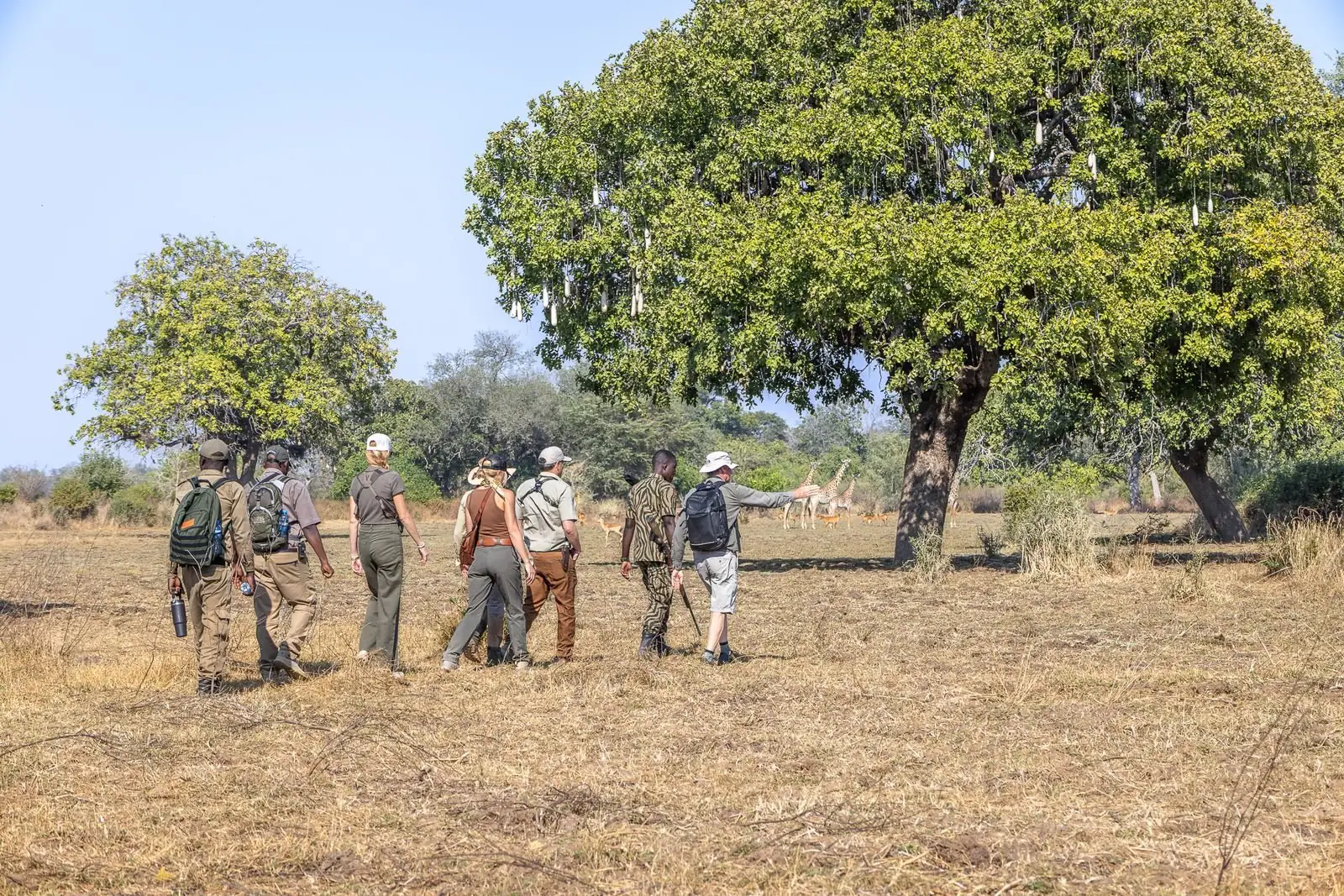
A guided walk, usually in the cool of the morning, led by a licensed guide with an armed scout. Small groups, a slow pace, and always optional.
Zambia’s Department of National Parks and Wildlife, which manages the national parks and provides the armed scouts who walk with every group.
Community land that borders the national parks, where people live and farm and wildlife still moves freely. Much of our community and conservation work happens in these areas.
The evening game drive carries on after dark with a spotlight, when leopards, hyenas, genets and the rest of the night shift are out.
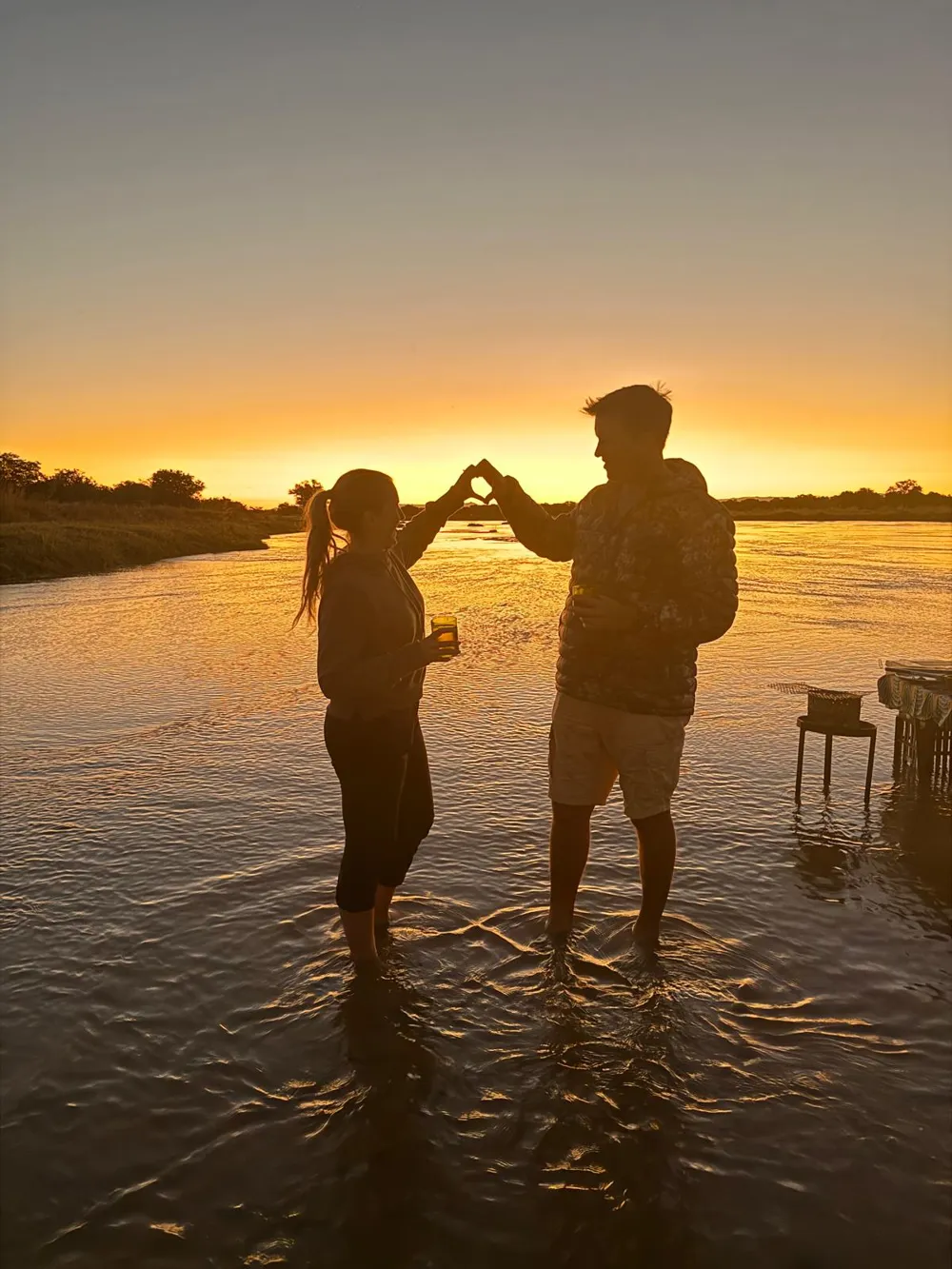
A drink at sunset, out in the bush or on a riverbank, before the drive home.
The rainy months, roughly December to April, when the valley turns green, the birds return and the gateway camps stay open. Some guests call it the emerald season.
Government and conservation levies of about US$95 to US$120 per person per night. They are not part of our published rates, but every quote includes them.
Peak-season rates run from US$800 to US$1,700 per person per night, depending on the camp. Park fees and government and conservation levies add about US$95 to US$120 per person per night, and every quote includes them. Chibembe is a private reserve, opened to one party at a time by arrangement; rates are shared once a stay is being arranged. Stays of six nights or more often qualify for specials.
At the six bushcamps every guest pays the adult rate, whatever their age. At Mfuwe Lodge, children aged 2 to 11 sharing with two adults have a reduced rate, and guests 12 and over pay the adult rate. The Villas at KuKaya and the Family House at Mfuwe Lodge are priced by the villa or house, with a set charge for each extra child. Every quote spells out the cost for your whole party.
Fly into Lusaka, Zambia’s capital, then take Proflight’s twice-daily scheduled flight of about 1 hour 20 minutes to Mfuwe Airport, the only commercial airport in South Luangwa. There are no direct flights from the US or UK: most guests connect through Dubai, Doha, Addis Ababa, Nairobi, Istanbul or Johannesburg. Private charters can land at an airstrip near Kapamba Bushcamp, or at an airstrip in Mwanya Chiefdom about 30 minutes from Chibembe. See the full getting there guide.
At the time of writing, Delta flies nonstop from Atlanta to Johannesburg and United from Newark, each about 15 to 16 hours, with an easy connection to Lusaka and on to Mfuwe. From elsewhere in the US, guests connect through Atlanta or Newark, or fly from major gateways such as New York, Washington, Chicago, Houston, Dallas, Miami and Los Angeles via Dubai, Doha, Istanbul or Addis Ababa. Allow about a day and a half door to door, and many guests spend a night in Lusaka on the way in. Reservations can book the Lusaka hotel, the domestic flights and the airport meet and greet. Going home, you can usually fly from Mfuwe to Lusaka on the same day as your international flight.
At the time of writing, Qantas flies nonstop to Johannesburg from both Sydney and Perth, and from Johannesburg it is about two hours to Lusaka, then on to Mfuwe. From New Zealand, connect through Sydney or Perth. Australian and New Zealand passport holders can currently visit Zambia for tourism without a visa, but check the rules for your passport before you book. Late June to mid-July, the Australian winter school holidays, is cool, dry and excellent for walking.
There are no nonstop flights from Europe to Zambia. Most European guests fly to Lusaka via Istanbul with Turkish Airlines, Dubai with Emirates, Doha with Qatar Airways, Addis Ababa with Ethiopian Airlines or Nairobi with Kenya Airways, or overnight to Johannesburg and connect north to Lusaka. From London and most European capitals, allow about 14 to 18 hours to Lusaka, then the short flight on to Mfuwe. At the time of writing, UK and many European passport holders can visit Zambia for tourism without a visa; check the rules for your passport before you book.
No airline flies directly from Mexico to southern Africa. At the time of writing, Turkish Airlines flies from Mexico City to Istanbul, and Emirates flies from Mexico City to Dubai, both with onward flights to Lusaka. Some guests connect instead through a US gateway such as Atlanta or Newark to Johannesburg, which needs the right US travel documents for the transit. Check whether your passport needs a Zambian visa; Zambia offers e-visas online.
At the time of writing, LATAM flies nonstop from São Paulo to Johannesburg in about eight hours, with an easy connection on to Lusaka and then Mfuwe. Ethiopian Airlines, Emirates, Qatar Airways and Turkish Airlines also fly from São Paulo, via Addis Ababa, Dubai, Doha or Istanbul. Check whether your passport needs a Zambian visa; Zambia offers e-visas online.
From Mfuwe Airport: Mfuwe Lodge and The Villas at KuKaya, just inside the park entrance, about 40 minutes; Kuyenda about 2 hours; Chamilandu about 2 hours 40 minutes; Chindeni and Bilimungwe about 3.5 hours; Zungulila and Kapamba about 4 hours (4.5 at most); Lion Camp about 2 hours 10 minutes; and Chibembe about 2 hours. Beyond the gateway, every transfer is a game drive in itself. The detailed map shows every drive and walking time.
Yes. Victoria Falls is the natural pairing: our journey The Falls and the Valley begins with two nights at Victoria Falls before the gateway, Kuyenda and Lion Camp, and the reservations teams can add Victoria Falls nights to any journey and coordinate the commercial flights between Livingstone and Mfuwe.
All three are superb. What sets South Luangwa apart is walking: here it is the heart of the safari, led by a licensed guide with an armed scout, where in much of Kenya and Botswana it is a sideline or not allowed. Night drives with a spotlight run at every camp. The valley sees far fewer visitors, so sightings are rarely crowded. The leopard viewing is among the best in Africa.
At the time of writing, US passport holders can visit Zambia for tourism without a visa for up to 90 days, with a passport valid for at least six months and blank pages to spare, and many other nationalities can too. The rules change from time to time, so check the current requirements for your passport with the Zambia Department of Immigration or your travel advisor before you book flights.
Gratuities are not included in rates and are always at your discretion. Most guests leave something for their guide and scout and something for the camp team as a whole. Reservations can tell you what is customary.
South Luangwa is a malaria area, as are most parts of Zambia. See your doctor or a travel clinic six to eight weeks before you go about antimalarials and recommended vaccinations. A yellow fever certificate is generally needed only if you arrive from, or transit through, a country with yellow fever risk. Confirm current requirements before you travel.
Yes, it is required. Every traveler needs comprehensive travel and medical insurance for the whole journey, covering medical treatment and trip cancellation and interruption. We strongly recommend emergency evacuation and repatriation cover, and, where it is available to you, “cancel for any reason” cover.
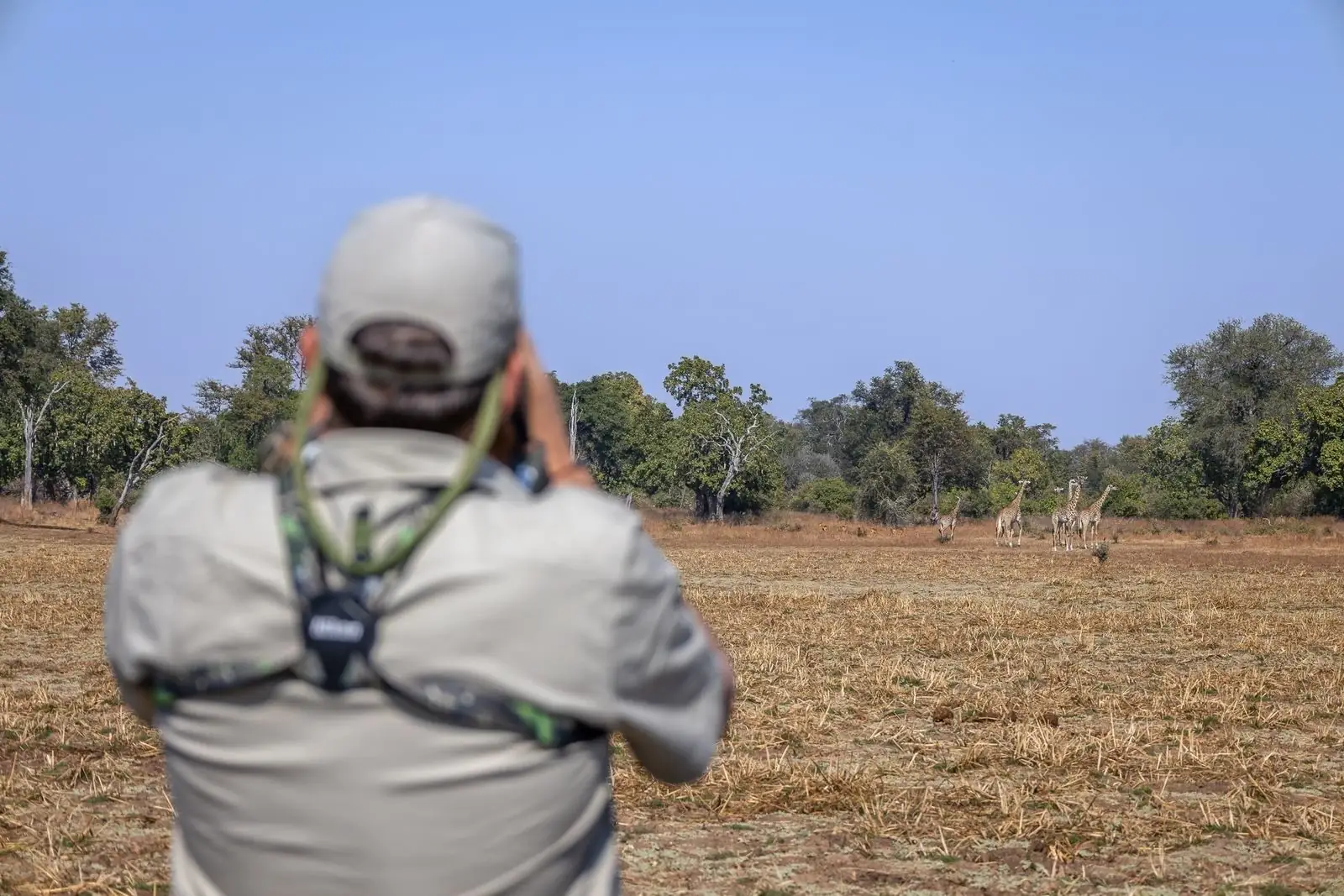
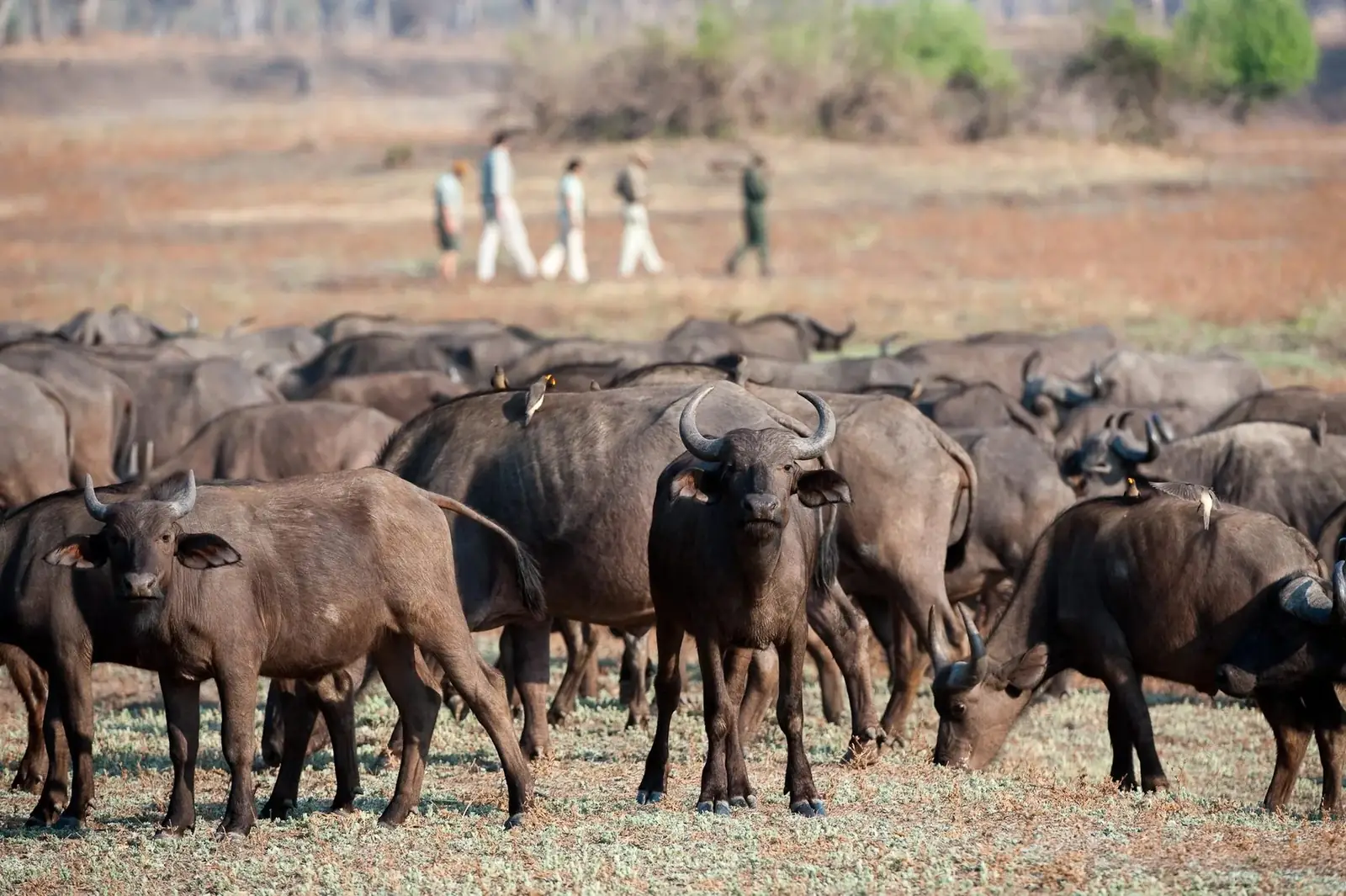
No. Walking is always optional. Walk every morning, drive instead, or mix the two, and just let your guides know what you would like to do. Game drives, by day and into the night with a spotlight, run at every camp.
No more than six guests a vehicle on shared game drives, so everyone has a seat on the outside. A private guide and vehicle carries only your party: it is included at The Villas at KuKaya, Chibembe and the Family House at Mfuwe Lodge, and can be added at every other camp. A larger group traveling together can share one vehicle of up to eight.
Every walk inside the national park is led by a licensed guide with an armed scout from the Department of National Parks and Wildlife. Walks are slow, typically 2–3 miles over three to four hours with many stops, and suit most reasonably active adults. Read more: Are walking safaris safe? and How fit do you need to be?
Mfuwe Lodge and The Villas at KuKaya welcome children of all ages, the bushcamps welcome children from 12, and younger children with a private guide and vehicle or the whole camp booked for the family, and Chibembe welcomes children at our discretion. Walking safaris carry a minimum age of 12, set by Zambia’s Department of National Parks and Wildlife; at Lion Camp the walking minimum is 16. See Families & private use for family rooms, private villas and private guides, and Teenagers & young adults for older children. Walking is always optional, and many families with younger children simply enjoy the game drives.
Clothing in khaki, olive and light brown; broken-in walking shoes or light boots; a warm layer for cold early mornings; a wide-brimmed hat, sunglasses and sunscreen; and binoculars, ideally one pair each. Flights to Mfuwe have luggage limits, so soft bags are best. See our full What to Pack for South Luangwa.
WalkingSafaris.com, an independent guide to walking safaris across Africa, covers walking in South Luangwa, your first walking safari and the history of the walking safari. For our conservation and community work, see The Bushcamp Company’s impact page.
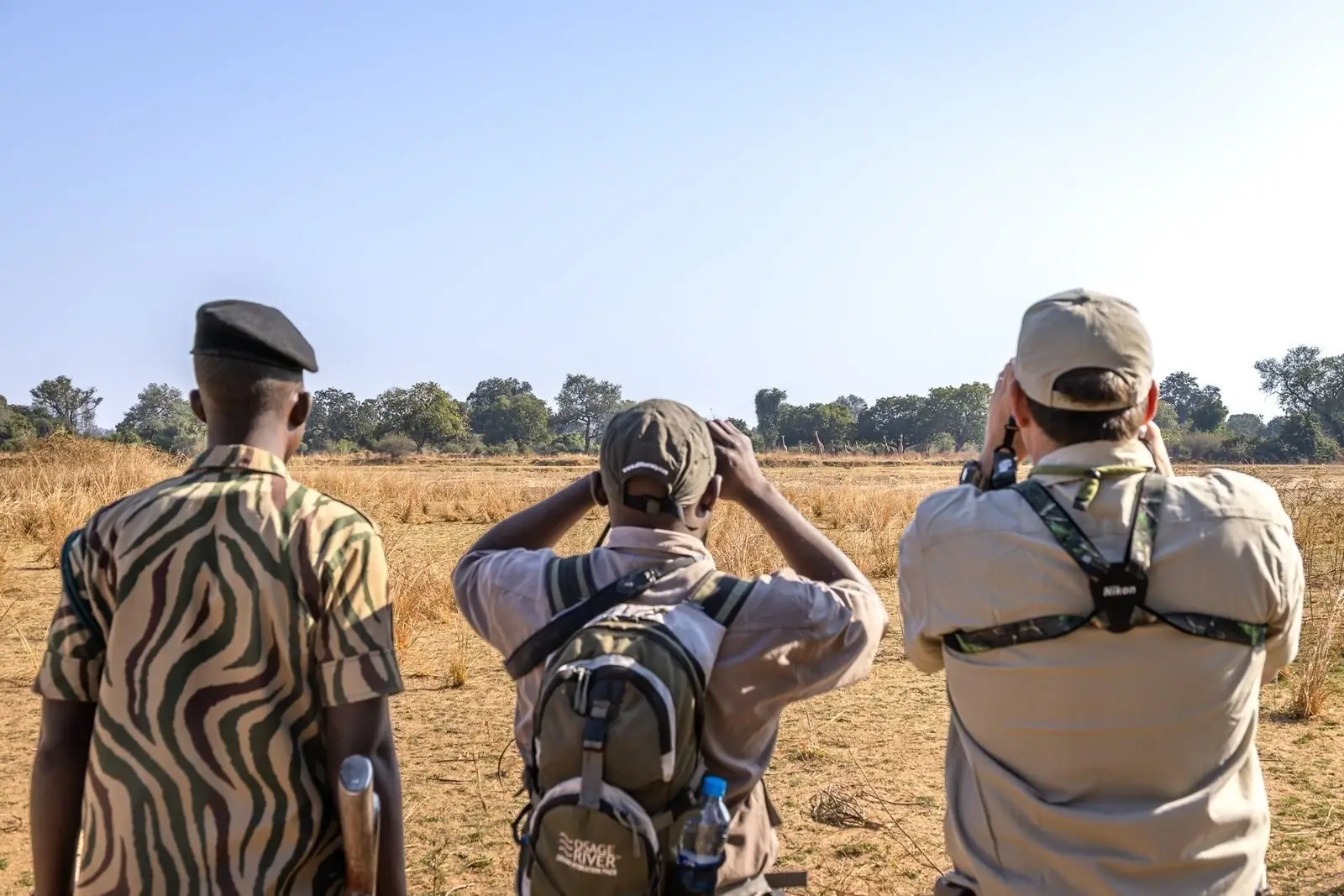
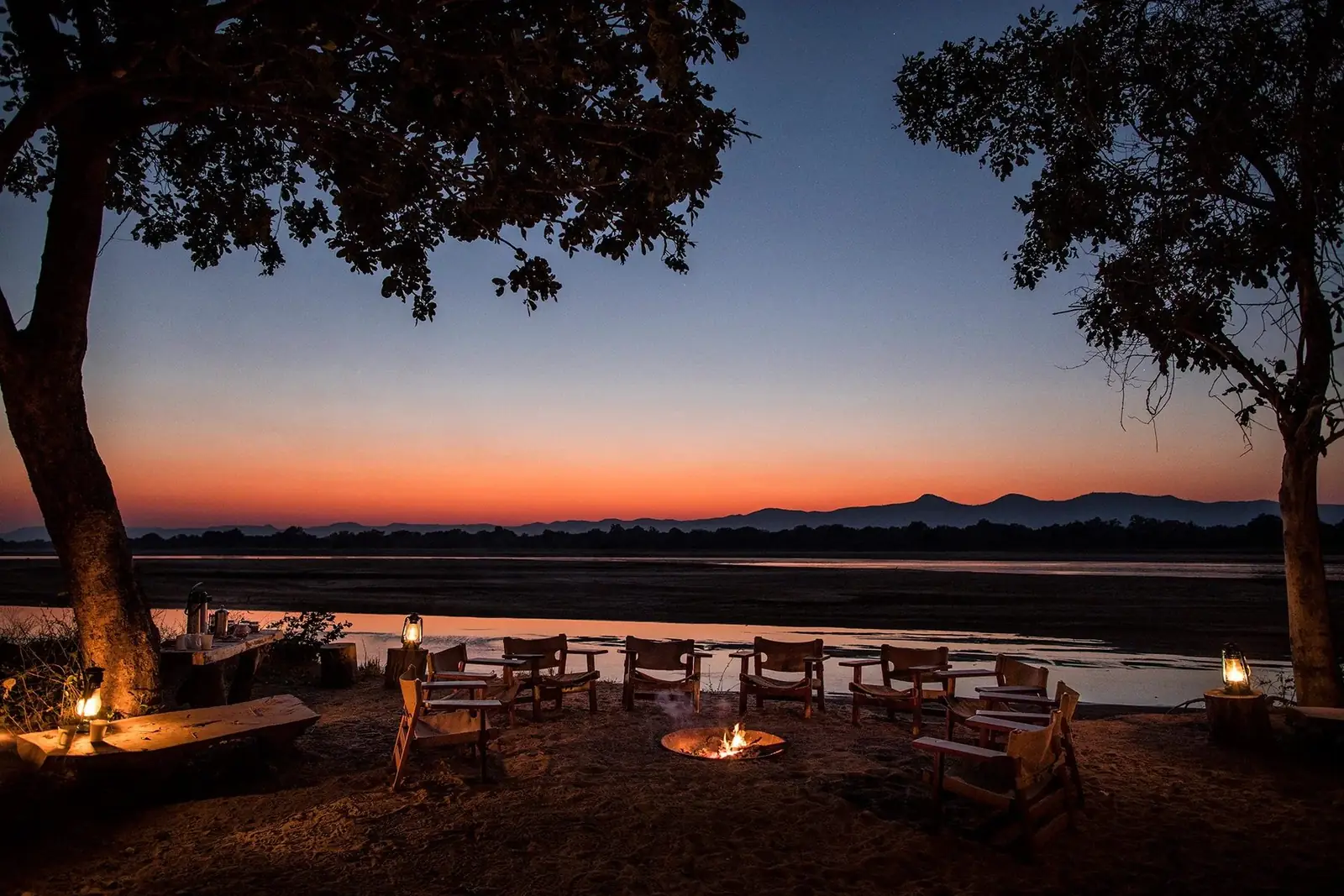
Yes, at every camp. Mfuwe Lodge and The Villas at KuKaya have Wi-Fi throughout, including in the rooms. The bushcamps, Lion Camp and Chibembe have Wi-Fi too, though many guests choose to switch off and enjoy being somewhere wild.
Every camp outside the two gateway lodges runs on solar power alone: the six bushcamps, Lion Camp and Chibembe. Mfuwe Lodge and The Villas at KuKaya are on mains power with air conditioning; Lion Camp’s suites have Evening Breeze, a cooling system over the bed; the bushcamps and Chibembe use fans. You can charge cameras and phones at every camp. Sockets are the square, three-pin British type.
Mfuwe Lodge and The Villas at KuKaya, the two gateway camps, have full air conditioning on mains power. At Lion Camp every suite has Evening Breeze, a cooling system that cools the air around your bed at night. The six bushcamps and Chibembe run on solar power with fans.
Yes. Mfuwe Lodge has a spa, and our traveling bush spa therapists can come to any camp in the Collection for massage and treatments. Ask when you book or once you arrive.
Very much so. Lion Camp’s Deluxe Suites have their own outdoor bathtub. At Kapamba, sundowners are served standing in the river. Dinner With Dr. Livingstone is a private dinner in the bush under the stars, and our bush spa therapists can come to any camp. For a stay with no one else in camp at all, ask us about Chibembe, a private reserve opened to one party at a time, or begin at Victoria Falls with The Falls and the Valley. Tell us what you are celebrating when you inquire, and every camp on your journey will know.
Yes. Mfuwe Lodge and all the bushcamps offer complimentary daily laundry.
Soft-sided bags are strongly recommended. Scheduled flights to and from Mfuwe allow 23 kg (50 lb) per person, and extra allowance can usually be bought at the airport. Charter flights may have lower limits, so check when you book.
Yes. Lion Camp, The Villas at KuKaya and Chamilandu have photographic hides. Just ask your guide or the camp, and they will set up time in one for you. Several camps also have decks built for watching wildlife: the chalets and main area at Mfuwe Lodge, and the main areas at KuKaya, Bilimungwe, Zungulila and Chindeni, plus the lounge at Chibembe. More in For photographers.
Send one inquiry, or build your journey in our journey planner, and the right reservations team will come back to you. Either team can book one camp or the whole circuit, including Chibembe. Travel advisors can book everything the same way.
Once you tell us you would like to go ahead, we hold your camps and dates for 10 business days. A deposit of 20% confirms the booking. The balance is due 45 days before arrival at The Bushcamp Company’s camps, 45 to 60 days before at Lion Camp, and 60 days before at Chibembe. Cancellation charges rise as your travel date gets closer, up to 100% of the booking inside 45 days (30 days at Lion Camp), which is why insurance that covers cancellation is required, and “cancel for any reason” cover is worth adding where you can. The full schedule for each camp is on our Booking terms page.
Really, the valley has great wildlife viewing all year round, although many areas are inaccessible during the rainy season. The peak walking months, August to October, when the dry season draws more game closer to the river, tend to be the most popular. It should be noted that camps can book up a year or more ahead, especially the smaller camps. The early and late weeks of the season are often easier to find, and still excellent for walking.
January to March: the peak of the rains, in the heart of the emerald season (December to April). The rains turn the valley green, the river runs full and birdlife is at its best. Mfuwe Lodge and The Villas at KuKaya stay open; the bushcamps, Lion Camp and Chibembe are closed. April and May: the rains end and the bush is still lush. Kapamba and Zungulila open around mid-April, Chindeni and Bilimungwe in May, and Lion Camp in late May. June and July: cool, clear mornings and warm days, ideal for walking. Kuyenda opens June 1, Chamilandu June 7 and Chibembe in June. August and September: the heart of the dry season. Water shrinks to the river and lagoons, game concentrates, and walking is at its peak. October: the hottest and driest month, with some of the most dramatic sightings of the year. The bushcamps close around November 1. November and December: the first rains arrive and the valley turns green again. Elephants walk through reception at Mfuwe Lodge for the wild mangoes, from late October to mid-December.
 Getting There
South Luangwa is easier to reach than its wildness suggests: one international journey to Lusaka, one short flight to Mfuwe, and guests are in game-viewing country within the hour.
There are no direct flights from the US, UK, Europe or Australia. Every major hub has daily connections to Lusaka:
Proflight Zambia flies twice daily from Lusaka to Mfuwe Airport, the only commercial airport in South Luangwa, in about 1 hour 20 minutes. Seasonal flights also link Lilongwe, Malawi.
If the international flight lands late, a night in Lusaka is the safe choice.
Guests are met at Mfuwe Airport. Mfuwe Lodge and The Villas at KuKaya are about 40 minutes away, and every onward transfer is a slow game drive through the park.
Private charters can land at an airstrip near Kapamba Bushcamp, deep in the southern exclusive area, or at an airstrip in Mwanya Chiefdom, about a 30-minute drive from Chibembe. Ask reservations or your travel advisor about routing and availability.
Adding Victoria Falls is easy: our journey The Falls and the Valley starts there, and reservations can coordinate the flights from Livingstone to Mfuwe.
| Camp | Transfer time |
|---|---|
| Mfuwe Lodge · The Villas at KuKaya | About 40 minutes from Mfuwe Airport |
| Kuyenda | About 2 hours from Mfuwe Airport |
| Chamilandu | About 2 hours 40 minutes from Mfuwe Airport |
| Chindeni · Bilimungwe | About 3.5 hours from Mfuwe Airport |
| Zungulila · Kapamba | About 4 hours from Mfuwe Airport, 4.5 at most |
| Lion Camp | About 2 hours 10 minutes from Mfuwe Airport |
| Chibembe Wildlife Reserve | About 2 hours from Mfuwe Airport · 35 minutes plus a river crossing from Lion Camp |
Start with reservations or your travel advisor: either of our reservations teams can arrange flights from Lusaka, transfers and the whole circuit. Write to info@safariheritagecollection.com and your inquiry goes straight to the right team, for any of the ten camps.
Luggage: soft-sided bags, 23 kg (50 lb) per person on scheduled flights to Mfuwe; extra allowance can usually be bought at the airport. Most nationalities can enter Zambia visa-free, but rules change, so confirm before travel. Transfer times are approximate game drives. See also the circuit map and practicalities.
Families & Private UseFamilies are welcome across the Collection. Mfuwe Lodge and The Villas at KuKaya take children of all ages, with game drives, private vehicles and space to run that make a first safari easy. The bushcamps welcome children from 12, and younger children when the family has a private guide and vehicle or the whole camp. Chibembe, booked for exclusive use, welcomes children at our discretion. Walking safaris in Zambia carry a minimum age of 12, set by the Department of National Parks and Wildlife, and Lion Camp sets its own walking minimum of 16. Many families start at the gateway and move on to the bushcamps once the children are old enough to walk. Walking is always optional, and plenty of families with younger children simply enjoy the game drives, by day and after dark with a spotlight.
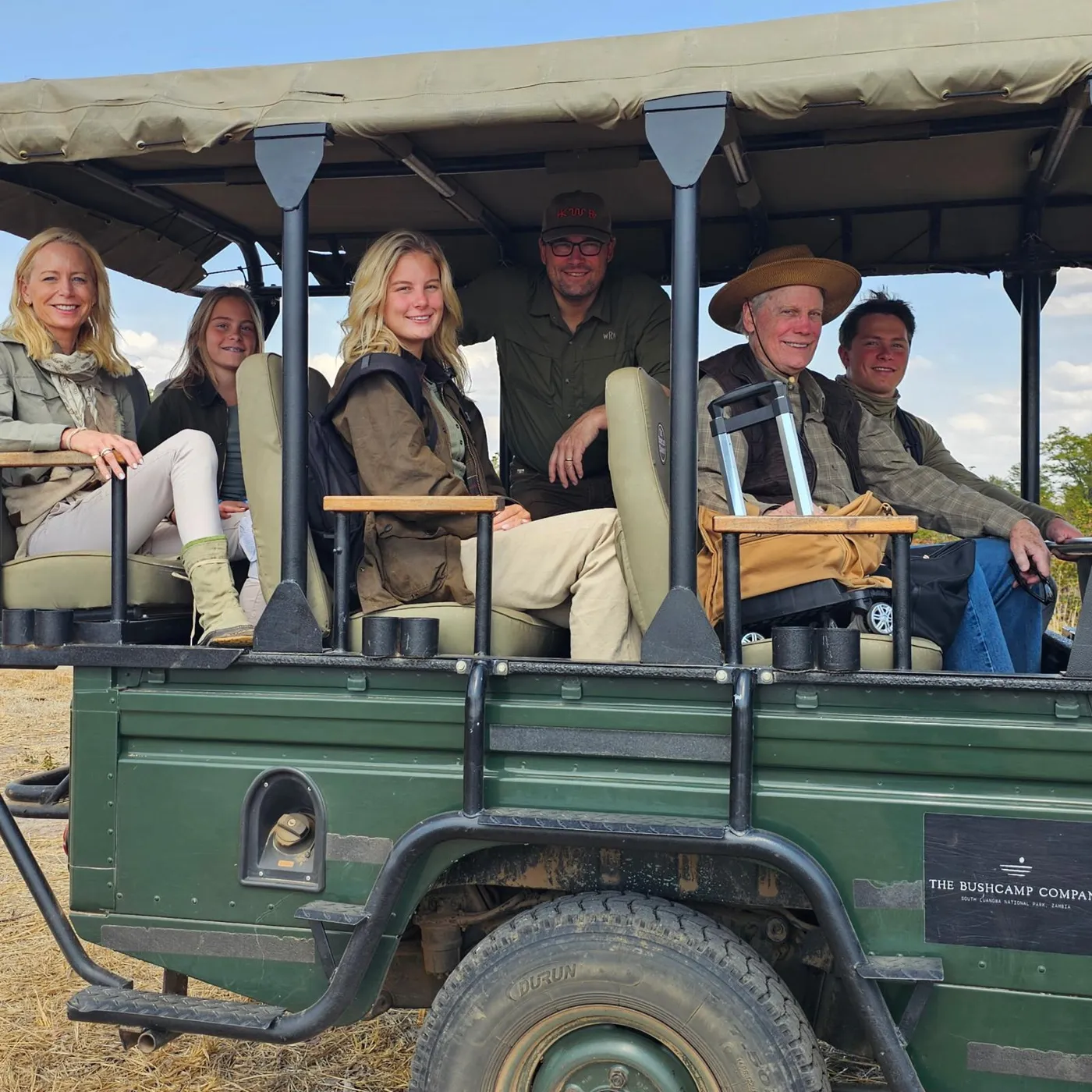
Private villas at the park gate, each with its own guide, vehicle and plunge pool. Children of all ages are welcome, and the day runs to your family’s rhythm.
All ages welcome
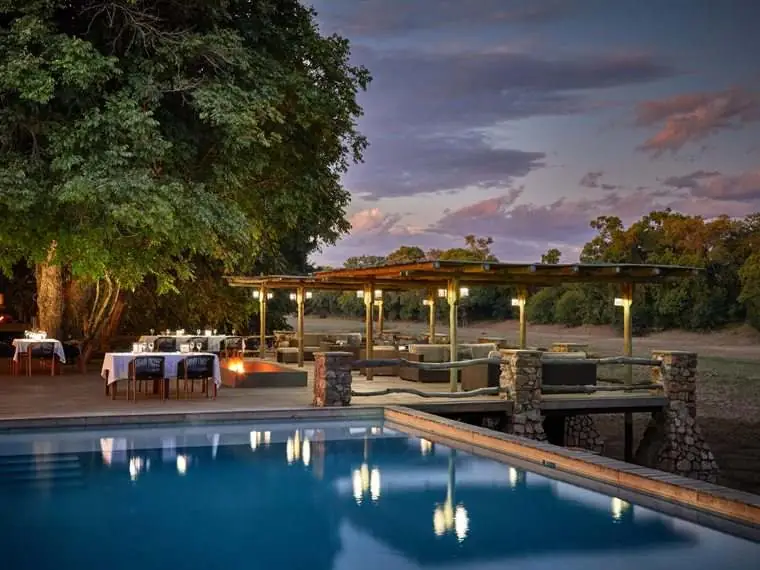
Three family rooms, a pool, a library, and elephants walking through reception in season. Open all year and welcoming children of all ages.
All ages welcome
High school and college-age kids are the guests a walking safari was made for. At 12 they can walk at every Bushcamp Company camp, and from 16 at Lion Camp too, with a licensed guide and an armed scout from the Department of National Parks and Wildlife. They are old enough to sit quietly with a leopard, curious enough to ask the guide everything, and fit enough to walk from one camp to the next. No screen competes with lions calling in the dark outside the tent.
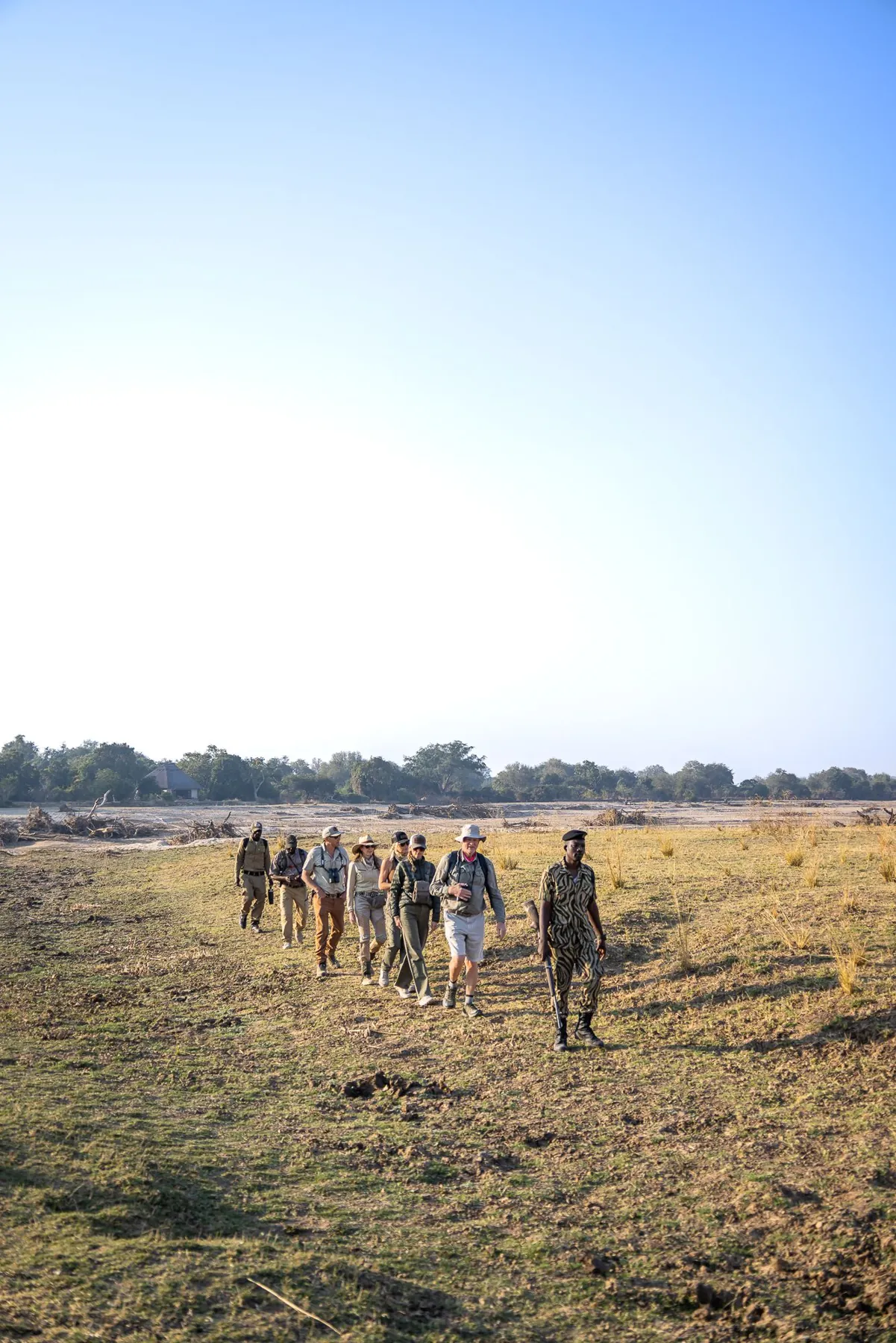
Morning walks of two to three miles, and a classic walk between bushcamps, with breakfast or tea in the bush. Walking is always optional, so a tired parent can take the vehicle.
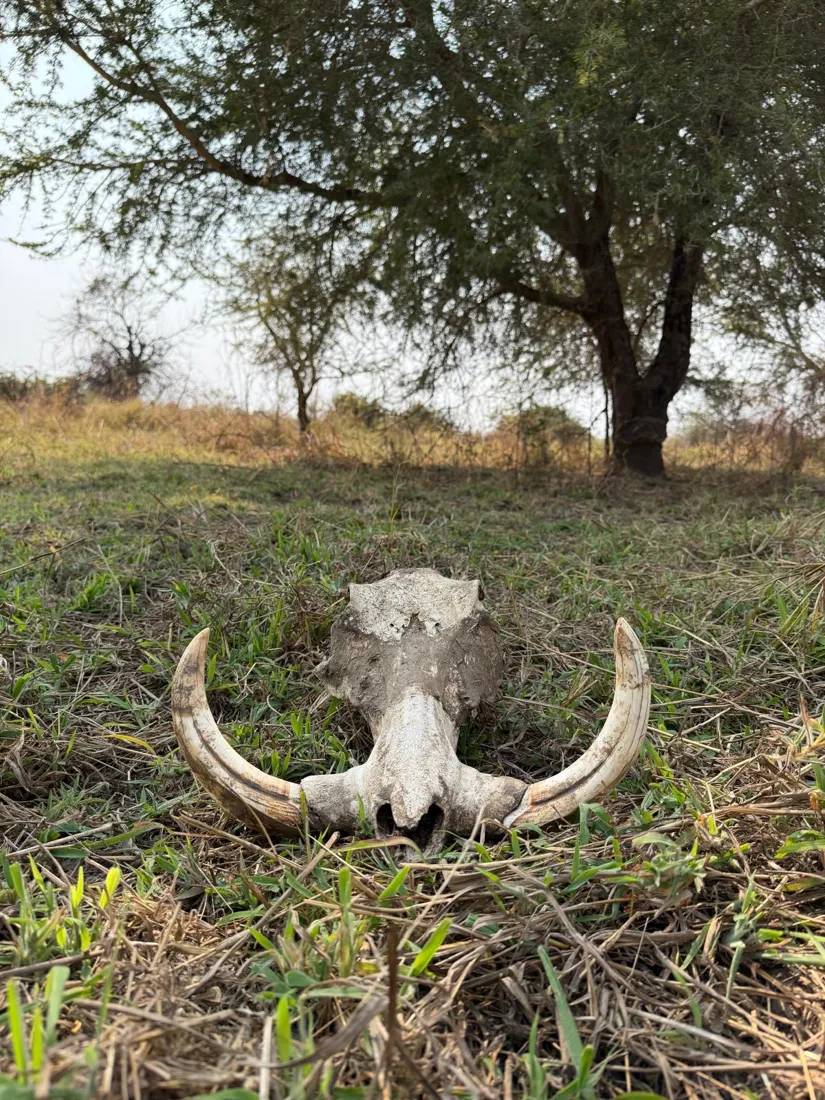
Guides teach them to read spoor, age a track and find the animal that left it. Night drives with a spotlight turn up genets, civets, honey badgers and leopards on the hunt.
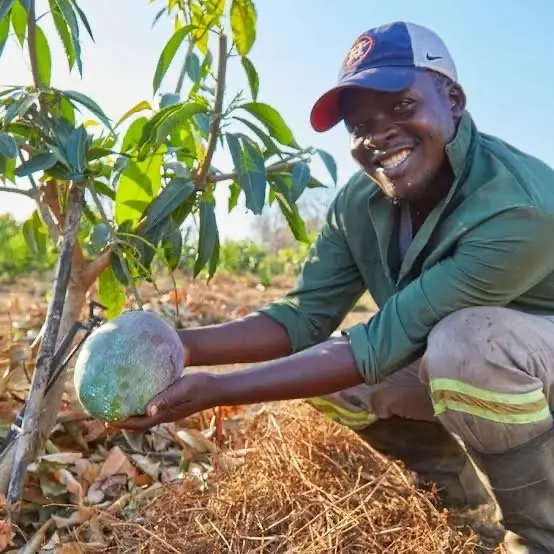
Visit the farm that feeds every camp, the game scout school, or a community project. For many young guests it is the first time they see how conservation actually works.
For a milestone, a family reunion or simply the luxury of having the bush to yourselves, much of the Collection can be booked privately: from a private guide and vehicle to a whole camp, or the whole reserve at Chibembe. Private charters can land at an airstrip near Kapamba Bushcamp, or at an airstrip in Mwanya Chiefdom about 30 minutes from Chibembe.
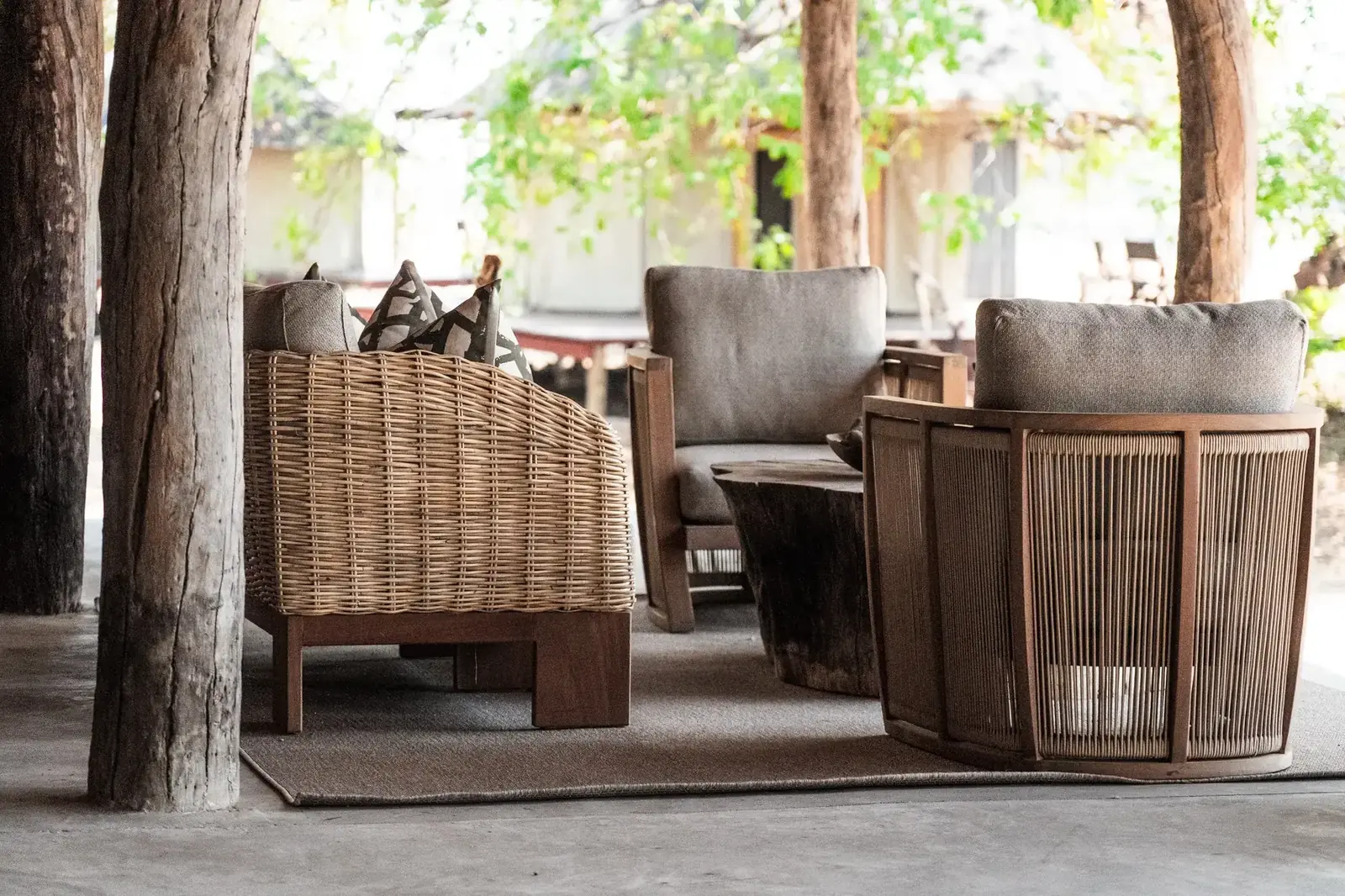
A private reserve: eight guests in comfort, more for a family, one party at a time by arrangement, five nights or more, on the ground where the walking safari began.
Exclusive use
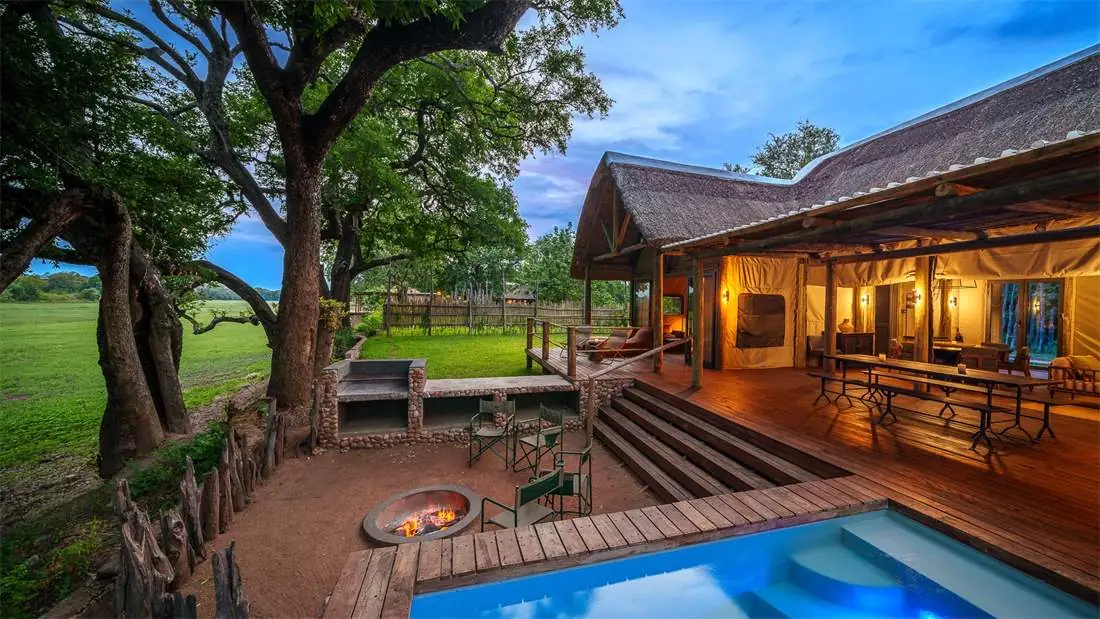
Take the whole property for a family celebration or a group of friends: every villa, the central boma, dining area and lounge, with your own guides and vehicles.
Exclusive use available
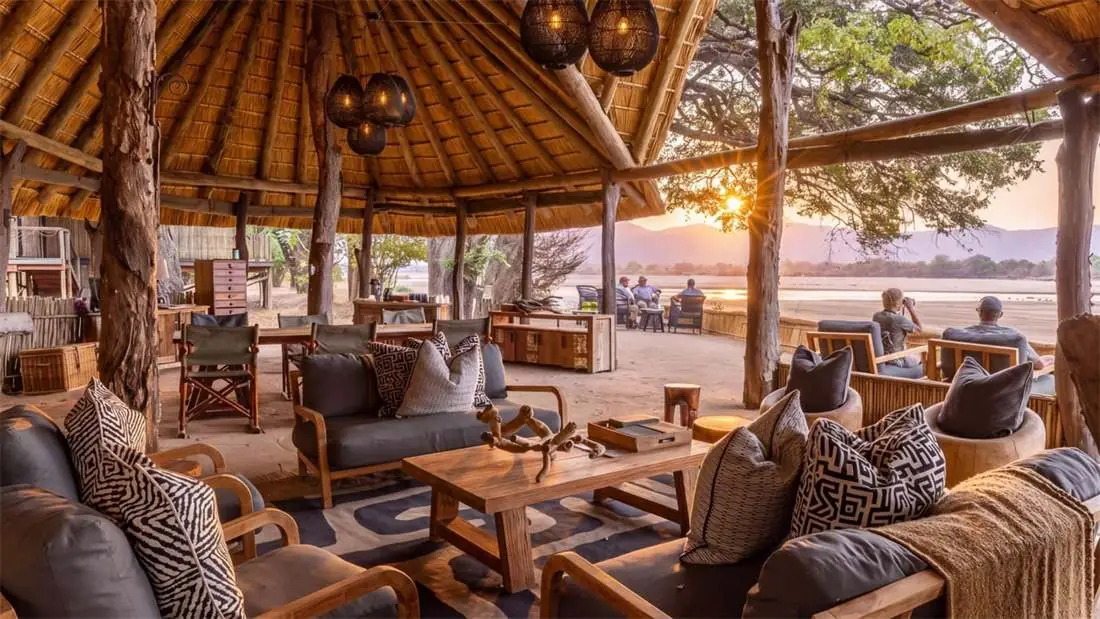
The southern bushcamps are small, taking six to ten guests and most of them eight. Ask about reserving one for your group, or several along the circuit.
Ask reservations
Each camp sets its own child and private-use policies, and some apply minimum stays. For details and availability, write to info@safariheritagecollection.com, speak to your travel advisor, or see Planning & FAQ and Getting there.