South Luangwa is a long, unfenced valley in eastern Zambia, cut by a river that wanders, floods and changes course every year. It is famous for leopards, for walking safaris and for how few people you share it with. This guide gathers what first-time visitors most want to know, from the people who have run camps here for more than twenty years.
The park
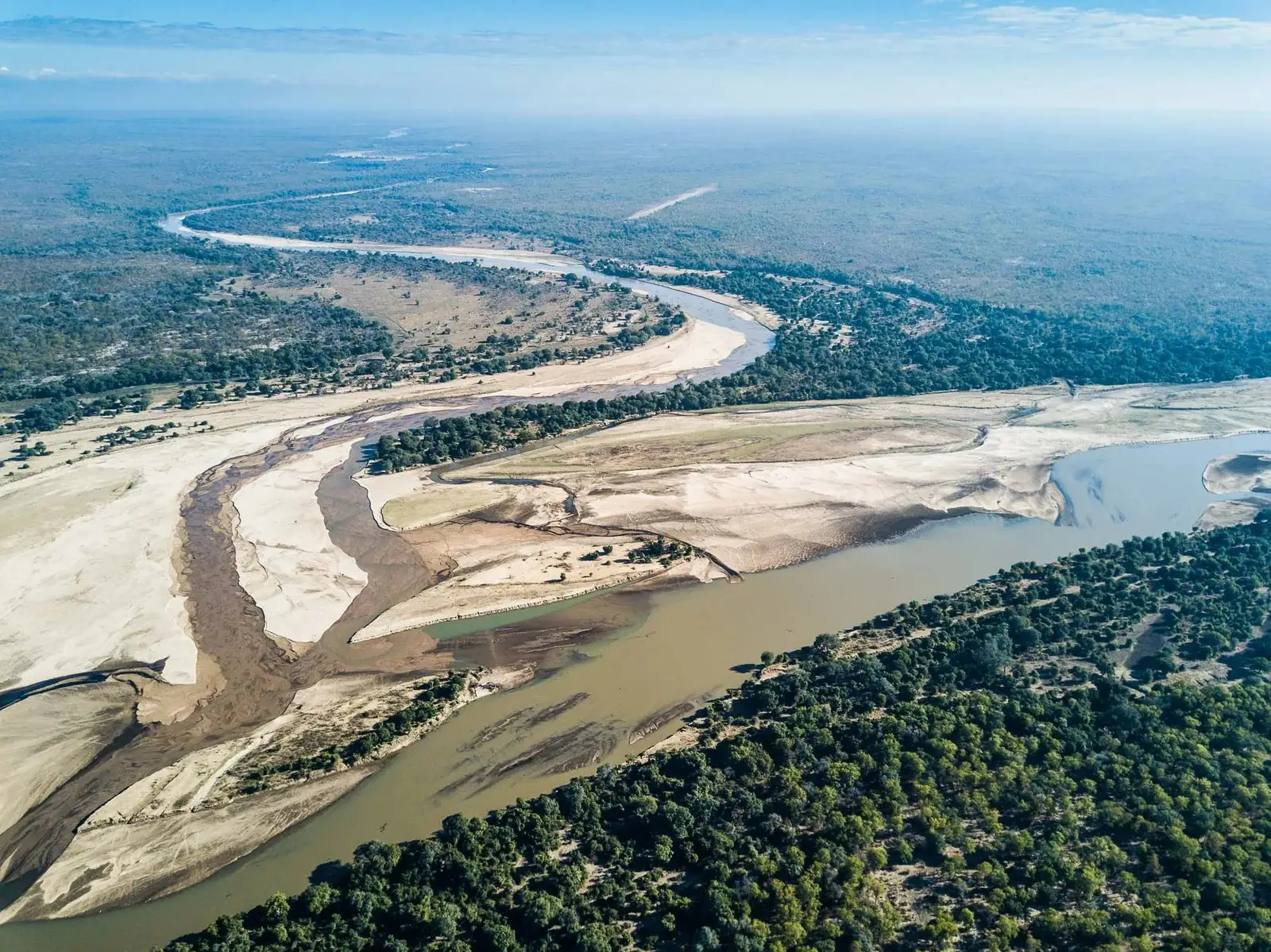
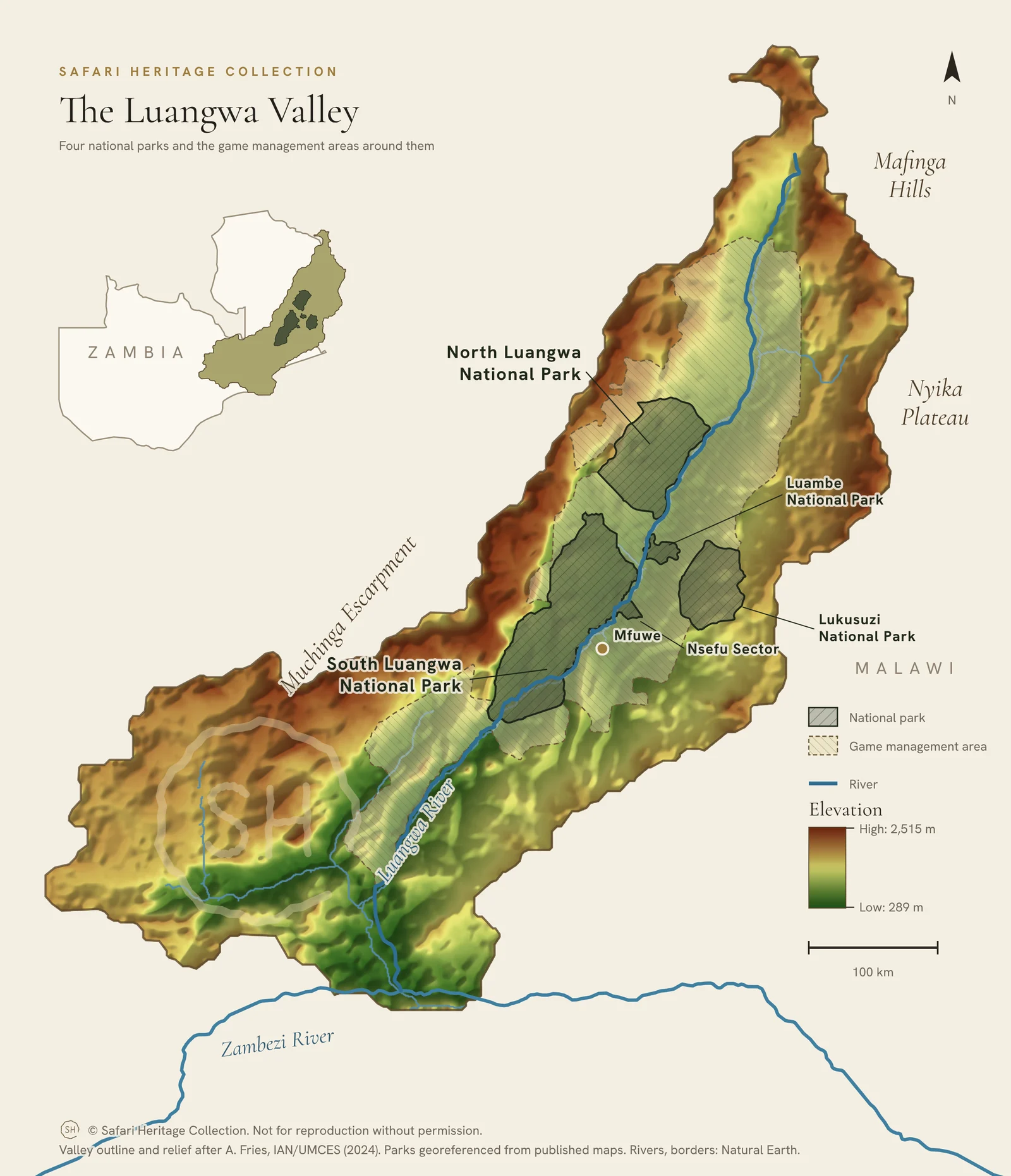
South Luangwa National Park covers about 3,500 square miles at the southern end of the Great Rift Valley, walled to the west by the Muchinga Escarpment. There are no fences. The Luangwa River runs its length, and each wet season it floods, cuts new channels and leaves oxbow lagoons behind. Those lagoons, the floodplains and the woodlands around them hold one of the richest concentrations of wildlife in Africa.
The valley stayed wild for a reason: for most of the twentieth century it was hard to reach, and the tsetse fly kept cattle and settlement out. It is still remote enough that you rarely see another vehicle away from the main gate.
Walking safaris
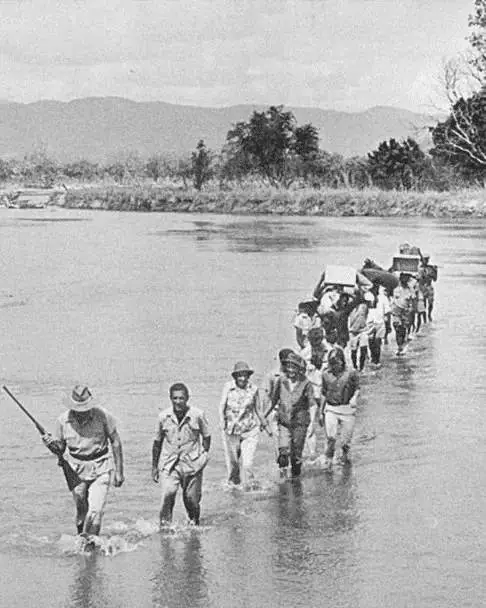
This is where the walking safari began. In 1961 Norman Carr began walking paying guests through big-game country from Lion Camp, on a circuit reached across the river at Chibembe, and the government record of that year names it “a type of tourism.” The story, and the documents behind it, are in The Birth Certificate of the Walking Safari.
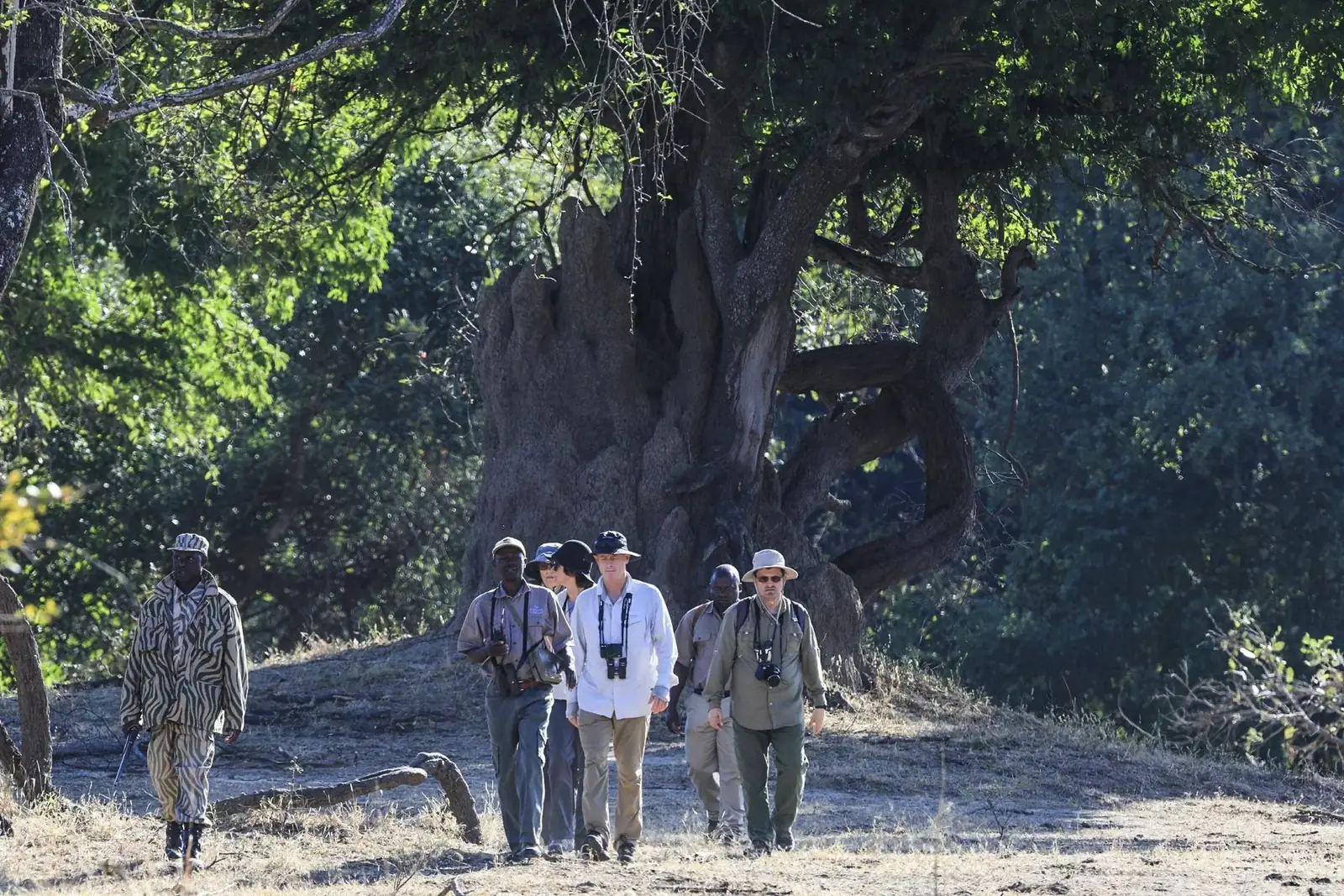
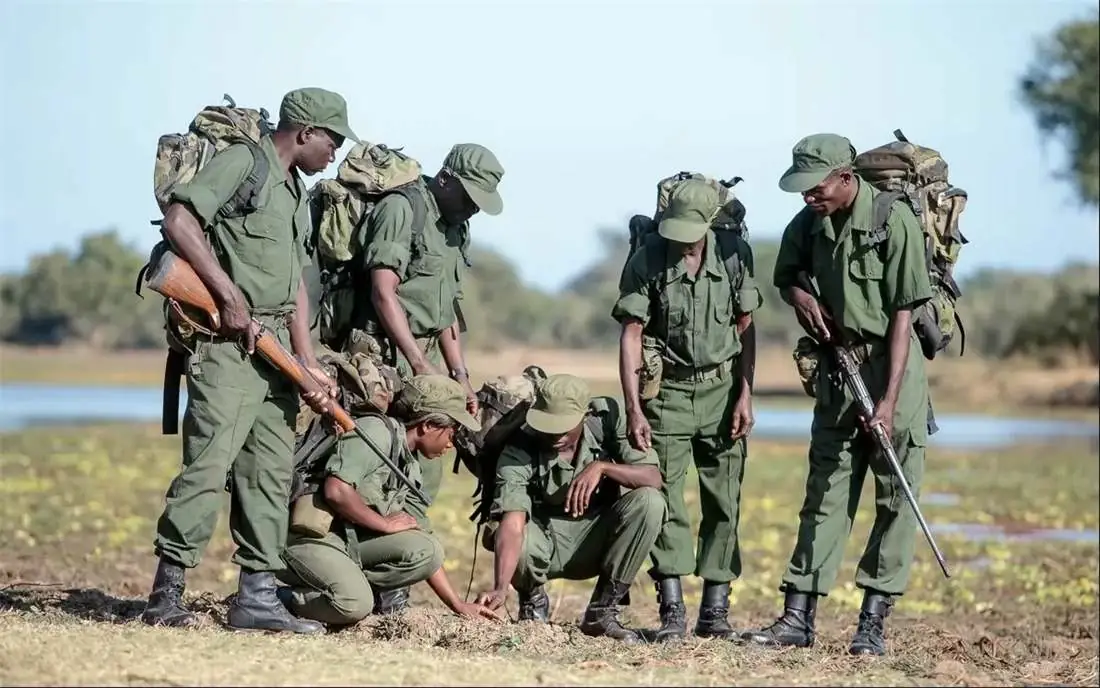
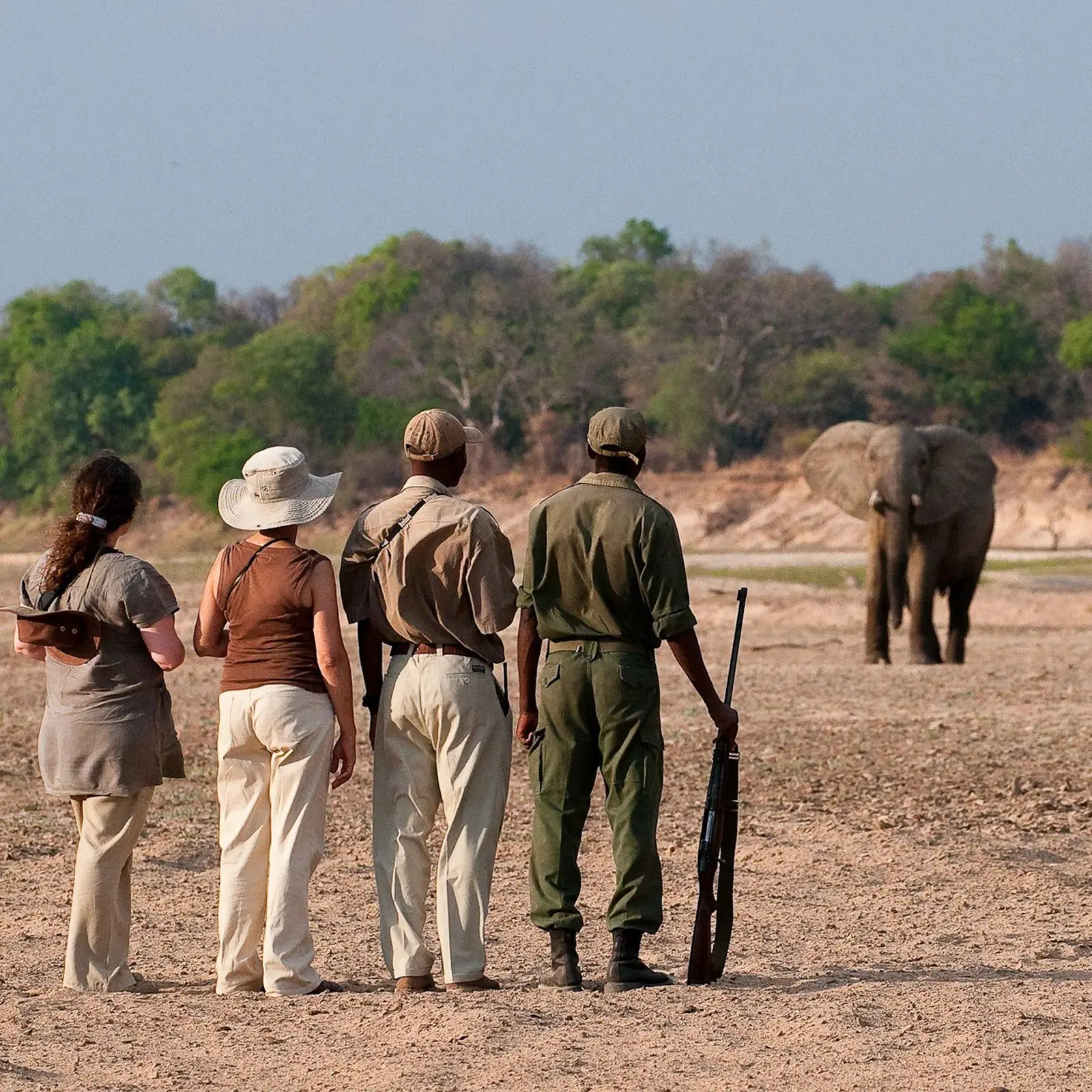
Today every walk inside the park goes out with a licensed guide and an armed scout from the Department of National Parks and Wildlife. Groups are small, eight walkers at most and usually fewer. Most walks cover two to three miles in the cool of the morning and end well before dark. The minimum walking age is 12. Walking is always optional: game drives run at every camp, and you can walk every morning, drive instead, or mix the two. Read more in The Guides of the Luangwa.
Wildlife
South Luangwa is often called the valley of the leopard, and it earns the name: leopards are seen by day and, on night drives, by spotlight. Lion prides, African painted dogs, big herds of buffalo and elephants are all here, along with some of the densest hippo populations in Africa. Thornicroft’s giraffe is found only in this valley, and Crawshay’s zebra and fourteen kinds of antelope share the floodplains. More than 400 bird species have been recorded, and from September the carmine bee-eaters nest in the riverbanks. See The Valley and its Seasons.
Nothing is guaranteed in the wild, but sightings across the valley are consistently strong, and the guides record them every day.
When to go
May to October is the dry season, with peak game viewing from June. The bush thins, water shrinks back to the river and lagoons, and the animals gather there. Mornings in June and July are cold; by October the days are hot. All ten camps are open.
May and November are the shoulders. The bushcamps open as the roads dry, from mid-April to early June depending on the camp, and close around November 1. In November elephants walk through the reception at Mfuwe Lodge to reach the wild mango trees.
December to April is the green, or emerald, season. The rains bring newborn animals, migrant birds, dramatic skies and a valley almost to yourself. The gateway lodges stay open all year. Read The Emerald Season.
Night drives
Many African parks forbid driving after dark. South Luangwa allows it, and the afternoon drive usually runs on into the night with a spotter and a spotlight. This is when leopards hunt, hyenas move, and the small cats, along with genets, civets and porcupines, come out. For many guests it is the highlight of the day.
Where to stay
Stay inside the park if you can: you start every activity in game country instead of driving in from outside. The Collection’s ten camps run along sixty miles of the Luangwa as one circuit:
- The gateway. Mfuwe Lodge and The Villas at KuKaya, inside the park and about 40 minutes from Mfuwe Airport.
- The bushcamps. Six small seasonal camps in a 140,000-acre exclusive area in the south, run by The Bushcamp Company.
- The wild north. Lion Camp, on a permanent lagoon on the Lion Plain.
- Where it began. Chibembe Wildlife Reserve, a private reserve opened to one party at a time, by arrangement.
Moving between camps is part of the safari: transfers are game drives, not flights. See all ten camps and the circuit.
Getting there
Fly into Lusaka; there are no direct flights from the US or UK, but good connections run through Dubai, Doha, Addis Ababa, Nairobi, Istanbul and Johannesburg. Proflight Zambia flies twice daily from Lusaka to Mfuwe in about an hour and twenty minutes, and you are met at the airport. Soft-sided bags of up to 23 kg (50 lb) are allowed on scheduled flights to Mfuwe. Full details are on Getting There.
Families, couples and first-timers
The valley suits almost everyone. First-timers get walks, day drives and night drives in one stay, with a scheduled flight to the door. Families can take the private Family House at Mfuwe Lodge, a two-bedroom villa at KuKaya or the family suite at Chindeni; children under 12 drive rather than walk. Couples and friends can book a whole bushcamp, or Chibembe, to themselves. See Families & Private Use.
What to pack
Pack light and in muted bush colors: khaki, olive, tan and brown, which matter on foot. Bring a warm layer for early mornings and night drives, especially in June and July; a wide-brimmed hat, sunglasses and sunscreen; comfortable closed walking shoes; and binoculars, one pair each if you can. The full list is in What to Pack for South Luangwa.
Conservation
The Luangwa stays wild because people work to keep it that way: scout patrols, community programs, schools and boreholes, run by many organizations across the valley. Every stay with the Collection contributes. See The Impact and Stronger Communities, More Wildlife.
Ready to plan the journey?
Planning & FAQ