
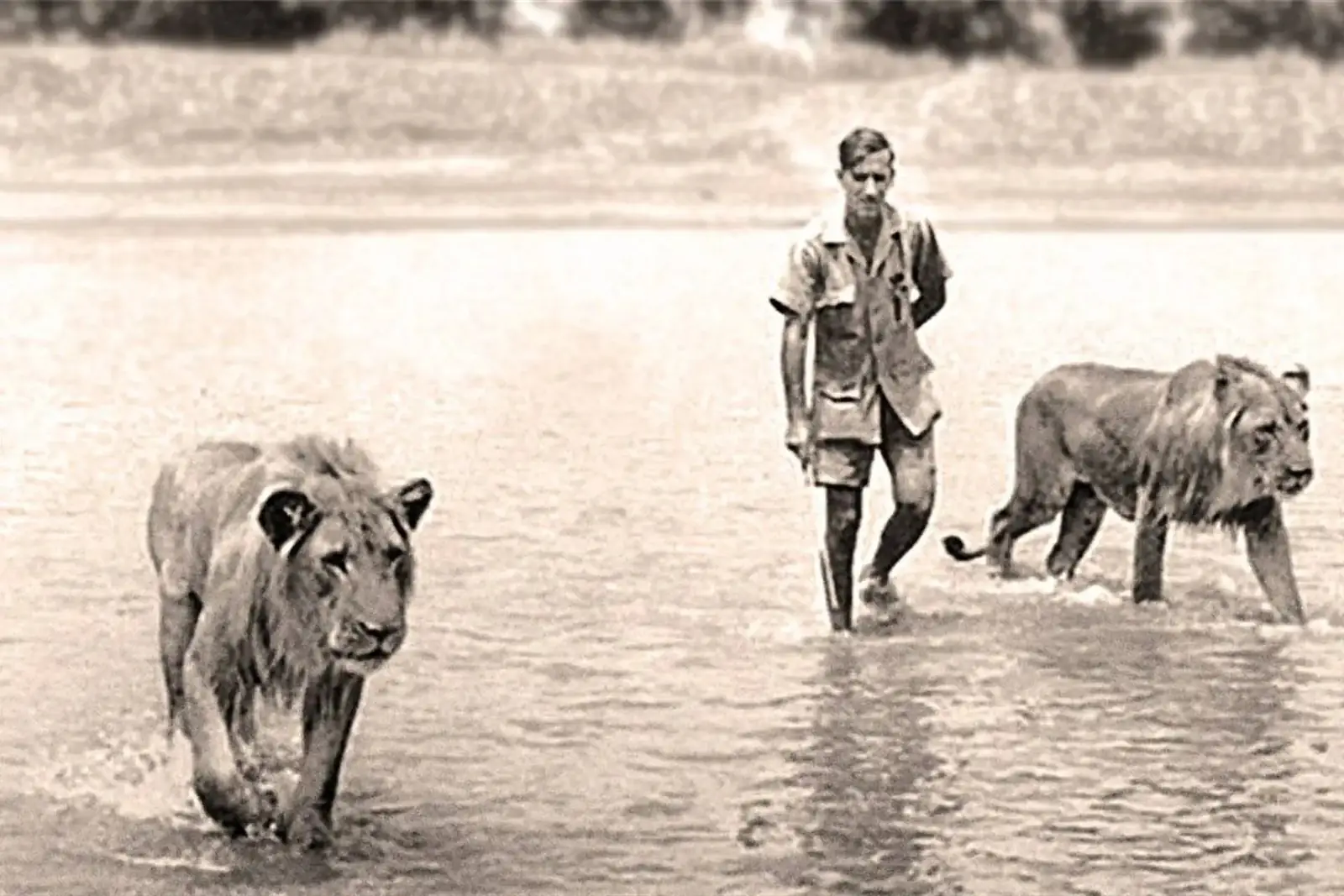
The record · Luangwa Valley, Zambia
Norman Carr and the birth of the walking safari
The game ranger who first took paying guests on foot through big-game country. His walkers crossed the Luangwa at Chibembe and walked to Lion Camp, and the government wrote it down.
- Born
- July 19, 1912
- Died
- April 1, 1997, ashes scattered on the Luangwa
- Known for
- First public game-viewing camp in Northern Rhodesia (1950); Wilderness Trails, the walking safari as tourism (1961)
- Where it began
- The Chibembe crossing on the Luangwa River and Lion Camp, in what is now South Luangwa National Park
In short
Where was the walking safari born?
In Zambia's Luangwa Valley, in 1961. That year Lion Camp was leased to Luangwa Safaris, a company of which Norman Carr was a director, and the government record states that from this camp Carr pioneered Wilderness Trails "as a type of tourism."
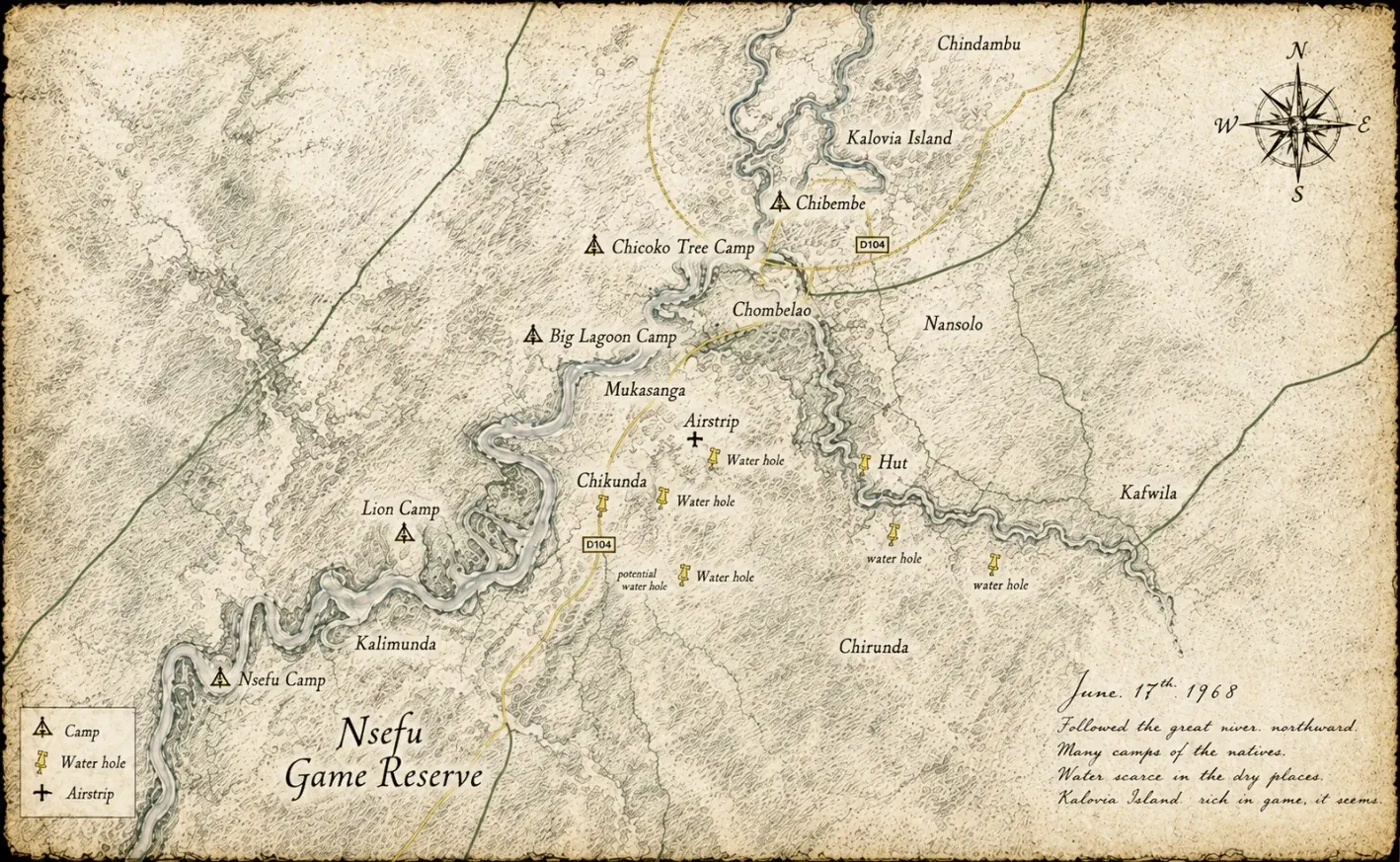
The road into the valley came from Fort Jameson (now Chipata) and ended at the Chibembe crossing on the east bank, where the government had built a pontoon in 1955. Carr's guests arrived there, crossed the river and walked with him to Lion Camp. The model he set, a small group with a guide and an armed scout, is the one most walking safaris still follow.
Legacy
The man who changed what a safari is
Norman Carr is widely credited with two of the ideas that define the safari today: that wildlife survives when the people who live beside it share in its value, and that the truest way to know wild Africa is on foot. He put both to work in the Luangwa Valley, at Nsefu in 1950 and on the Chibembe–Lion Camp circuit in 1961. Today both are practiced across Africa.
"Quite possibly the most influential conservationist of the 20th century."
"The only hope for survival of wildlife outside national parks now is by community involvement … However, Norman Carr was thinking along these lines thirty years earlier."
"Widely regarded as the pioneer of walking safaris as part of non-consumptive tourism … in Africa."
The Safari Heritage Collection holds the ground where his walking safari began, and carries both ideas forward: walking at every one of its camps, and conservation and community work across the valley. See how the walking safari spread from Chibembe →
The man
A life in the Luangwa
Norman Carr spent most of his working life in the valley. He saw, earlier than almost anyone, that a living animal could be worth more to the people beside it than a dead one, and that the best way to understand wild Africa was on foot.
- Born on July 19.
- Comes to the Luangwa Valley as an elephant control officer.
- Serves with the King's African Rifles in the Second World War, then returns as one of the colony's first game rangers.
- Senior Chief Nsefu sets aside his land for wildlife, and Carr builds the first camp in Northern Rhodesia where visitors pay to watch game rather than shoot it. The revenue goes to the chief and his community.
- The government builds a seasonal pontoon across the Luangwa at Chibembe, and Lion Camp with viewing tracks on the west bank.
- Leaves government service and starts Luangwa Safaris with his friend Peter Hankin. The road from Fort Jameson ends at the Chibembe crossing, where Hankin has built a camp. Tough, pp. 101, 105
- Lion Camp is leased to Luangwa Safaris. From it Carr pioneers Wilderness Trails, guided walks for paying guests, between the Chibembe crossing and Lion Camp.
- Publishes Return to the Wild, the story of raising the lions Big Boy and Little Boy and returning them to the bush.
- Luangwa Safaris opens Chibembe camp, which becomes the hub of the walking circuit. Astle, p. ix
- Works up and down the valley: Mfuwe Camp from 1962, Mfuwe Lodge from 1966, and based at Chibembe from the early 1970s. A generation of Luangwa guides learns the craft on his walks. Tough, p. 95
- South Luangwa Game Reserve becomes South Luangwa National Park. Tough, p. 102
- A new airport built to take larger flights opens at Masumba, outside the park, and is named Mfuwe. A permanent bridge over the Luangwa at Mfuwe opens at the same time. The valley's front door moves from the Chibembe pontoon to Mfuwe. Tough, p. 102
- Sells Chibembe Lodge and gives two years to the Save the Rhino Trust campaign. Phil Berry moves to Chinzombo, near Mfuwe, the camp Carr had used as his rainy-season base. Tough; Carr (2013)
- Approaching seventy, he turns to guiding guests by vehicle from Mfuwe, living with his colleagues and family in a camp of bush materials at Kapani, three miles from Mfuwe. Tough, pp. 120–121
- Opens Kapani Lodge near the Mfuwe Bridge, with President Kenneth Kaunda performing the opening. Kapani and its bush camps, among them Nsolo, become Norman Carr Safaris. Tough, p. 123; Legends & Legacies
- Nearing eighty, steps back from day-to-day management, though he keeps guiding and writing. Tough, p. 123
- Dies on April 1, having guided and written almost to the end.
Timeline drawn from Carr's biography, Alistair Tough's Norman Carr: Pioneer of Community-based Wildlife Conservation (Gadsden Publishers, 2024), and from W. L. Astle's valley history (1999) for the 1955 and 1961 entries. Page references are shown where the biography is the direct source.
The record
Two entries, six years apart
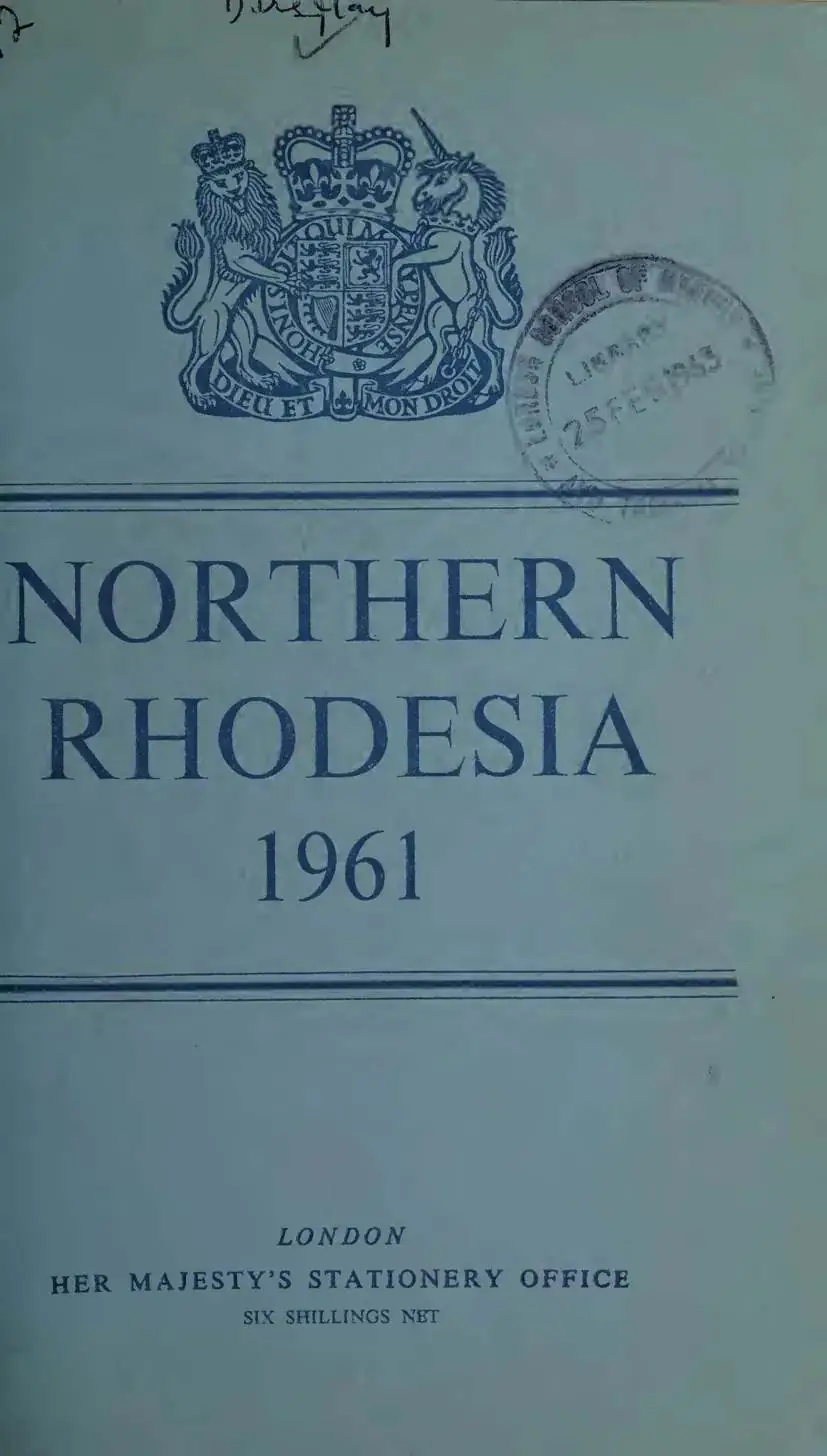
Most claims about where the walking safari began are repeated, not sourced. This one rests on two short entries in the valley's official history, compiled year by year from the government record by W. L. Astle, Zambia's former Chief Wildlife Research Officer.
"A seasonal pontoon crossing built across the Luangwa at Chibembe to permit access from the east. Lion Camp and viewing tracks built." Astle (1999), entry for 1955

"Lion camp leased to 'Luangwa Safaris', a director of this company was N.J. Carr; from this camp Wilderness Trails were pioneered by Carr as a type of tourism." Astle (1999), entry for 1961
Guests still came in from the east, to the Chibembe crossing where the road stopped, and set off on foot from there. The circuit ran between the two banks along about nine miles of river.
What the record does, and does not, claim
People walked this country long before 1961: hunters on foot for centuries and, by some accounts, visitors at Nsefu in the 1950s. In South Africa, Ian Player and Magqubu Ntombela led the first official wilderness trail in iMfolozi in March 1959, the start of an educational movement that shaped a generation, and their work deserves its own place in this history.
The 1961 Luangwa record describes something different: walking among big game, offered to paying visitors, as tourism. That is the first it credits to Carr.
Act I · 1961–1979
Wilderness Trails: Carr's first walking safari business
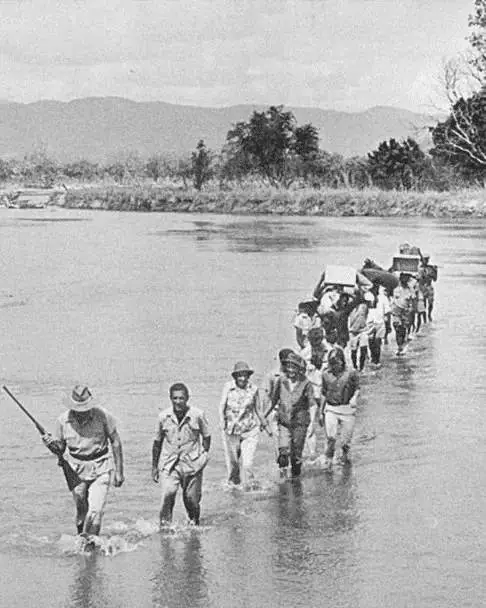
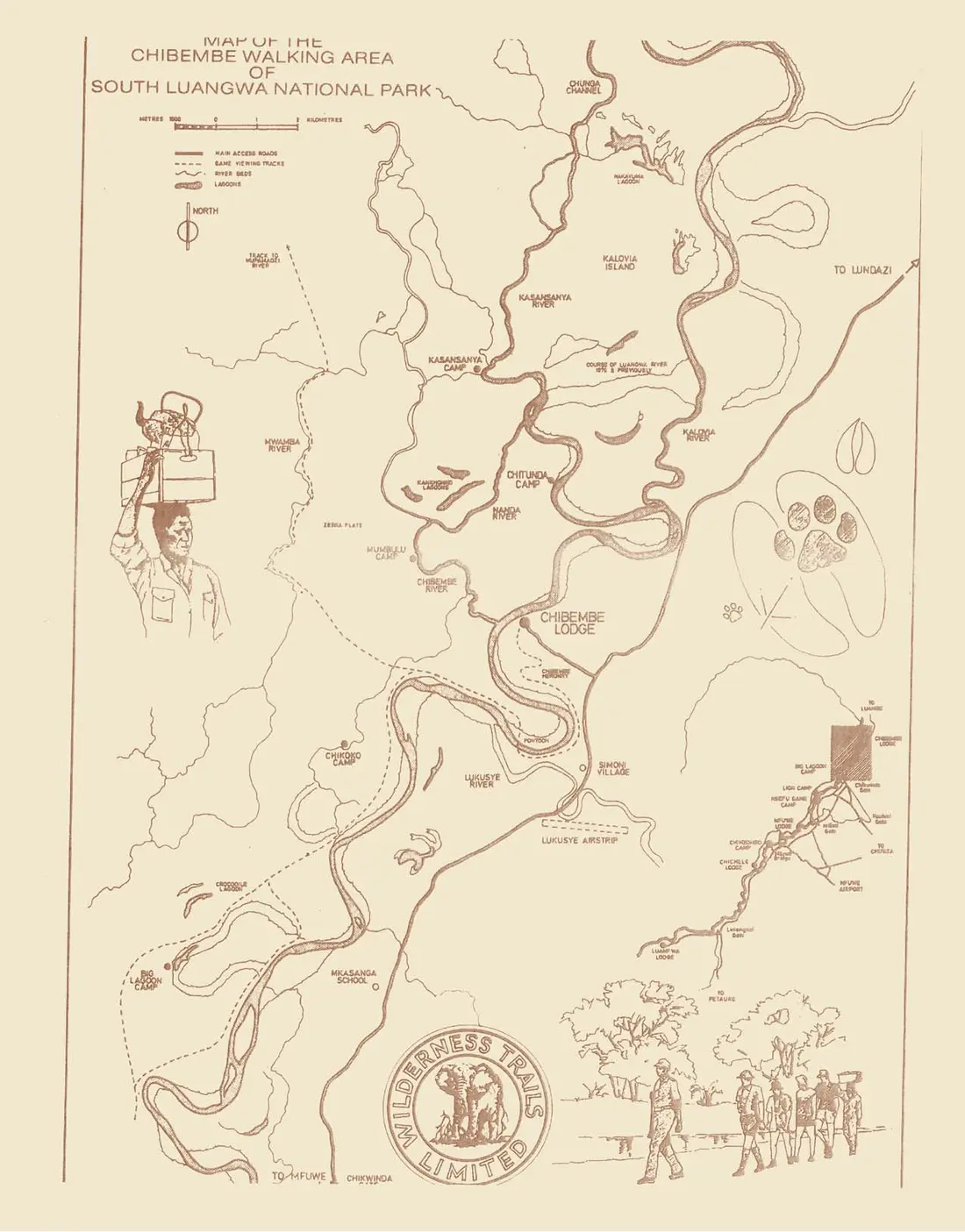
Carr's original walking safari business was Wilderness Trails, run through Luangwa Safaris, the company he formed with Peter Hankin. From 1961 his guests walked from the Chibembe crossing to Lion Camp, sleeping in simple bush camps along the way. This is the business the 1961 government record describes, and it ran for almost twenty years, centered on Chibembe from 1968, until Carr sold Chibembe Lodge in 1979; under new owners, Wilderness Trails kept walking from Chibembe into the 1990s. Astle; Tough; Legends & Legacies
How the walks worked
A Wilderness Trail was a small party on foot: paying guests, Carr or one of his guides, and an armed game scout in front. Porters carried what the camp needed. Guests crossed the Luangwa on foot or by pontoon and walked through open woodland and along the river, where elephant, buffalo and lion were common.
After 1968 the circuit centered on Chibembe Safari Camp on the east bank. Many of the guides who later shaped walking in the valley learned there, among them Phil Berry, who joined Carr in 1976 (Tough, p. 111). See how the lines run in the walking safari family tree.
Act II · 1986 onward
Norman Carr Safaris: his second safari company
Norman Carr Safaris was not Carr's first walking safari business. It was the second act of his career, built from Kapani Lodge near Mfuwe, which opened in 1986, a quarter of a century after Wilderness Trails began at Chibembe and Lion Camp. By then Carr was in his seventies, the valley's gateway had moved south to Mfuwe, and the original walking circuit was behind him. Tough, pp. 120–123
From Chibembe to Mfuwe
For Carr's first twenty years in tourism, the way into the valley was the road from Fort Jameson and the pontoon at Chibembe. That changed in the mid-1970s. In 1975 the government opened a new airport outside the park, named Mfuwe, and a permanent bridge across the Luangwa at Mfuwe at the same time. Visitors could now fly in and drive straight into the park. Tough, p. 102
Carr had already used Chinzombo, on the river near Mfuwe, as his base in the rainy season, when the Chibembe country became impassable. In 1979 he sold Chibembe Lodge and gave two years to the Save the Rhino Trust campaign. Phil Berry moved to Chinzombo, and Carr gave the camp to the Trust as a base and a source of income for its work. Norman Carr Safaris later bought it back. Tough; Carr (2013)
From 1981, approaching seventy and past the days of long walking safaris, Carr guided guests by vehicle from Mfuwe. He lived with his colleagues and his daughter's family, the Guhrses, in a camp of bush materials at Kapani, three miles from Mfuwe. The biographer notes that the journey "over a tar road and a bridge was easy by comparison with the dirt roads and pontoon crossings of a previous generation." Tough, pp. 120–121
In 1986 he opened Kapani Lodge, close to the Mfuwe Bridge, with President Kenneth Kaunda performing the opening. It was a success, and Carr added bush camps such as Nsolo, named for the greater honeyguide. Kapani and its camps became Norman Carr Safaris, the company that carries his name. Kapani was his home for the rest of his life. Tough, p. 123; Legends & Legacies
Remembered
"The originator, the acknowledged 'father', of the African Walking Safari."
"Years ago, when I started the Walking Safaris, I realised that this may be one of the few places on earth where people can escape modern life completely. Where for a few days they can pretend they're Victorian explorers."
Carr "set up pioneering walking and photographic tours in the Luangwa Valley (Chibembi lodge)."
In his words
The books
Carr wrote about the valley for more than thirty years. His books are still the best introduction to the Luangwa and to the thinking behind the walking safari.
- Return to the Wild1962
Raising two orphaned lions, Big Boy and Little Boy, and returning them to the bush.
- The White Impala1969
His memoir of the early walking safaris and the thinking behind them.
- Valley of the Elephants1979
His account of the Luangwa, closing with a walking safari.
- A Guide to the Wildlife of the Luangwa Valley1987
His guide to the valley's wildlife.
- Kakuli1996
His last book, written near the end of his life.
The ground today
Both ends of the 1961 circuit are still walked
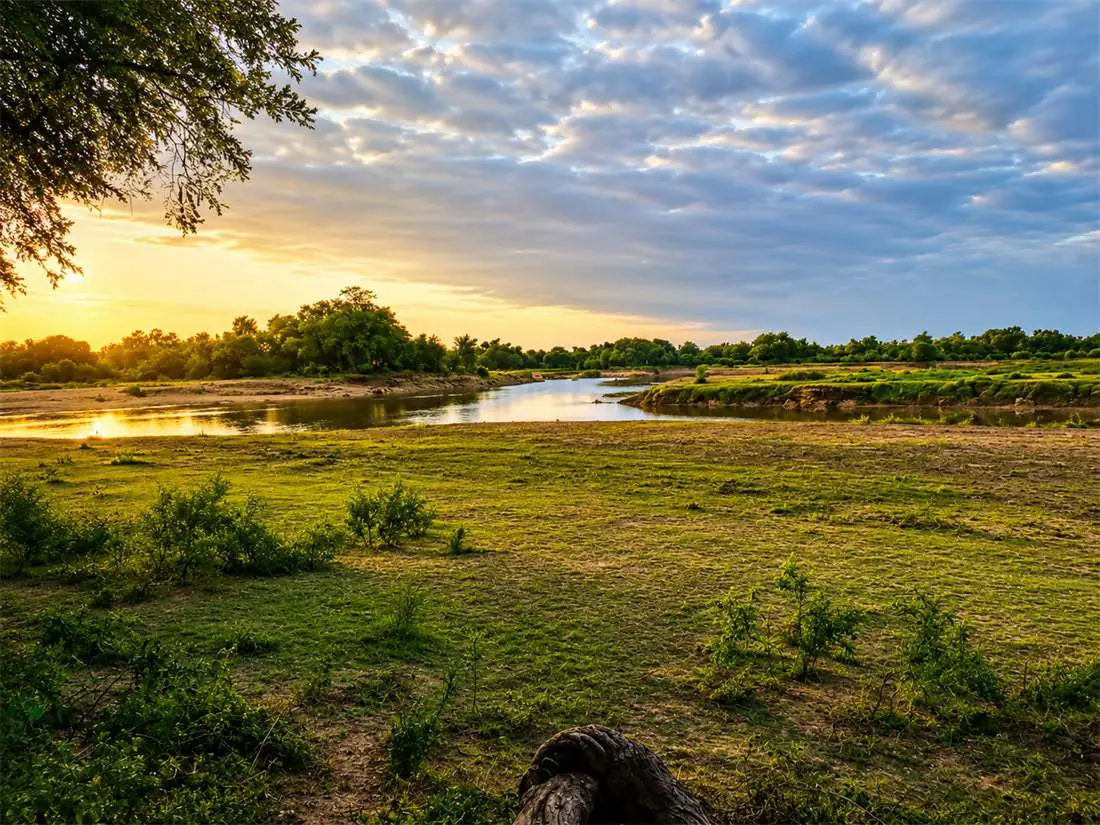
The Chibembe confluence on the east bank is now Chibembe Wildlife Reserve, a private reserve outside the national park. Lion Camp still stands on its original 1955 site on the west bank, in the north of South Luangwa National Park. Guests at both can set out on foot across the same country Carr's first walkers crossed.
South Luangwa remains one of Africa's great walking destinations, with walks led by licensed guides and armed scouts at camps across the park.
Questions
Norman Carr, answered
Who was Norman Carr?
Norman Carr (1912–1997) was a game ranger and conservationist who spent most of his working life in Zambia's Luangwa Valley. He opened the first public game-viewing camp in Northern Rhodesia in 1950 and pioneered the walking safari as a form of tourism in 1961.
Where was the first walking safari?
The government record places it in the Luangwa Valley. In 1961 Lion Camp was leased to Luangwa Safaris, of which Carr was a director, and from that camp he pioneered Wilderness Trails as a type of tourism. Guests arrived at the Chibembe crossing on the east bank and walked with him to Lion Camp.
What were Wilderness Trails?
The name of Carr's guided walking safaris, begun in 1961: small groups of paying guests on foot in big-game country with a guide and an armed scout, between the Chibembe crossing and Lion Camp.
Did Norman Carr invent the walking safari?
People walked in wild Africa long before 1961, and Ian Player and Magqubu Ntombela led the first official wilderness trail in South Africa's iMfolozi in 1959. What the 1961 Luangwa record describes is walking among big game offered to paying visitors as tourism, and it credits Carr with pioneering it.
What was Kapani?
Carr's last home and lodge, three miles from Mfuwe near the bridge into the park. He lived there in a simple bush camp from the early 1980s, opened Kapani Lodge in 1986, and built Norman Carr Safaris around it.
Why did Carr move from Chibembe to Mfuwe?
In 1975 the government opened a new airport named Mfuwe and a permanent bridge across the Luangwa at Mfuwe. Visitors no longer came by the old road and the Chibembe pontoon, and after selling Chibembe Lodge in 1979 Carr based himself near the new gateway.
Was Norman Carr Safaris Carr's first safari company?
No. Carr's first walking safari business was Wilderness Trails, run through Luangwa Safaris from 1961, walking guests from the Chibembe crossing to Lion Camp with bush camp nights between. Norman Carr Safaris was his second act, built from Kapani Lodge near Mfuwe, which opened in 1986.
Who was Peter Hankin?
Carr's friend and partner in Luangwa Safaris, formed around 1960–61. Hankin had built a camp at the Chibembe crossing, the point where the road from Fort Jameson reached the river and where Carr's walkers set out.
When did Norman Carr die?
On April 1, 1997. His ashes were scattered on the Luangwa River.
Sources
The record behind this page
- W. L. Astle, A History of Wildlife Conservation and Management in the Mid-Luangwa Valley, Zambia (Bristol: British Empire and Commonwealth Museum, 1999), xviii + 149 pp., ISBN 0-9530175-1-0. Chronology, pp. vii–ix: entries for 1955, 1961 and 1968; Phil Berry and Chinzombo, p. 82.
- Northern Rhodesia, Annual Reports of the Department of Game and Tsetse Control, 1949–1960, corroborating the 1950 Nsefu camp, the 1950s development program and Lion Camp as the Game Officer's station in 1959.
- Alistair Tough, Norman Carr: Pioneer of Community-based Wildlife Conservation (Lusaka: Gadsden Publishers, 2024), 166 pp., ISBN 978-9982-24-143-4. The biography of Carr, by a British historian and archivist. Project MUSE · African Books Collective.
- B. Dalal-Clayton and B. Child, Lessons from Luangwa (London: IIED, 2003).
- Vic Guhrs, The Trouble with Africa: Stories from a Safari Camp, the memoir of Carr's son-in-law, who lived and worked with him at Chibembe.
- Norman Carr, Return to the Wild (Collins, 1962); The White Impala (Collins, 1969); Valley of the Elephants: The Story of the Luangwa Valley and its Wildlife (Collins, 1979); A Guide to the Wildlife of the Luangwa Valley (1987); Kakuli (1996).
- Christina Carr, "New life for an old camp", Zambia Tourism, September 2, 2013, on Chinzombo.
- Legends & Legacies of Africa, "Norman Carr".
- Wikipedia, "Norman Carr".
Cite this page
Archive photographs are from the Norman Carr archive, held by The Safari Heritage Collection, which today operates Chibembe Wildlife Reserve and Lion Camp. Writers and researchers may request permission to reproduce them with credit.