Most claims about where the walking safari began are repeated, not sourced. This one rests on two short entries in the government record, one from 1955 and one from 1961. Here they are.

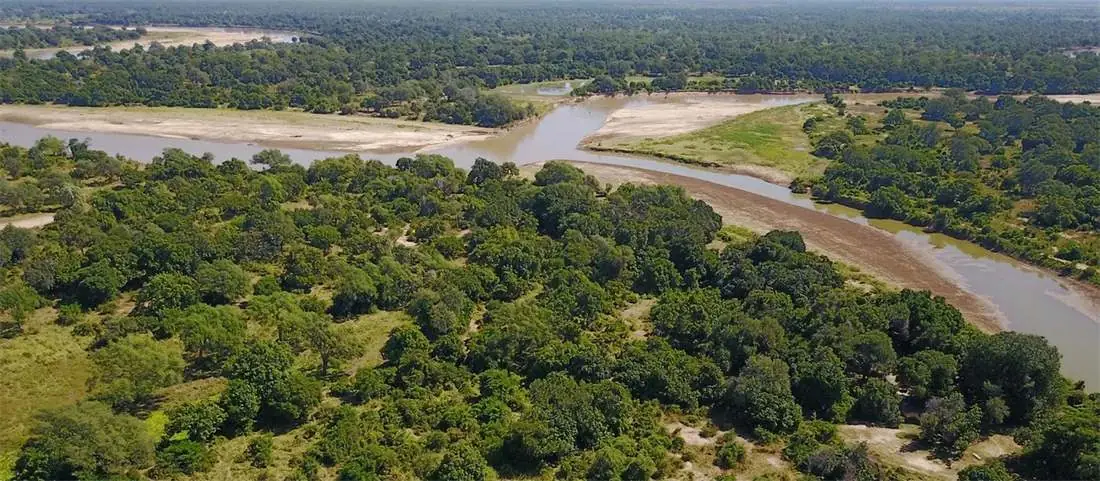
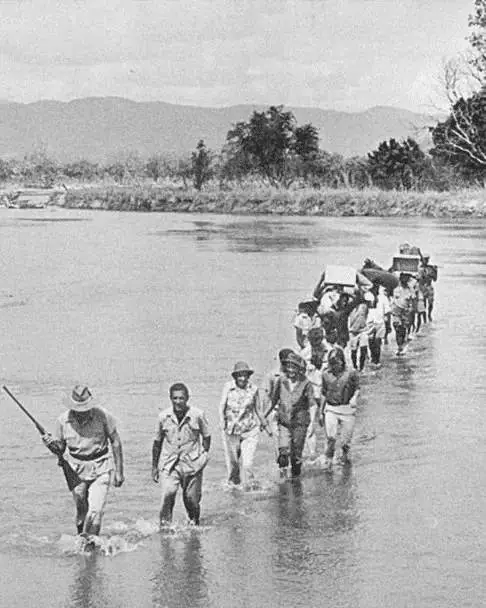
1955. “A seasonal pontoon crossing built across the Luangwa at Chibembe to permit access from the east. Lion Camp and viewing tracks built.” The road into the valley came from Fort Jameson in the east, so visitors arrived on the east bank at Chibembe. The pontoon carried them across to the west bank, to Lion Camp and tracks built for viewing game.
“Lion camp leased to ‘Luangwa Safaris’, a director of this company was N.J. Carr; from this camp Wilderness Trails were pioneered by Carr as a type of tourism.”
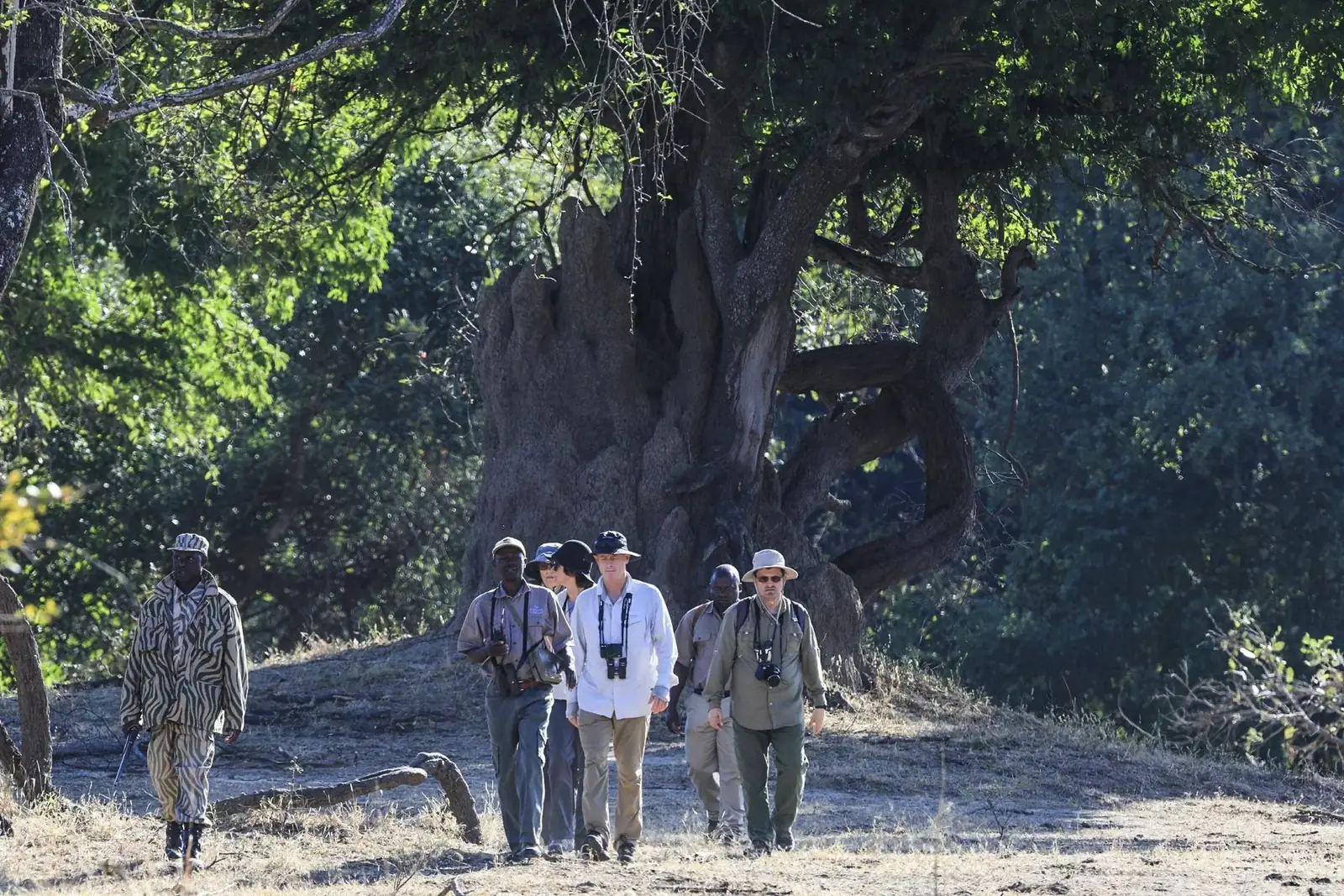
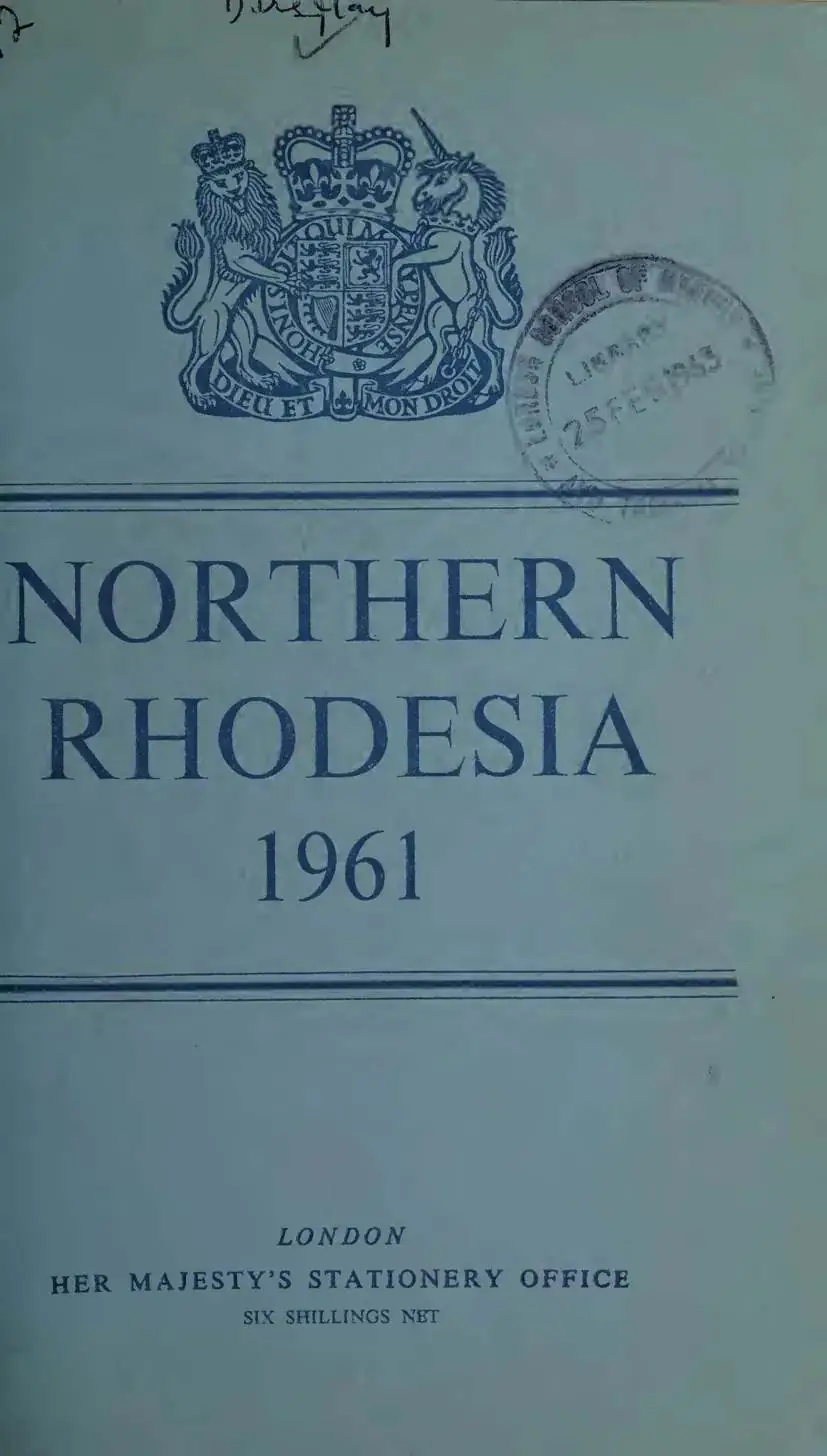
W. L. Astle, A History of the mid-Luangwa Valley (1999) · shown with a Northern Rhodesia government report (HMSO)1961. Six years later Norman Carr’s company leased Lion Camp, and from it began walking paying guests through big-game country. The record’s words are plain: Carr pioneered walking “as a type of tourism.” Guests still came in from the east, to the Chibembe crossing where the road stopped and where Carr’s partner Peter Hankin had built a camp, and set off on foot from there. The Wilderness Trails circuit ran between the two banks, along about nine miles of river.
Two entries, six years apart. Together they are the birth certificate of the walking safari.
Who wrote it down
Both entries survive in A History of Wildlife Conservation and Management in the mid-Luangwa Valley, Zambia (1999) by W. L. Astle, Zambia’s former Chief Wildlife Research Officer, who compiled the valley’s history year by year from the official record. The Northern Rhodesia annual reports of the 1950s confirm the wider story around them: the first photographic camp at Nsefu in 1950, the pontoon and roads of the mid-1950s, and Lion Camp as the Game Officer’s station in 1959. That fuller account, with the original pages, is in The Government Record.
What came after
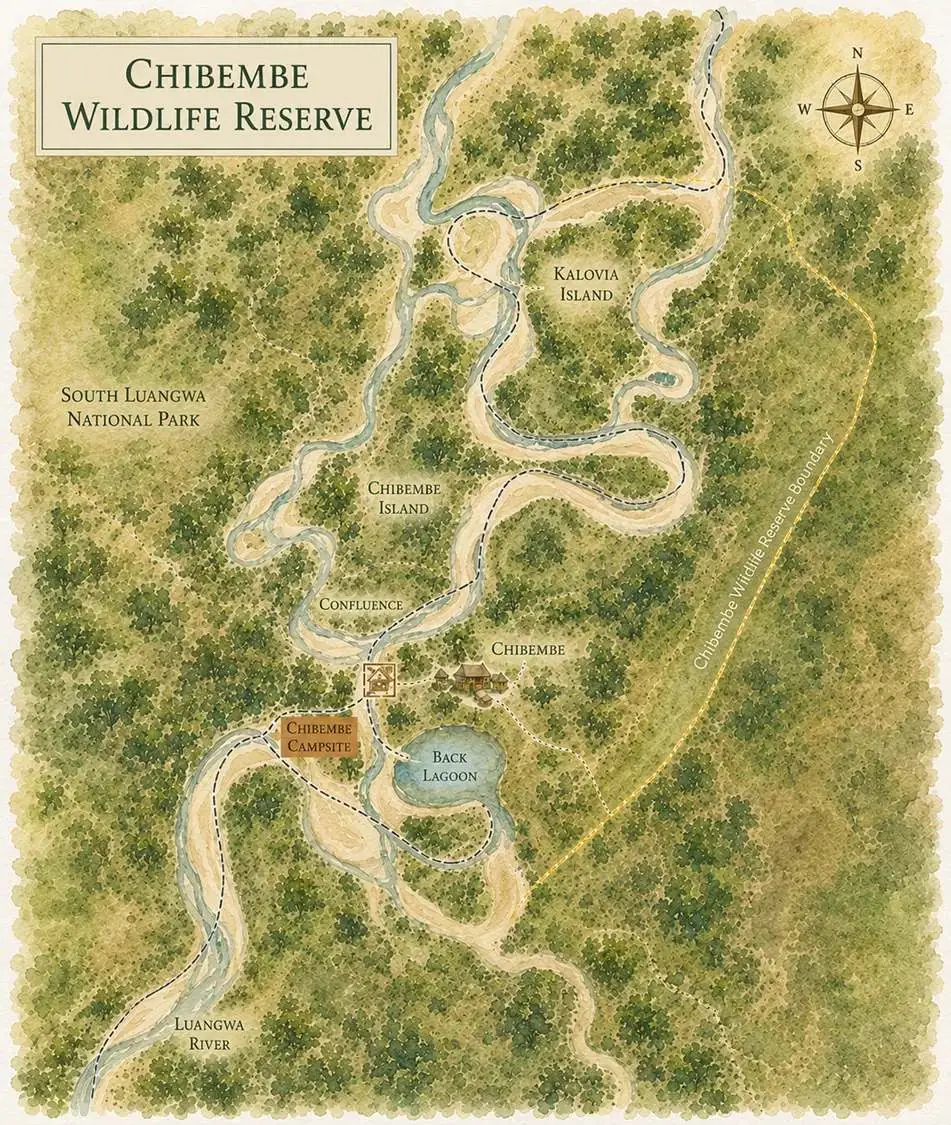
In 1968 Carr built a new Chibembe Safari Camp on this ground, an area that had always been known as Chibembe, and it became the hub of the walking circuit. A generation of Luangwa guides learned the craft on this ground, among them Phil Berry, who later founded Kuyenda. In time the circuit’s camps were sold separately, and Chibembe spent years as a self-drive campsite.
Today the Chibembe land is a reserve again, held by the same family that looks after Lion Camp, and both ends of the 1961 circuit are walked again as one.
Walk the ground the record describes.
Discover ChibembeSOURCES: (1) W. L. Astle, A History of Wildlife Conservation and Management in the mid-Luangwa Valley, Zambia (British Empire & Commonwealth Museum, 1999), entries for 1955 and 1961; Astle was Zambia’s former Chief Wildlife Research Officer. (2) Northern Rhodesia Annual Reports, Department of Game and Tsetse Control, 1949–1960 (archive refs b31409830 through b31409921), corroborating the 1950s development program and the 1959 Lion Camp Game Officer’s station. (3) Alistair Tough, Norman Carr: Pioneer of Community-based Wildlife Conservation (2024), the biography, which records Carr’s partnership with Peter Hankin, Luangwa Safaris’ concession on the east bank, his years at Mfuwe and Chibembe, and the sale of Chibembe Lodge in 1979. (4) Norman Carr, Return to the Wild (Collins, 1962) and The White Impala (Collins, 1969), his own accounts of the early walking safaris. (5) B. Dalal-Clayton and B. Child, Lessons from Luangwa (IIED, 2003), independent corroboration that Carr “set up pioneering walking and photographic tours in the Luangwa Valley.” (6) Vic Guhrs, The Trouble with Africa: Stories from a Safari Camp, the memoir of Carr’s son-in-law, which describes Chibembe Camp, its walking trails and Carr’s own account of starting the walking safaris. The source documents are on file and available to any journalist, researcher or institution that wishes to verify them.