In 1984, a thirteen-year-old boy from Houston stood on the bank of the Luangwa River for the first time. Elephants came out of the morning mist. Hippos surfaced without hurry. Corby Robertson went home, but the river never quite let him go. Forty years later, he and his wife Brooke have spent their working lives answering a question that river put to him: how do you keep a place like this wild?
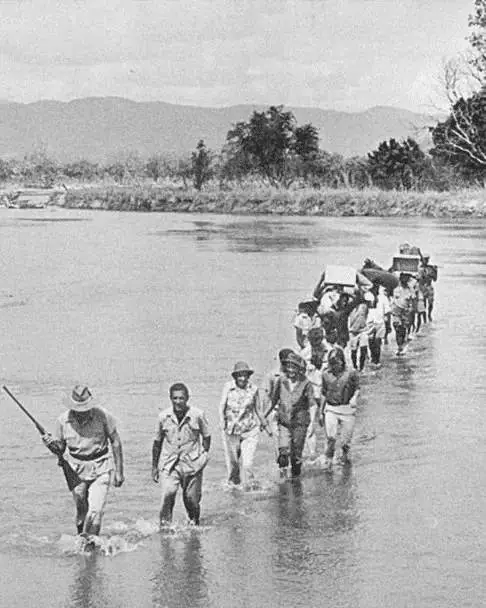
The answer they came to is the one Norman Carr, the man who first walked guests through this valley, had reached long before them.
“You must make the wildlife mean something to the community — give it a value they can see, feel, and benefit from. Only then will they want it to prosper.”Norman Carr
Stronger communities, more wildlife. It is the simplest idea in conservation, and in the Luangwa Valley it may be the most urgent.
In the Luangwa, that idea is led by the chiefs and chieftainesses, community resource boards and village leaders of the chiefdoms beside the park. They decide what their communities need. The camps, the foundations and the guests who visit help them get it.
One of Africa’s last great wild places
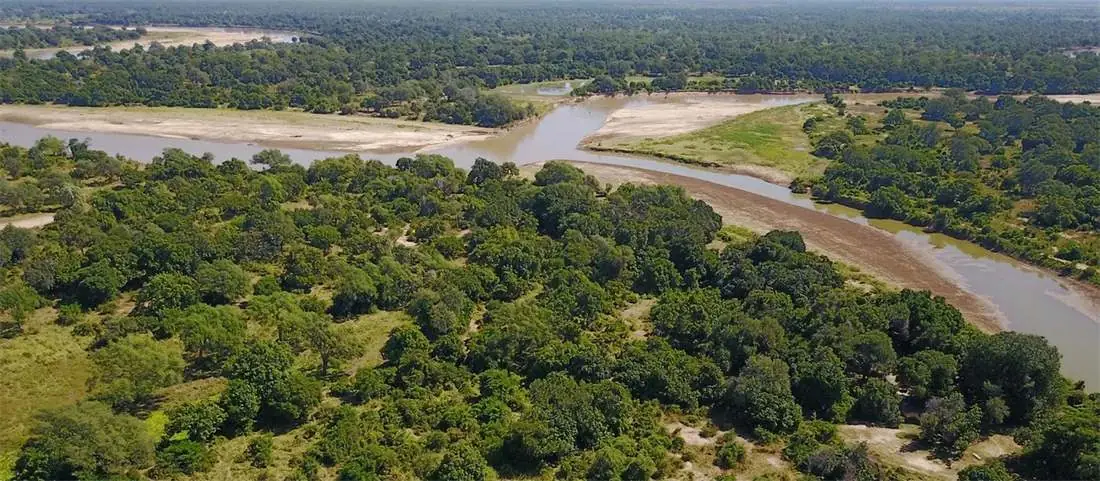
The Luangwa is one of the few places left in Africa that still works the way it always has. The river runs some 500 miles from the Mafinga Hills to the Zambezi without a single dam, flooding and reshaping its valley every year. South Luangwa National Park alone covers about 3,500 square miles, close to the size of Yellowstone, and the game management areas around it add thousands of square miles more of largely unfenced country.
It holds some of the highest leopard densities recorded in southern Africa, one of the continent’s most important painted dog populations and, with the Mid-Zambezi, one of Zambia’s most important lion populations. Thornicroft’s giraffe lives here and nowhere else on earth. In North Luangwa, black rhinos, reintroduced after Zambia lost them entirely, have more than doubled in number without a single one poached.
And yet the Luangwa has never drawn the attention, or the conservation investment, that flows to better-known landscapes in Kenya, Tanzania, Botswana or South Africa. Many travelers have never heard of it. That obscurity has kept it wild. It has also left it underfunded at exactly the moment it is under the most pressure.
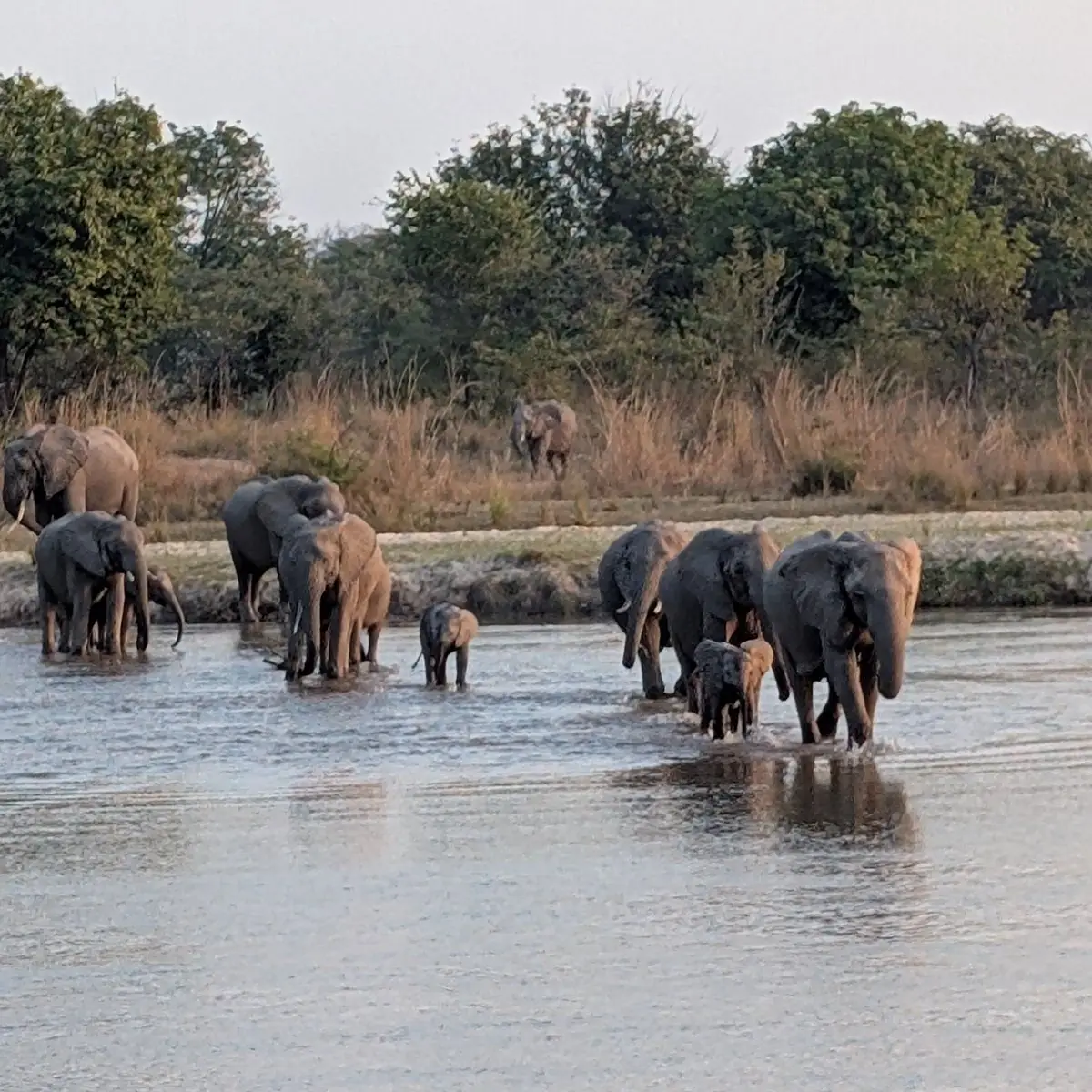
Why it matters now
Zambia is a peaceful, welcoming country, but life in its countryside is hard. Most rural families farm for a living and formal jobs are scarce. In 2024 the country’s worst drought in more than forty years halved the maize harvest, and the eastern regions, home to the Luangwa Valley, were among the worst affected.
When a harvest fails on the edge of a national park, the pressure falls on the wildlife. A snare line becomes a way to feed a family. A new field is cut from the bush. Elephants raiding crops become a threat to a year’s food, and sometimes to life. No fence and no patrol changes that on its own. Clean water, food, schools, health care and work do.
In a place like this, wildlife is one of the few economies that actually reaches the villages. The World Bank estimates that nature-based tourism around South Luangwa adds about $10.7 million a year to the local economy, and that wage income from it reaches nearly a quarter of nearby households. Protect the wildlife and you protect those livelihoods. Strengthen the communities and you protect the wildlife.
What a safari makes possible
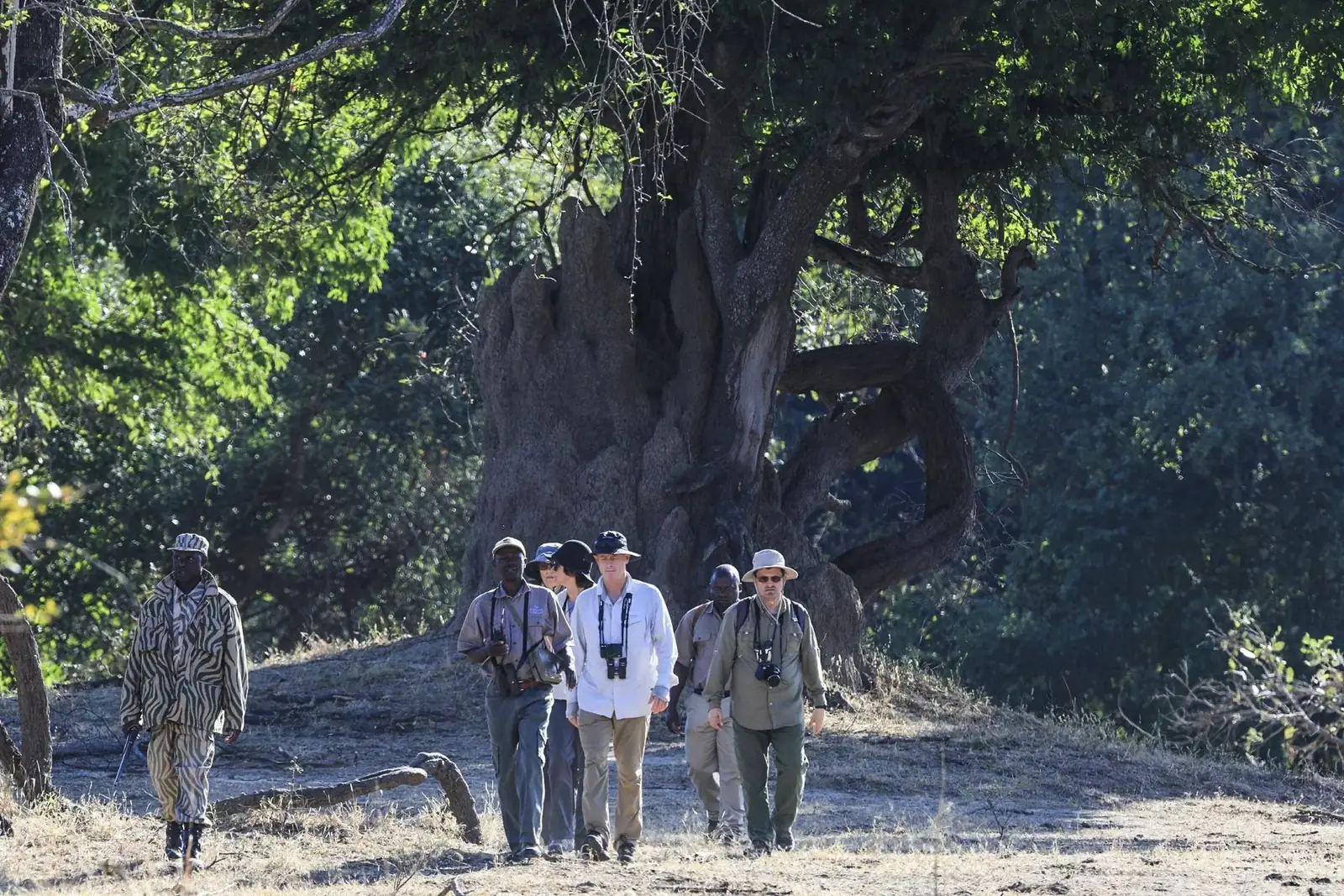
This is where our guests come in, and it is why we are so grateful to them. Every night at a Collection camp pays park and concession fees that fund the national park and its scouts. It employs people from the neighboring villages as guides, chefs, builders, mechanics and managers. And it supports two charities that turn the camps’ presence in the valley into change on the ground.
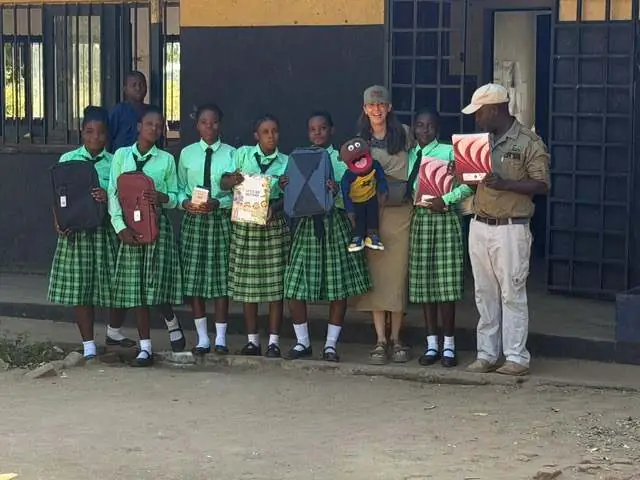
Charity Begins at Home is The Bushcamp Company’s Zambian charity. Since 1999, together with the company’s guests, it has raised more than $7 million for the communities around the park: clean water, a daily meal that keeps children in school, classrooms and dormitories, and scholarships, especially for girls.
$7M+
Raised through The Bushcamp Company since 1999
~300
Boreholes drilled for clean water
4,000+
Children fed every school day
350+
Students on scholarship
34
Classrooms built
Many of those guests came for the leopards and left as supporters. They have funded wells, sponsored students and come back years later to see what their gifts helped build. Much of this progress belongs to them and to the communities who lead it.
Farther up the valley
Most of the valley’s tourism, and with it most of the community support and programs, has grown up around Mfuwe, the gateway to South Luangwa. That work matters, and it continues. But the villages beyond Mfuwe, farther up the valley and away from the busy gate, have often been left with far less.
That is where Brooke and Corby Robertson have chosen to work, alongside the chiefdoms there. They co-founded the Zambia Wildlife & Community Foundation (ZWCF) to take the same model beyond the gateway, renaming and broadening Friends of Charity Begins at Home, the US charity through which American guests had long given with a tax deduction. It still supports that work. It has since grown into a foundation in its own right, working in the Mwanya Chiefdom around Chibembe, on the east bank far north of the gate, and in the Chifunda area of North Luangwa, among the most remote country in Africa.
Brooke leads much of that work in person. The Kalovia Island lease, 2,500 acres granted by Chieftainess Mwanya, was not negotiated; it was granted, after years of relationship-building between Brooke and the Bisa people of the Mwanya Chiefdom. In this valley, trust is everything, and it is earned slowly.
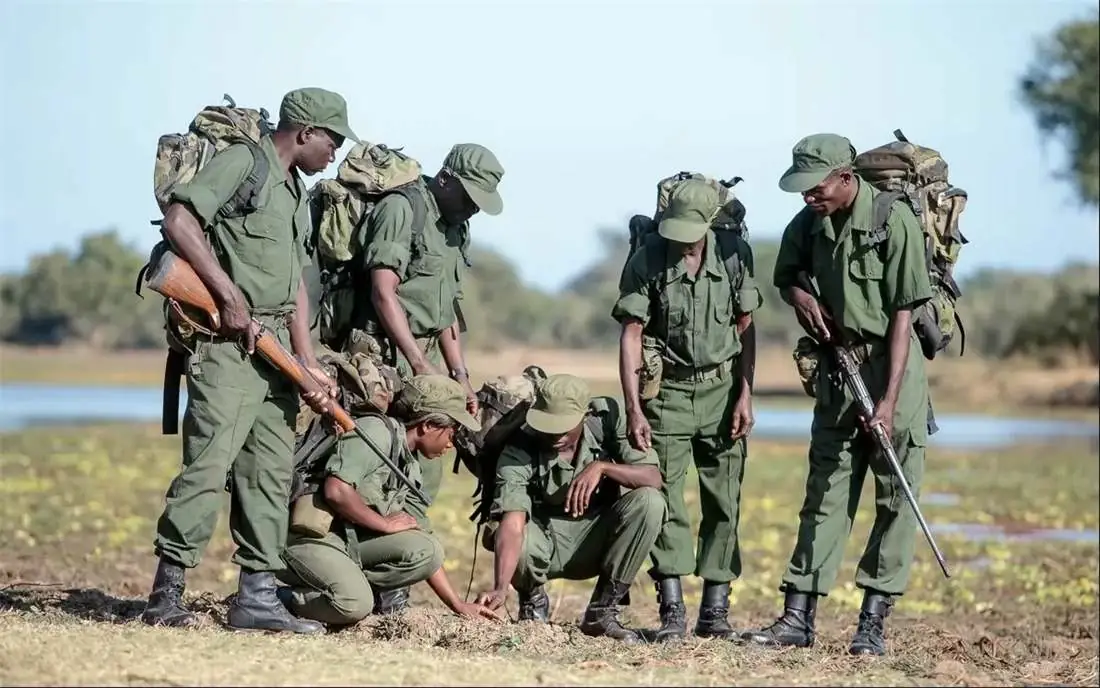
- Game scouts and patrols: salaries, equipment, rations and transport that support Department of National Parks and Wildlife officers and community scouts in the field.
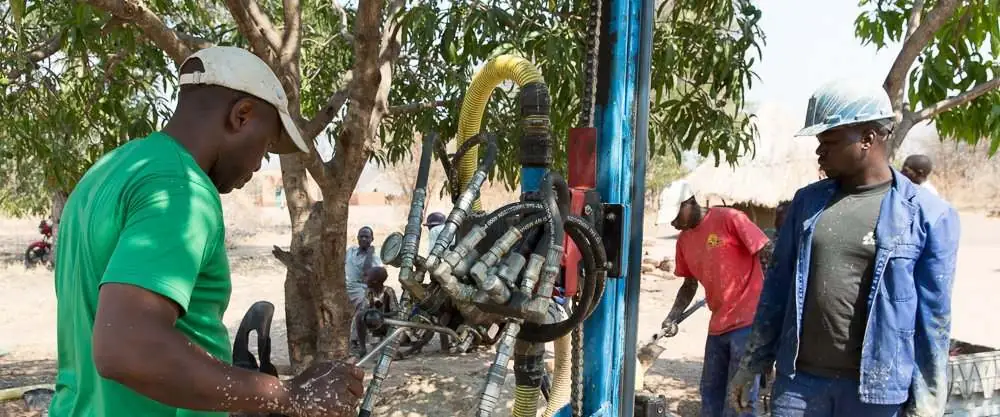
- Clean water: boreholes for villages and water points for wildlife, drilled with Chibembe’s own rig.
- Roads: about 63 miles graded every year and three airstrips kept open, so villages can reach clinics, schools and markets.
- Education: school supplies, scholarships, teacher housing and dormitories.
- Health care: clinic support, malaria medicine and emergency transport for communities hours from help.
- Food relief: delivered in person to villages in hard years, with community leadership.
The family’s companies carry the cost of running it. The teams of Chibembe Wildlife Reserve and The Bushcamp Company deliver ZWCF’s programs, with trucks, a road grader and a drilling rig already in the valley, at no overhead charge to the foundation. Every dollar given goes to the work.
On the ground at Chibembe
Chibembe Wildlife Reserve shows what this looks like up close. Scouts recruited from the Mwanya Chiefdom patrol the reserve’s 3,500 unfenced acres, given the training and equipment to protect their own land. The reserve’s rig, shipped from the United States, sinks drinking water for the chiefdom’s villages and water points for wildlife. Teachers in remote schools have new homes; children have books. A Conservation South Luangwa radio tower stands on the property, cameras watch across its habitats, and fire management and native grasses are bringing the land back.
Never alone
None of this is ours alone, and it would be wrong to tell it that way. The Luangwa is protected by a remarkable network of people, and we are proud to stand with them.
Zambia’s Department of National Parks and Wildlife and its scouts hold the line every day. Conservation South Luangwa runs anti-poaching work across the valley, including Zambia’s first conservation detection dog unit. The Zambian Carnivore Programme has studied and protected the valley’s lions, leopards and painted dogs for years. The Giraffe Conservation Foundation works for Thornicroft’s giraffe. In North Luangwa, Frankfurt Zoological Society’s North Luangwa Conservation Program brought black rhinos home. The Luangwa Conservation and Community Fund, and many of the valley’s other safari operators, support communities of their own.
Above all, the work belongs to the chiefs and chieftainesses, community resource boards, headmasters and village leaders of the chiefdoms beside the park. They decide what their communities need. We try to help them get it.
This valley is worth protecting. Not someday. Now.
How you can help
Come and see it. A safari at any Collection camp supports the valley’s people and wildlife, and guests are welcome to visit a community project during their stay.
And if this place has meant something to you, give. The Zambia Wildlife & Community Foundation is a registered US 501(c)(3) (EIN 81-5035617), and gifts are tax-deductible to the extent provided by law. There is no minimum, and every dollar goes to the work. Give at zwcf.org.
Stronger communities. More wildlife.
SOURCES: World Bank, Zambia Poverty and Equity Assessment (February 2025); World Bank, Zambia Economic Update (June 2025); World Bank, Zambia Country Climate and Development Report (April 2026); World Bank, “Protecting biodiversity to improve economic outcomes in Zambia” (2022); Zambian Carnivore Programme; Frankfurt Zoological Society; Zambia Wildlife & Community Foundation, zwcf.org; The Bushcamp Company, bushcampcompany.com/pages/impact (program figures as published, October 2026). Norman Carr quotation as used by ZWCF.