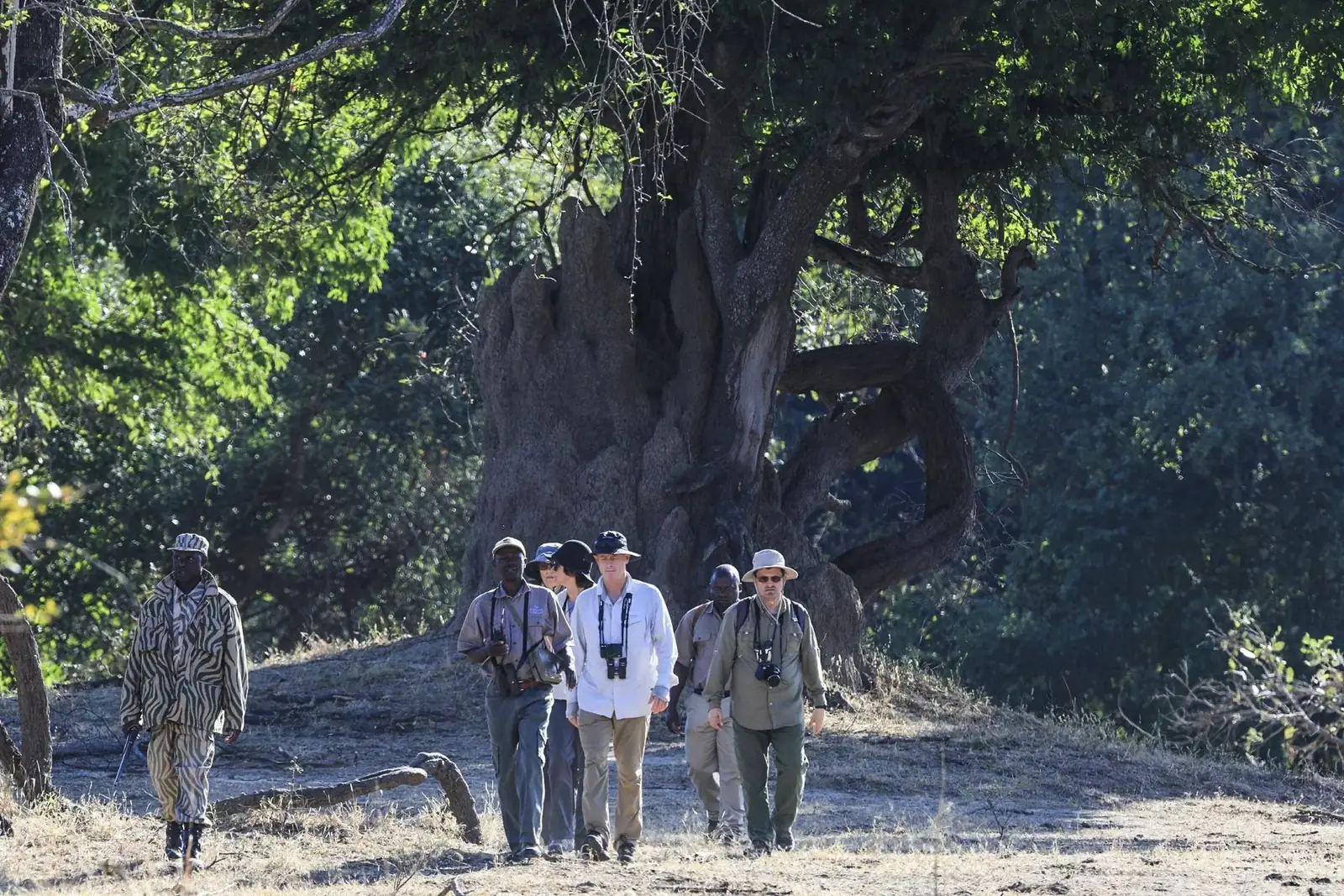
On a walking safari there is no engine to lean on and no roof over your head. There is the person walking in front of you, the scout beside them, and the valley. Everything you see, and everything you never have to worry about, depends on how well that person reads the ground. In South Luangwa, that person stands in a line that runs back to the beginning of the walking safari itself.
The first guide
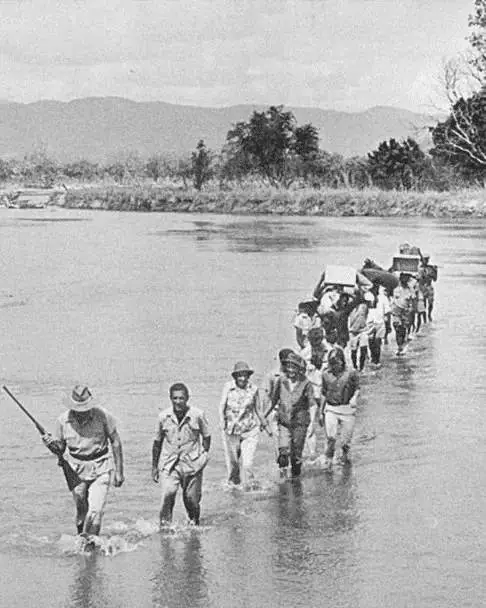
Norman Carr was a game ranger before he was anything else. When he began taking paying guests out on foot in 1961, on the circuit between Chibembe and Lion Camp, he was not inventing a product. He was sharing the way he already moved through the valley: slowly, quietly, downwind, reading every track and every alarm call. What the record of that year calls “a type of tourism” was, at heart, a way of guiding.
Those who followed
The craft passed from guide to guide on this same ground. Phil Berry worked alongside Carr and later founded Kuyenda, still one of the purest walking camps in the valley. Others who learned on the Chibembe circuit went on to guide, and to found camps of their own, across South Luangwa. Each of them trained others, and those guides trained more. The lineage was never written down as a course. It was handed on in the bush, one morning walk at a time.
How a Luangwa guide is made
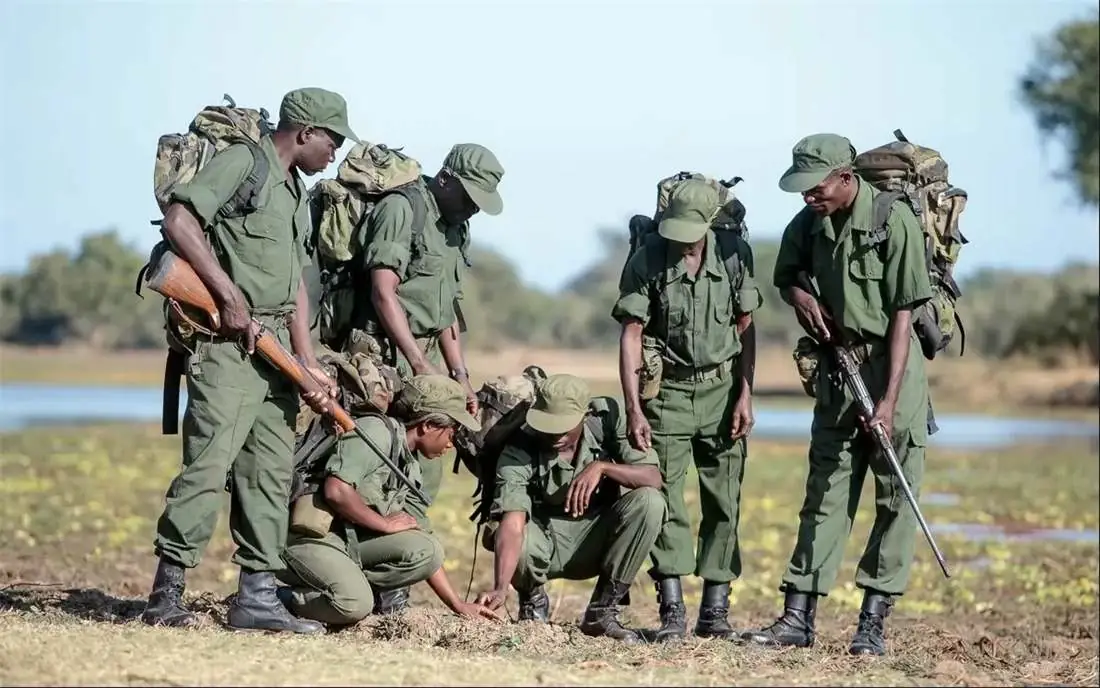
Today that tradition sits on a demanding foundation. Zambia’s walking guides are among the best trained in Africa, held to strict national guiding exams before they may lead guests on foot. Every walk in the national park is led by a licensed guide with an armed scout from the Department of National Parks and Wildlife. At The Bushcamp Company, every guide is Zambian and locally trained, and across the Collection the guides know this valley the way only people who have spent years in it can.
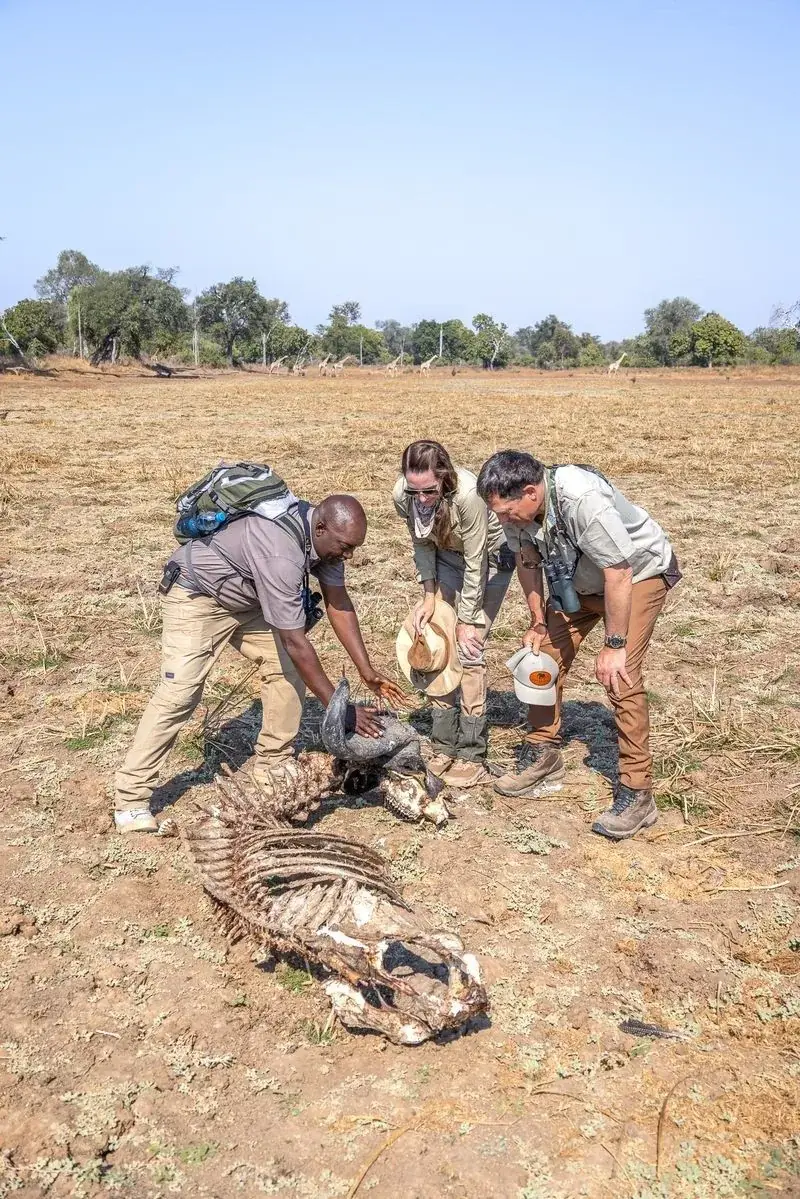
What a lifetime in one valley gives you
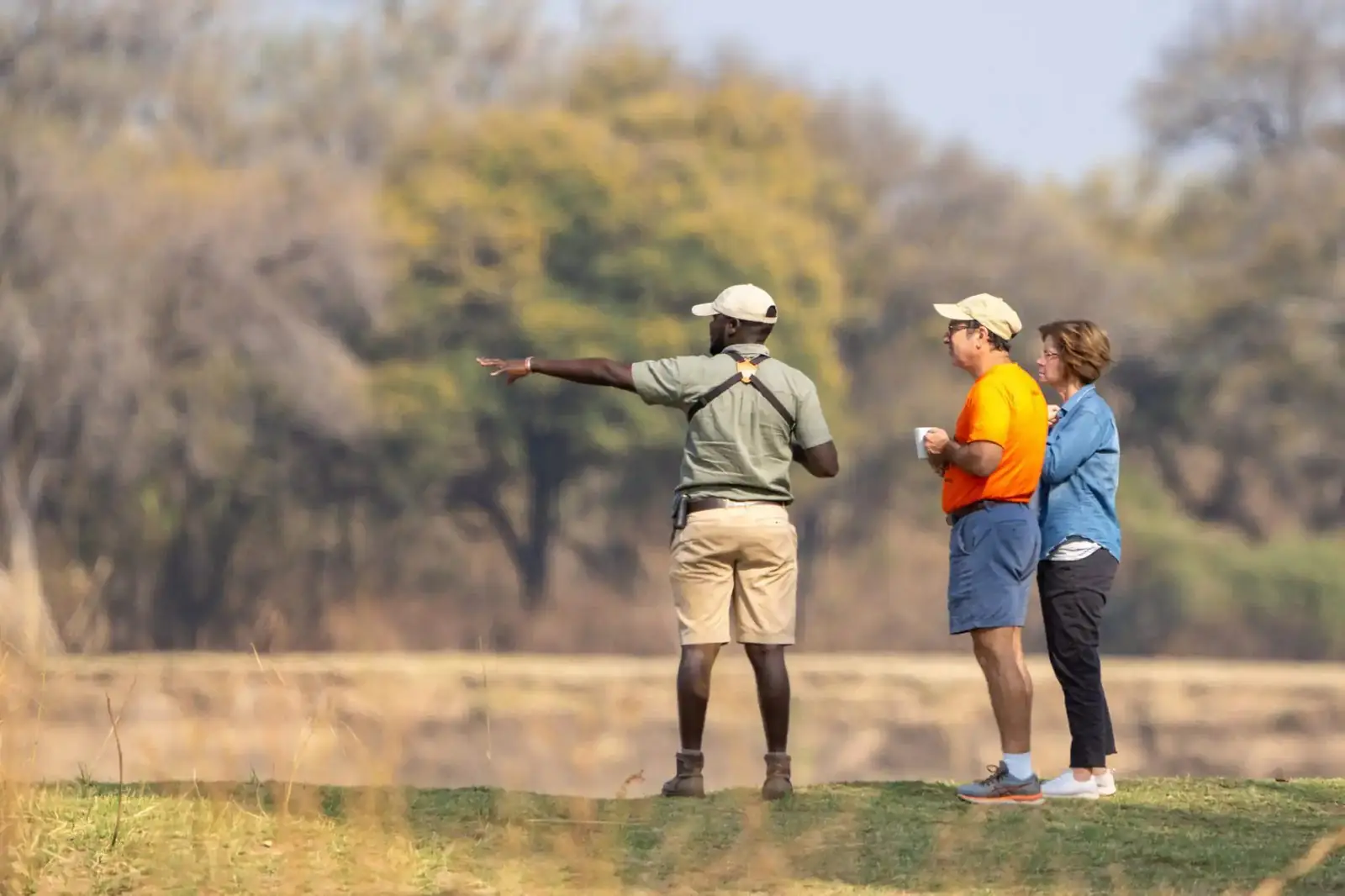
A great guide does more than find animals. They know which lagoon the buffalo will drink at by mid-morning, why the puku are staring at that thicket, and what a single francolin call means. They know when to stop, when to wait and when to walk on. That knowledge cannot be shipped in or trained in a season.
“You can buy a beautiful camp anywhere. You cannot manufacture a guide who has spent thirty years learning one valley. Our guides know this landscape like they know their own heartbeat.”Corby Robertson III
On the trail today
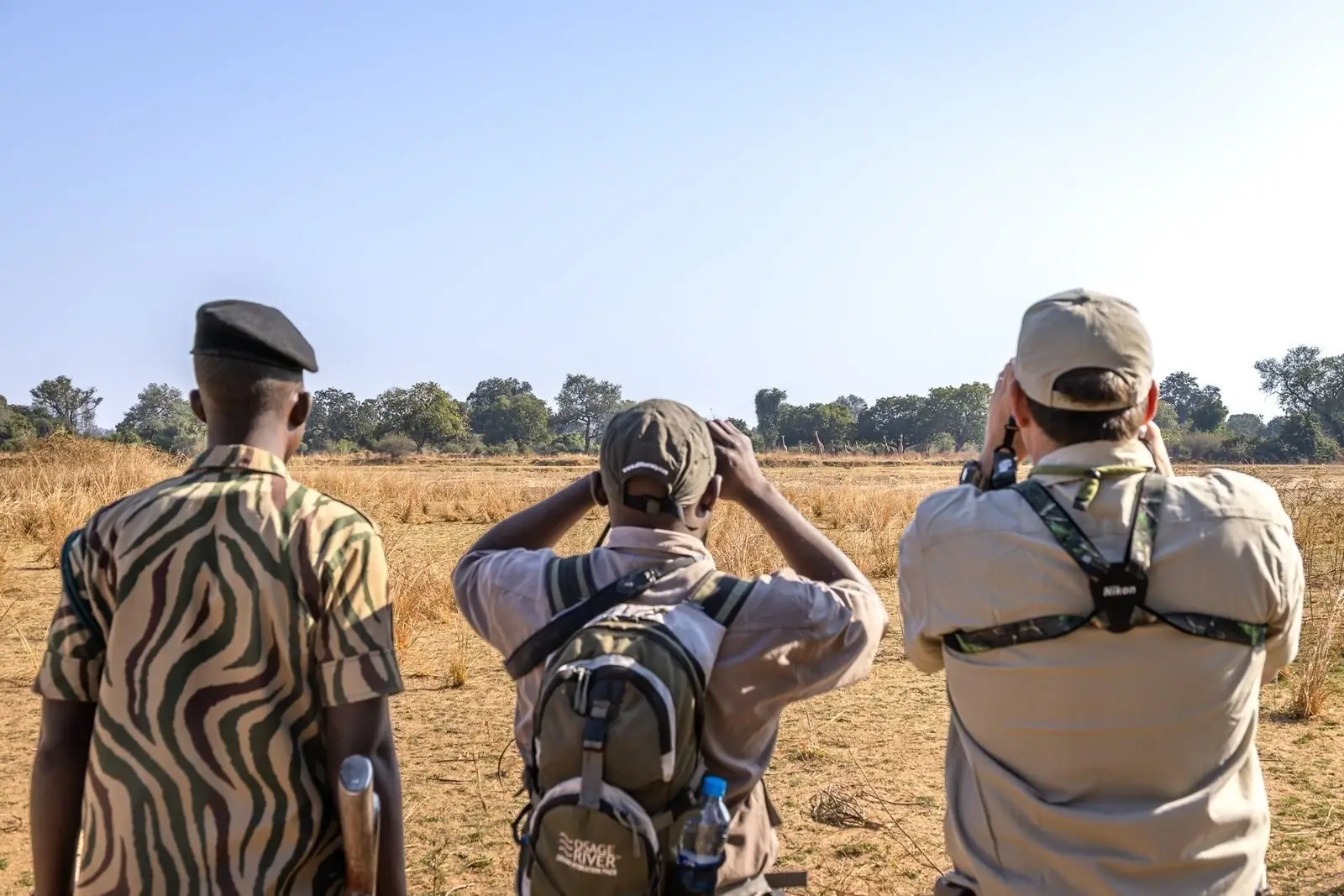
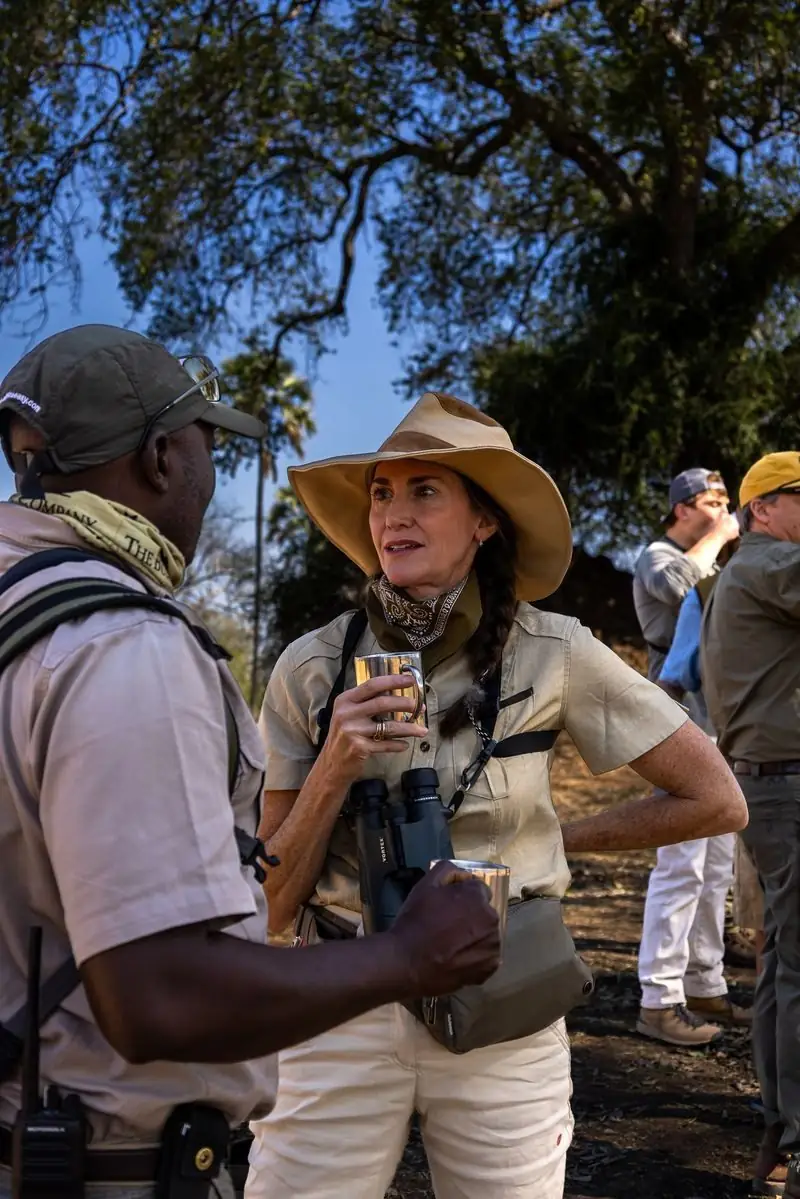
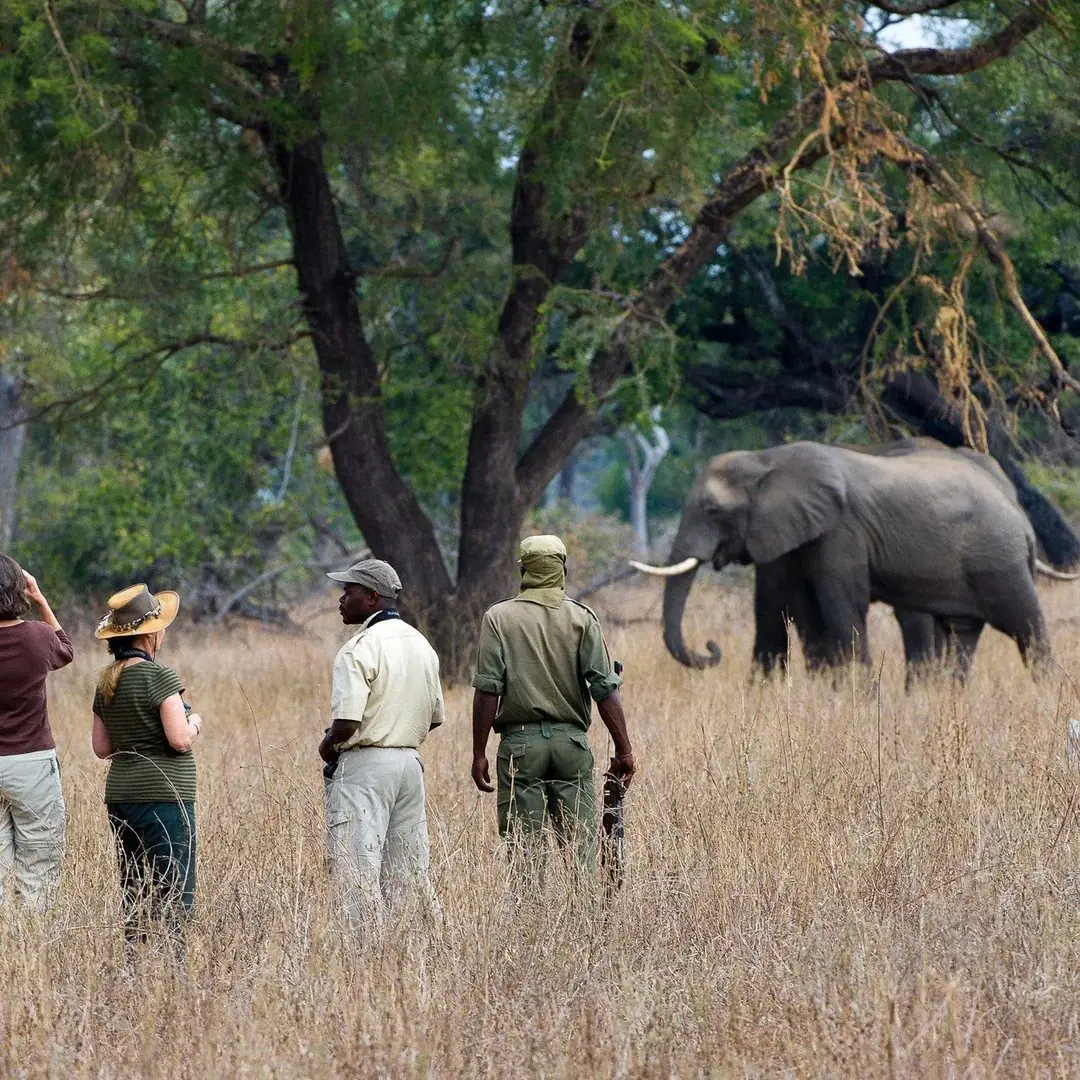
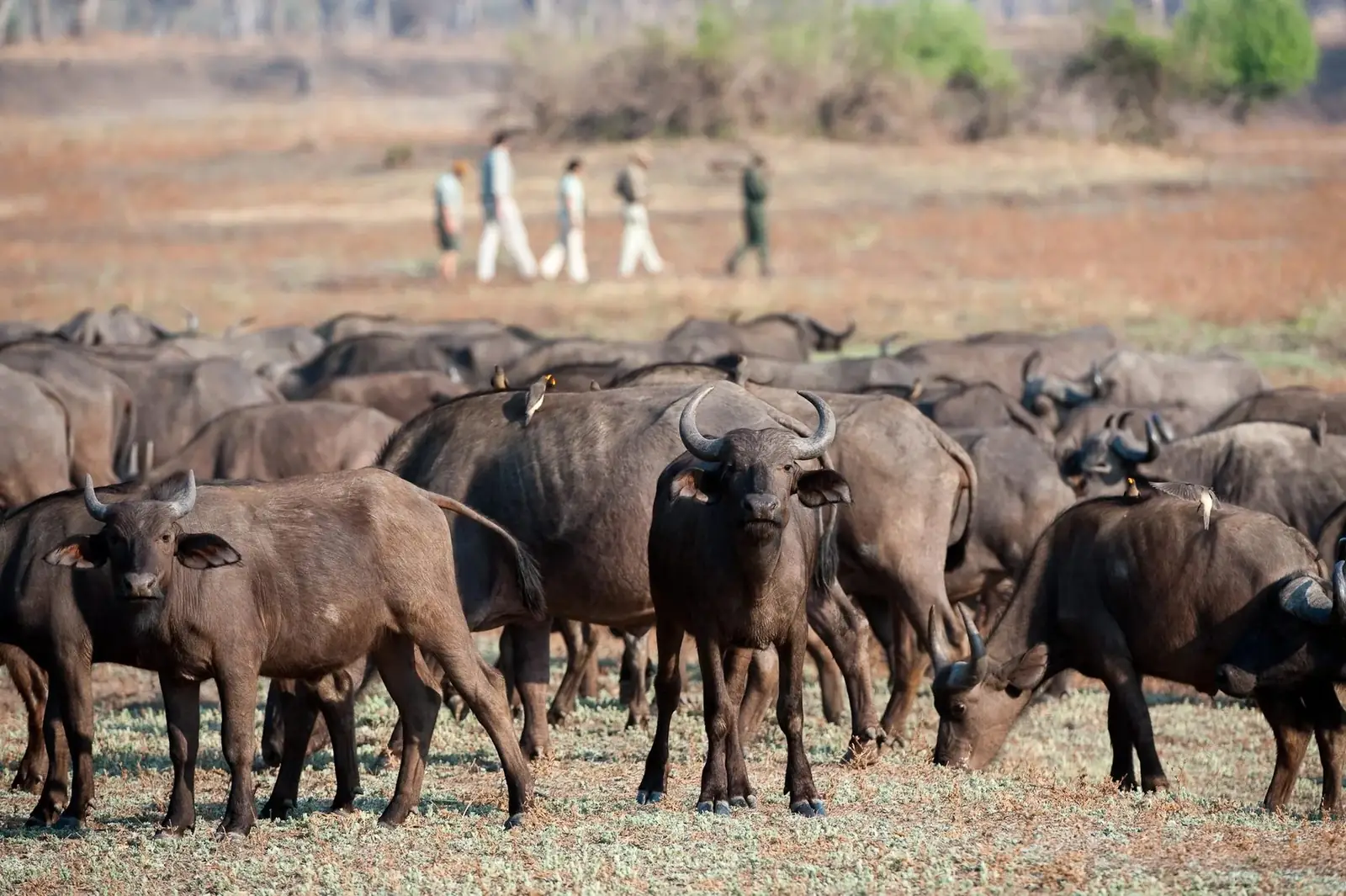
Guides and scouts of the Collection at work across the valley.
Walking with them
Every one of the Collection’s ten camps offers walking safaris, and walking is always optional. Most walks cover two to three miles in the cool of the morning, often ending at a vehicle that brings you back to camp in time for brunch. At the bushcamps, keen walkers can also walk from camp to camp on request. Whichever you choose, you will be in the hands of a guide whose craft began on this ground in 1961, and who has spent a working life learning to read it.
In guests’ words
The best evidence for a guide is what guests remember. These are quoted as written in recent reviews, with the guide’s name as the guest gave it.
“In total we found 7 different leopards along with lion and everything else you could wish for.”
“Our guide, Robert, at Lion Camp is the best we’ve ever had, and we have a fair bit of previous safari experience.”
“Much of the credit goes to Innocent, our guide, who was simply outstanding.”
“Samuel was amazing: kind, fun, patient, knowledgeable. The best in the biz.”
“Fanuel was amazing. The team worked together and made the trip incredible.”
“Our guide Patson was knowledgeable, caring and warm.”
“Elijah our safari guide was absolutely outstanding.”
“Gwen, Francis and Mischeck were very knowledgeable and each gave a unique perspective.”
The ground and the records are the heritage of this Collection. Just as important are the people who still walk the valley the way Norman Carr first walked it.