The guide’s fist goes up, and everyone stops.
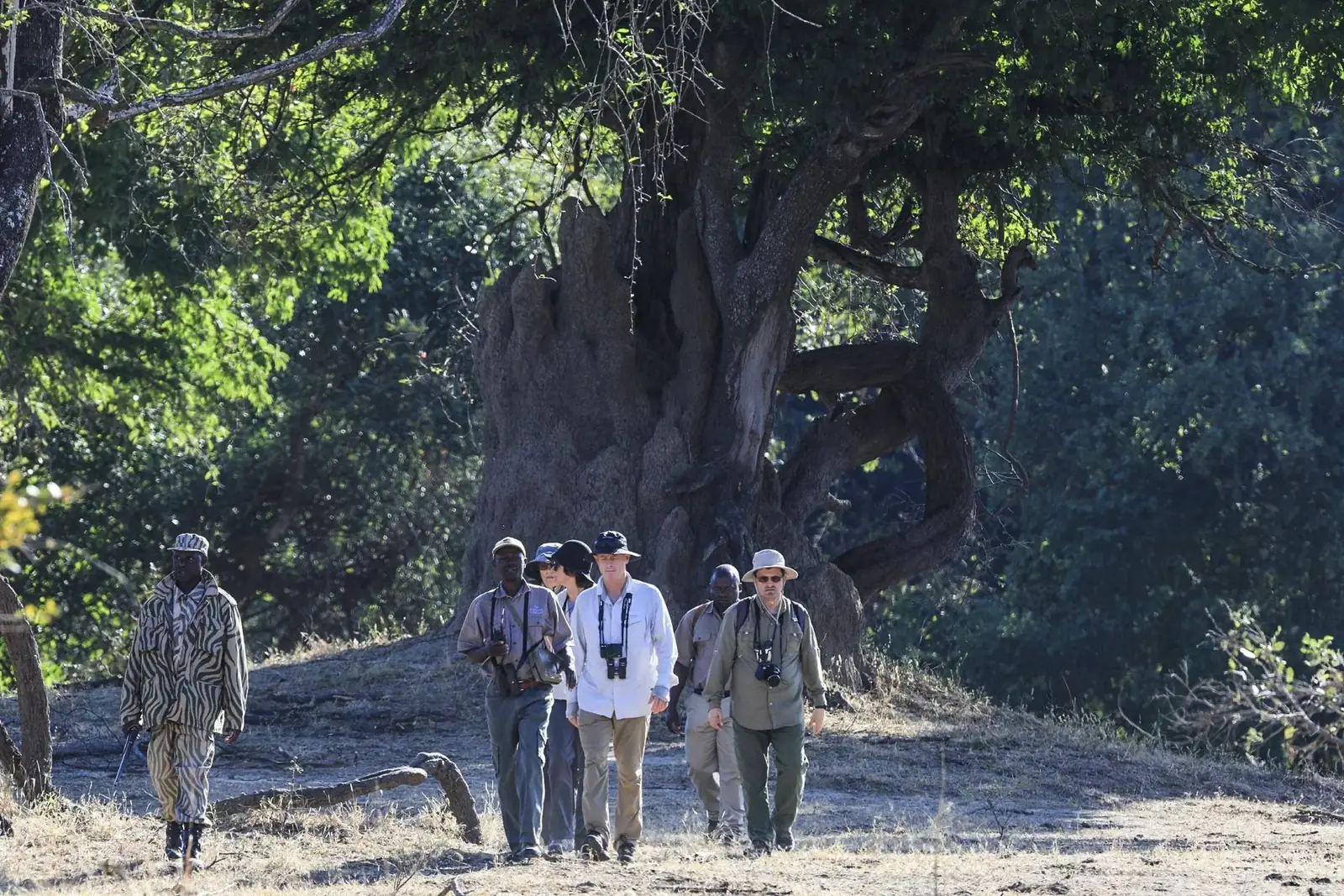
You have been walking for an hour, single file and in silence, into lion country. The bush has been talking the whole time, the way it does when you move through it slowly enough to listen: an alarm call in the distance, a track pressed into the sand less than an hour ago, the air cooling as you cross from riverine shade into open ground.
Then the fist. And thirty yards away through the grass, a lion. Not a lion at a sighting, not a lion surrounded by vehicles, but a male on his own route through the morning, who notices you and decides you are neither a threat nor of any interest. He looks. He looks away. He walks on toward somewhere only he knows.
“He’s not bothered,” the guide whispers. “You can use your camera.”
Most people who have stood there will tell you the same thing: they did not take a single picture. They could not move. They had seen lions before, perhaps the week before, at a kill with ten vehicles stacked around it and shutters firing from every direction. But standing in open grass, on foot, while a male lion decides you are beneath his attention, is a different kind of experience altogether. It is the moment a traveler stops watching Africa and finds themselves inside it.
That is what the Safari Five is about.
The Big Five is a brilliant list. It is also incomplete.
Every safari traveler arrives knowing the Big Five: lion, leopard, elephant, Cape buffalo and rhino. It is one of the best-known lists in travel, and it has earned its place. These are extraordinary animals, and the thrill of seeing them in the wild is entirely real.
But the Big Five is a list of species. It tells you what to look for on a game drive. It does not tell you what to look for in a safari, which is a different thing and a larger one. People who come home and start planning their next trip straight away are almost never chasing an animal they missed. They are chasing a feeling they found between the sightings: a morning that felt different, a place so alive that it asked something of them.
That feeling does not come from a checklist of five animals. It comes from five things of a different kind.
Introducing the Safari Five
The Safari Five does not replace the Big Five. Great wildlife is still the heart of a safari, and South Luangwa delivers it as well as anywhere on earth. What the Safari Five adds is a way to plan for the experiences that turn a good safari into one you never forget: the five things seasoned travelers describe as the moments they remember most, and the five things most of them wish someone had told them about before their first trip.
1. Stay in a true bushcamp
The foundation that makes everything else possible
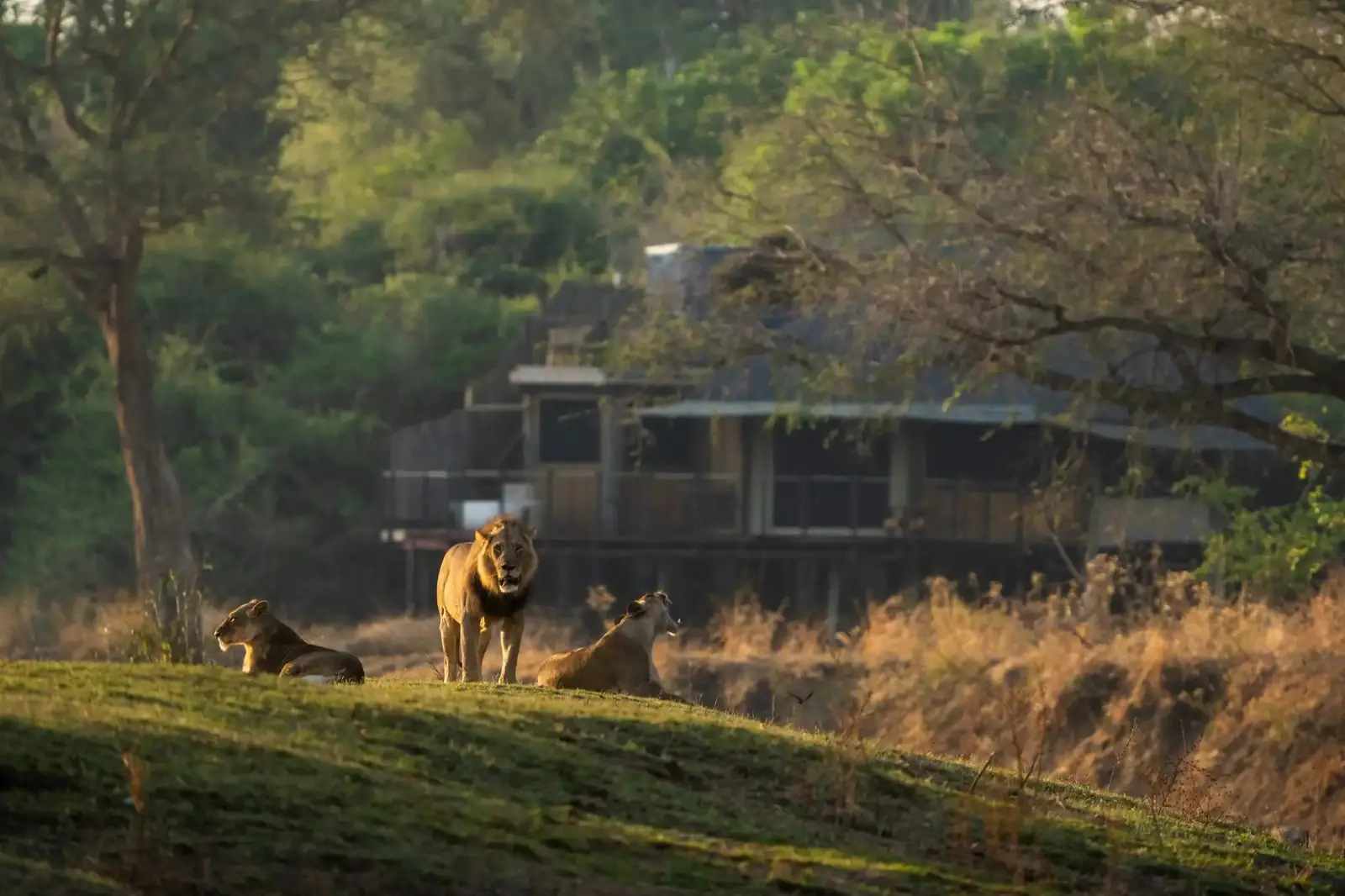
A bushcamp is not a tented lodge with a pool and a reception desk. It is something smaller and more particular: a handful of open-fronted chalets or tents for perhaps eight guests, set deep inside a national park, far from any busy road. The camp is unfenced. The animals move through it, not around it. You fall asleep to hippos in the river and wake to elephants in camp, and the line between where the bush ends and you begin is very thin.
The bushcamp grew up in South Luangwa, alongside the walking safari, and the Collection’s six seasonal bushcamps are run the way the tradition intended: small, remote and built around walking. Each is placed for its own ground and its own animals: Bilimungwe at a busy waterhole, Chindeni on a permanent lagoon, Kapamba on a clear, spring-fed river, Chamilandu on the Luangwa itself, Zungulila above a natural spring in the remote south, and Kuyenda, a walkers’ camp, above the Manzi sand river.
The bushcamp comes first because everything else depends on it. You cannot have the same walking safari from a large lodge at the park gate, or the same solitude from a camp shared with a hundred other guests. The bushcamp is not a style. It is the architecture of the whole experience.
In a true bushcamp you are not looking at the wilderness through a window. You are inside it.
2. Take a walking safari
In a vehicle, you see Africa. On foot, you feel it.
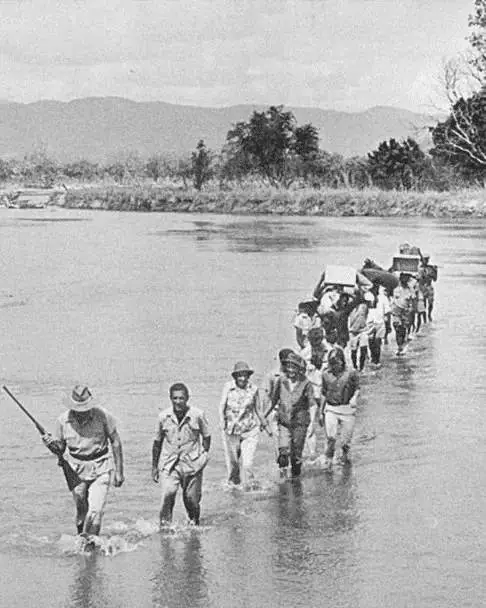
The walking safari began in South Luangwa. Norman Carr, a former game ranger, saw that the deepest way into the African bush was not from a vehicle but on foot, and in the early 1960s he made the guided walk into a safari in its own right, on a circuit that ran between Lion Camp and the east bank at Chibembe. Both are part of the Collection today, and guests can once again walk out from the ground where it began.
What a walk gives you is not only a closer view of wildlife, though it gives you that too. It is a different relationship with the place. On foot, every sense is working. You hear an impala’s alarm call before you see what caused it. You read a track pressed into the sand an hour ago, or a minute ago. You feel the air change as you leave the shade of the riverine trees for the open floodplain. You understand, in a way no game drive quite delivers, that you are inside an ecosystem rather than watching it from above.
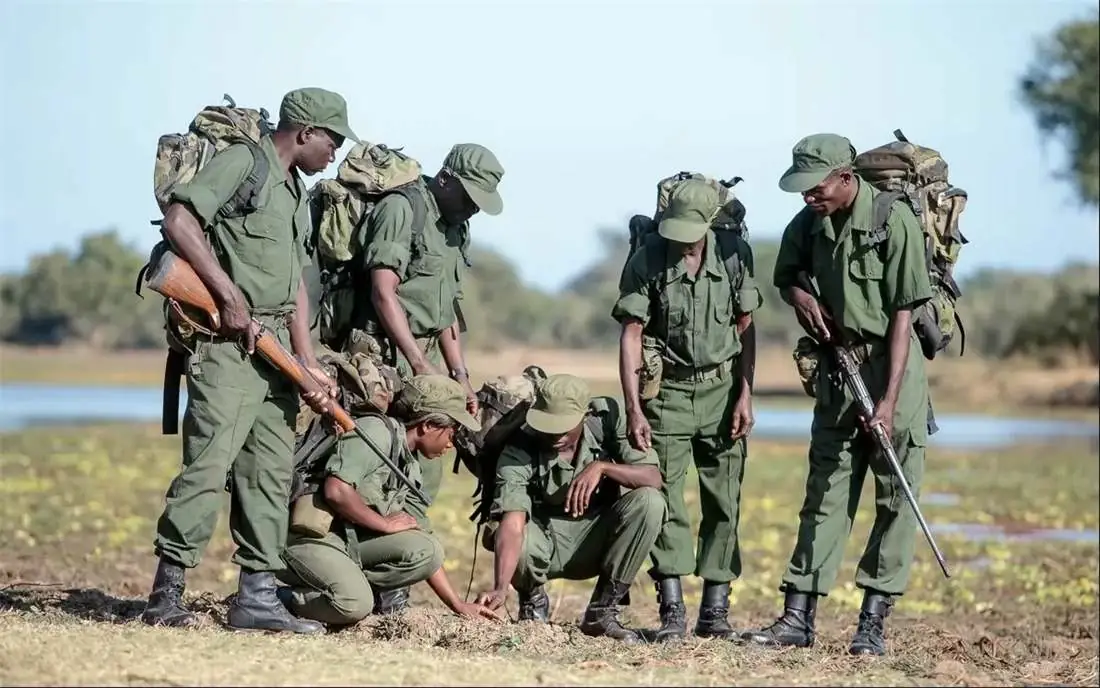
A walk is also the truest test of a guide. You cannot lead people on foot through dangerous game country with knowledge learned from books. In South Luangwa, every walk is led by a licensed walking guide with an armed scout from the Department of National Parks and Wildlife. The rifle is the least important thing they carry. What matters is the judgment behind it, and the Collection’s guides inherit a tradition of walking that runs from Norman Carr through Phil Berry, founder of Kuyenda, to the people leading walks in the valley today. See why your guide matters.
Walking is always optional. But almost everyone who tries it says the same thing afterward: they wish they had walked more.
On foot, the bush does not perform for you. You step into it.
3. See a conservation story with your own eyes
Stronger communities. More wildlife.
The wildlife you watch on safari is alive because somebody protects it. In South Luangwa that protection is not abstract. It is visible, specific and bound up with the people who share the valley with the animals.
Conservation here works because the communities living beside the wildlife have real reasons to value it. When families have clean water, food and work, fewer need to poach to survive; when people benefit from the animals around them, they come to protect them. Every night a guest spends in one of the Collection’s camps pays park fees and supports local jobs, and through Charity Begins at Home and the Zambia Wildlife & Community Foundation, the camps help put that principle to work: nearly 300 boreholes for clean water, more than 4,000 children fed every school day, scouts on patrol, and roads and airstrips kept open far beyond the busy gateway at Mfuwe.
None of this is the work of one company alone. Chiefs, community resource boards, the Department of National Parks and Wildlife and conservation partners such as Conservation South Luangwa all play their part. But guests can see it for themselves, on a village visit or in conversation with the scouts and guides, and understand that the painted dog pack they watched that morning is part of the same story. See our impact.
The wildlife thrives here because the people who live with it have reasons to protect it.
4. Find the Big Three carnivores
Lion, leopard and painted dog, in a valley that holds all three
If the Big Five is the list, the Big Three are its pulse: the three large carnivores whose presence together sets South Luangwa apart from most of Africa.
Lion are resident and active, working the open floodplains in prides that have held the same ground for generations. Buffalo herds, sometimes hundreds strong, draw them into the open in daylight, which makes the valley one of the best places anywhere to watch how lions actually live, rather than simply ticking them off.
Leopard are the valley’s signature. South Luangwa is known as the Valley of the Leopard, and surveys have recorded some of the highest leopard densities in southern Africa here. The guides know individual cats by territory and history, so a leopard sighting is often less a lucky find than a guide who knew, before the morning began, roughly where to look.
Painted dog are the rarest of the three and the most affecting. Africa has only around 6,600 left in the wild, and the Luangwa Valley is one of the places where packs can still be seen. Watching a pack on the hunt is not just a sighting; it is a glimpse of an intelligence and a social life that stays with people long after they have gone home.
Around them: elephants in great numbers, buffalo herds large enough to test a pride’s nerve, some of Africa’s largest concentrations of hippo, Nile crocodiles at every bend of the river, and two animals found almost nowhere else: Thornicroft’s giraffe, which lives only in the Luangwa Valley, and Crawshay’s zebra. See the wildlife of the valley.
Seeing lion, leopard and painted dog in a single stay is not unusual here. In most places, it would be remarkable.
5. Stay out for a night drive
Africa after dark
Unlike many of Africa’s national parks, South Luangwa allows game drives inside the park after dark, with a spotlight. It is a privilege, and it shows you a side of the bush that daylight never does.
The animals of the night are not the animals of the morning. A leopard leaving to hunt. Genet and civet crossing open ground. Honey badger, porcupine and serval caught for a moment in the beam. Hyenas at a carcass. Hippos grazing far from the river, nowhere near where you saw them at noon. A night drive is not a lesser game drive. It is a different way into the same landscape.
It is also the sky. With almost no light for a hundred miles, the Milky Way stands out above the vehicle, and the bush is not silent but speaking a different language from the one it uses by day. Many guests say the night drive was when they finally understood what “wild place” means.
It is rarely the first thing guests describe when they get home. It is almost always one of the memories that stays.
Two lists, one complete safari
The Big Five and the Safari Five are not rivals. The best safari in South Luangwa delivers both: the extraordinary wildlife the valley is known for, and the experiences that turn a week in the bush into something that changes how you see the natural world.
What the Safari Five gives you is a way to plan a safari that leaves nothing essential out. Many first-time travelers, focused on the animal list, come home having seen wonderful wildlife and having missed, without knowing it, the things that would have made the trip unforgettable: the walk they did not take, the night drive they skipped for an early night, the conservation story they never heard, the camp that was comfortable but never truly remote.
One honest note. Rhino have not lived in this part of Zambia for decades, so South Luangwa offers four of the Big Five, not five. Every item on the Safari Five, on the other hand, is here, and two of them, the bushcamp and the walking safari, began here.
The Big Five may bring you to Africa for your first safari. The Safari Five is why you will keep coming back.
Experience all five on one circuit.
See the Heritage CircuitSOURCES: Survey of leopard densities in the Nsefu sector, cited in Wikipedia, South Luangwa National Park; painted dog population estimate from the IUCN Red List (Lycaon pictus); Thornicroft’s giraffe range per IUCN SSC Giraffe and Okapi Specialist Group (2025); community figures from the Safari Heritage Collection impact record.